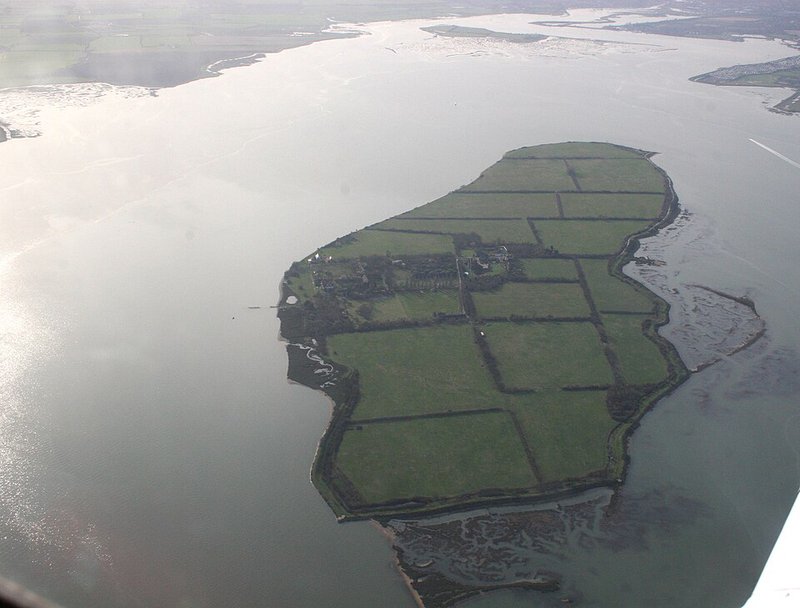
Terryjoyce, CC BY-SA 3.0, via Wikimedia CommonsEngland’s Haunted Islands
I suppose in many ways, Great Britain is just one (relatively) big haunted island, stuffed to the gills with paranormal activity.
That being said, there’s a plethora of small islands and islets around England (the focus of this particular investigation) which are themselves distinguished by various kinds of supernatural/unexplained activity.
And here are a few of them:
Osea Island
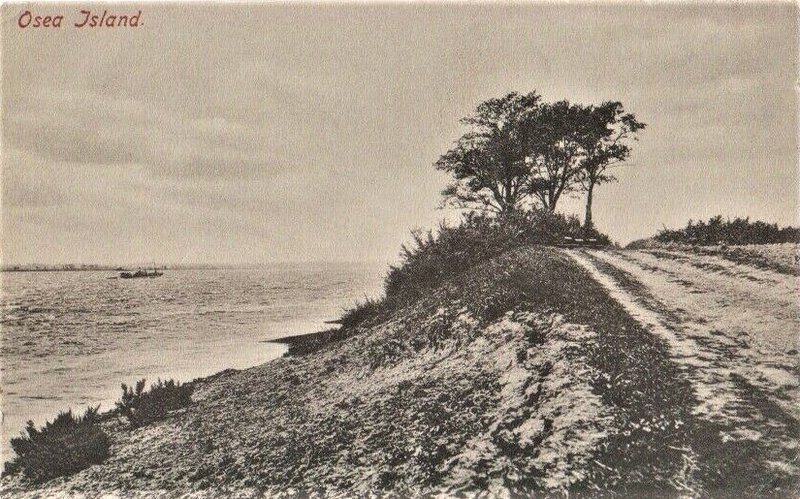
Mark Crombie, Public domain, via Wikimedia CommonsPart of Essex’s Blackwater Estuary archipelago, Osea Island, from Old English "Osyth's island, is an inhabited island consisting of approximately 380 acres (150 hectares) connected to the mainland by a causeway that is covered at high water. Owned by pop producer Nigel Frieda, there are 38 residential properties, a recording studio, and a pub called The Puffin; the island serves as a secluded, "hidden" location used for music, film, and private events, with the population fluctuating during large private events or film productions, sometimes reaching over 200 people.
Charrington brewing family member Frederick Nicholas Charrington (1850 -1936) established a retreat for wealthy alcoholics on Osea Island, among whom it is rumoured that Jack the Ripper suspect Walter Sickert was included. From 2005 to 2010, it was a rehabilitation centre specialising in the treatment of addiction problems and mental health, named the Causeway Retreat; in 2008, the late Amy Winehouse attended the island’s rehab clinic. On November 19th 2010, Brendan Quinn's Twenty 7 Management, which had run the Causeway Retreat, pleaded guilty at Chelmsford Magistrates' Court, and was fined £8,000 plus £30,000 costs for running an unlicensed hospital; District Judge David Cooper said the firm's standards "would really shame a third world country".
Although not haunted per se, Osea has a noticeably peculiar atmosphere, which coupled with its unique location, have made the island popular with filmmakers, as shown in the clips below. The proximity to the site of the 991 AD Battle of Maldon (see also Northey Island) means that the shades of Viking stragglers and Anglo-Saxon survivors of the clash may linger in the environs, as has been posited for the area. There have indeed been reports of sightings of a misty figure walking along the mudflats near Osea; local legend suggests this apparition is a Viking soldier, still waiting for a longship that departed over a thousand years ago.
The Third Day Trailer (2020)
The Woman in Black (1989) The 1989 television adaptation of Susan Hill's ghost story The Woman in Black used the tidal causeway of Osea Island as the filming location for the fictional "Nine Lives Causeway".
Northey Island
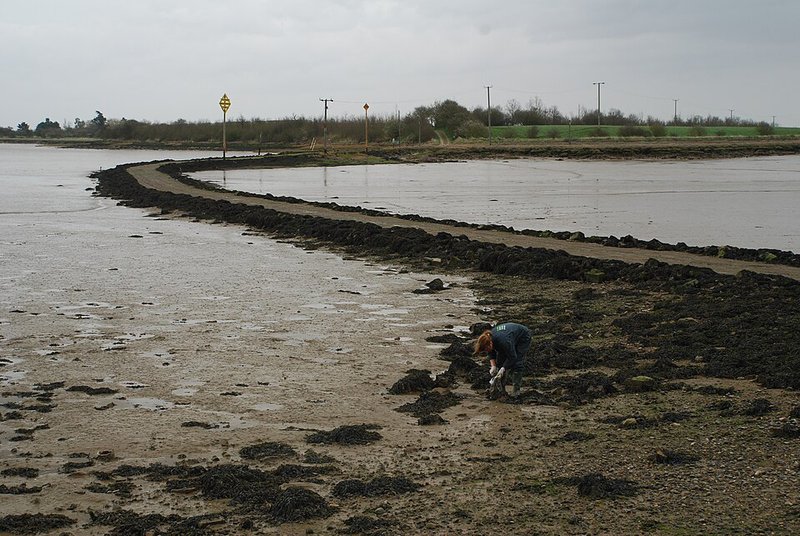
Northey Island Tidal Crossing by John Walton, CC BY-SA 2.0 , via Wikimedia CommonsOwned by the National Trust, Northey lies in estuary of the River Blackwater, linked to the south bank of the river by a causeway, which is covered up to 3 hours either side during high tide. The bloody Battle of Maldon (991 AD) between the Anglo-Saxons and invading Vikings took place on the causeway; the spirits of the slain apparently still haunt the vicinity.
Battle of Maldon (991 AD) - Full Poem
Mersea Island
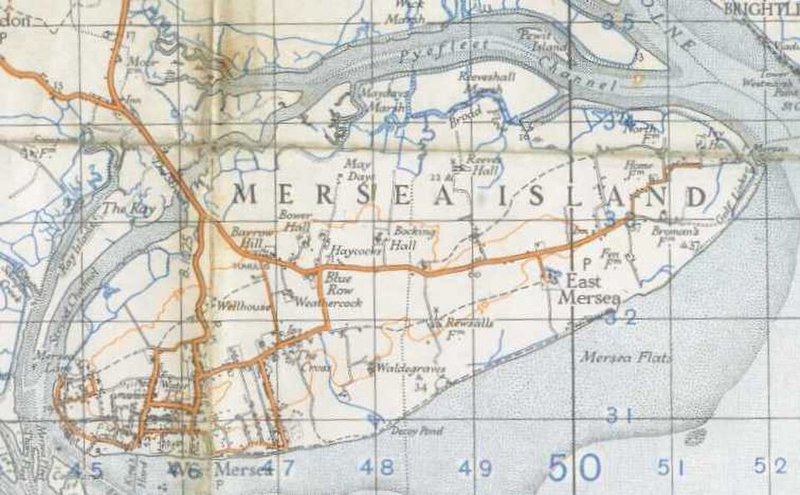
The original uploader was Geni at English Wikipedia., Public domain, via Wikimedia CommonsThe tidal Mersea Island is the joint largest (7 sqm) and second most populated (7,000 to 7,500 residents) of all those isles I’ve singled out for investigation. Connected to the mainland by the Strood, a causeway that can flood at high tide, Mersea has been inhabited since pre-Roman times.
Oh, and the spectre of a Roman legionary who walks the ancient Strood causeway. Sightings from 1904 describe him marching alongside cars, fighting, or guarding the road, usually when the tide covers the causeway, so sometimes viewed only from the waist-up.
The Black Shuck hound of East Anglian legend, has been reported around the marshes and creeks, whilst the windswept, lonely tidal marshes of nearby Dengie Coast are associated with ghostly figures, including headless highwaymen and mysterious lights locally known as ‘corpse candles’. See also Viking ghosts from the Battle of Maldon (991 AD).
The landscape of nearby 100-acre Ray Island helped inspire Sarah Perry’s The Essex Serpent (2016). Stories recount that a bear escaped from a ship onto the island and killed a group of fisherman who had landed there. A violent drunk apparently chased his wife and daughter into the island’s marshes but was drowned by the rising tide. Screams can be heard along with the panting of the mother and the wretched baby's weeping.
Canvey Island
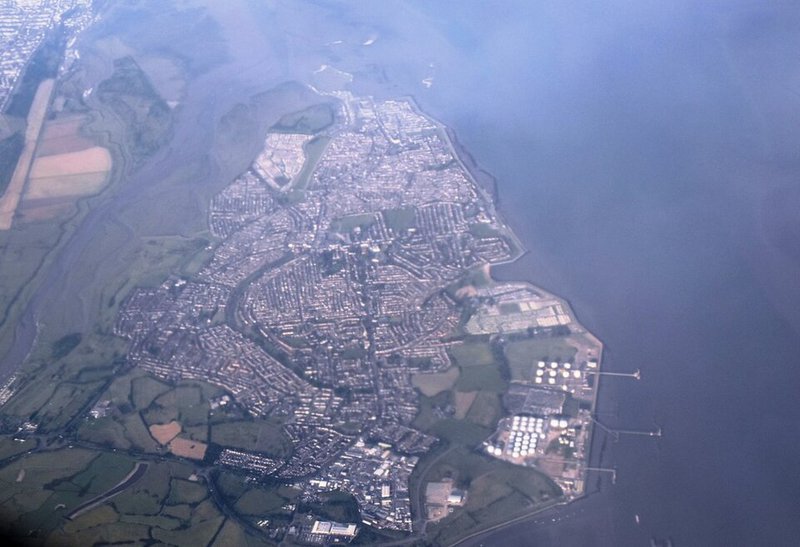
Canvey Island by N Chadwick, CC BY-SA 2.0 , via Wikimedia CommonsThe grim low-lying Cockney retreat of Canvey Island has an area of 7.12 square miles, similar to Mersea but boasts a far higher population of 38,327 residents condemned to live in a blasted wasteland of former hazardous chemical works and decrepit amusement arcades.
The forlorn ghost of a Viking haunts the mudflats on the northeast corner of the island. The Danes have been connected to a pre-Maldon skirmish here with King Alfred's son, Edward. The warrior also supposedly entered the bedroom of one Charlie Stamp, a resident of Canvey Point during the 1920s and 1930s and told his sorry tale to the sympathetic yokel.
Foulness
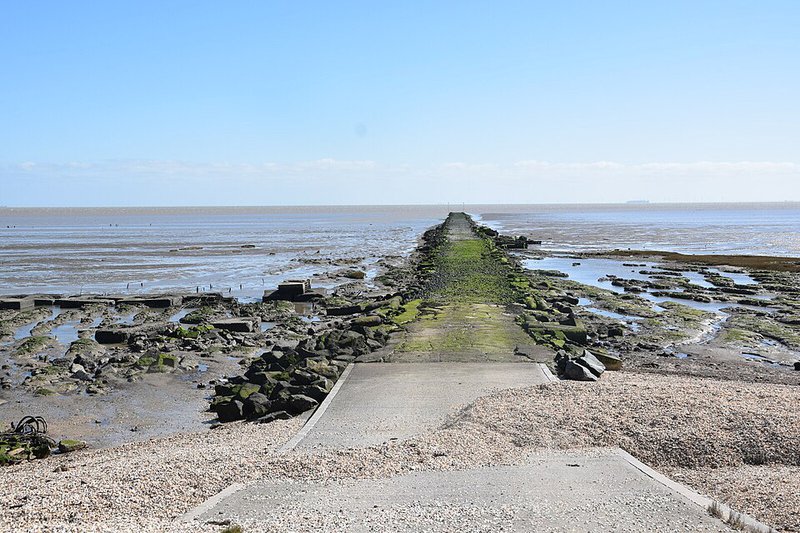
The northern end of The Broomway by Trevor Harris, CC BY-SA 2.0 , via Wikimedia CommonsEssex’s nine square mile marshy Foulness Island lies in the Thames estuary. It is separated from the mainland by narrow creeks and usually closed to the general public, having been taken over for military use in 1914. The 2021 Census recorded 158 residents (down from 212 in 2000) of the Godforsaken isle, primarily located in the northern villages of Churchend and Courtsend, accessible through army zones.
By July 2022 the general store and post office in Churchend had been abandoned; The George and Dragon pub in Churchend shut permanently in 2007, while the church of St Mary the Virgin closed in May 2010. Floods afflict Foulness, whilst the Broomway (named after the brooms that used to mark a safe route), a tidal path that predates the Romans, is extremely dangerous in misty weather; the incoming tide floods across the sands at high speed and the water forms vicous whirlpools, earning the title, "the most perilous byway in England".
Over 100 people have drowned on the path, which is also called “The Doomway”. In 2026, an Amazon delivery van became stranded on the Broomway after following misleading automated GPS navigation instructions for Foulness. Phantom Broomway travellers, ghostly smugglers and spectral other figures appear in the strange mists of the Foulness, often accompanied by chilling windy echoes.
Holy Island/Lindisfarne
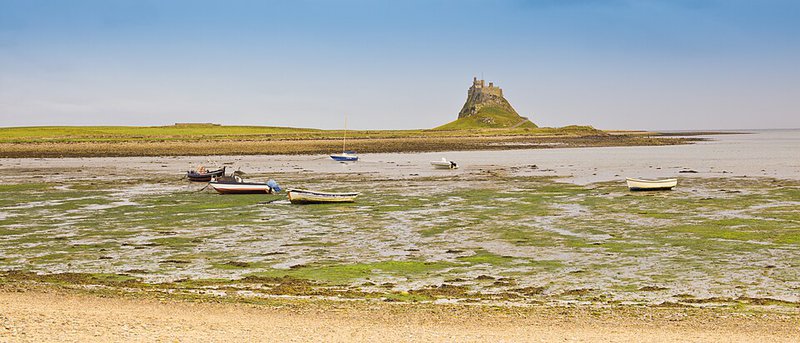
Michael D Beckwith, CC0, via Wikimedia CommonsSurely one of the most haunted islands in the world, 2 square mile Holy Island or Lindisfarne, is a tidal causeway accessible world historic site with 150 to 180 permanent inhabitants.
A site of immense importance to Anglo-Saxon Christianity, the wealthy abbey was the target of one of the first Viking raids in England in the year AD 793.
Alcuin, a Northumbrian scholar at Charlemagne's court wrote: "Never before has such terror appeared in Britain as we have now suffered from a pagan race ... The heathens poured out the blood of saints around the altar, and trampled on the bodies of saints in the temple of God, like dung in the streets."
The raid and other tragic events has given Lindisfarne a host of spectral residents, including:
St. Cuthbert: The island's patron saint is often seen wandering the ruins of the Priory and the shore, especially on stormy nights, creating St. Cuthbert’s Beads (fossilized sea lilies).
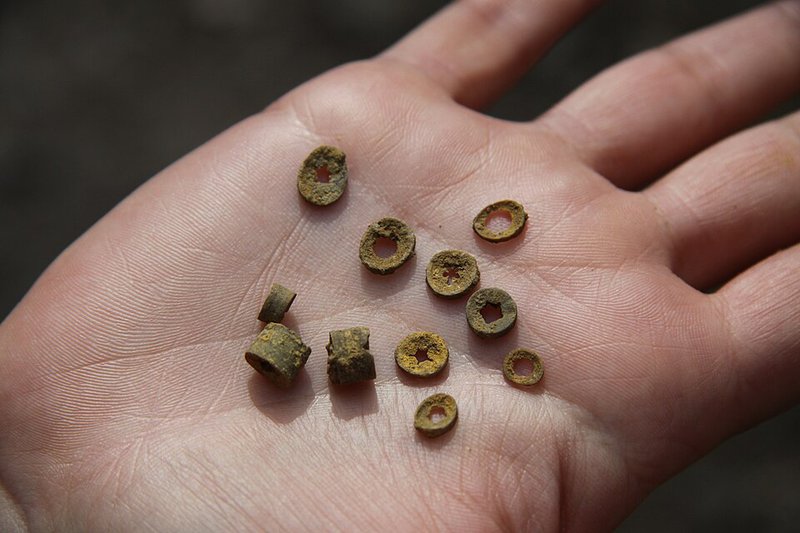
Chmee2, CC BY 3.0 , via Wikimedia CommonsSpectral Monks: Cowled monks, believed to be spirits of those killed in the AD 793.
Yet another White Lady: possibly a nun or a drowned local, glimpsed by the sand dunes.
The White Hound: A huge ghostly white dog jumps from the castle battlements at visitors, only to disappear.
Lindisfarne Castle Shade: An English Civil War-era soldier frequently seen or heard, accompanied by phantom footsteps, belching and the stench of stale tobacco.
Vikings: Eerie longships, accompanied by warlike bellowing and hazy helmeted figures on the shoreline.
Causeway Figures: Monks rise from the mist on the causeway road to warn cars back or lure them into the tidal waters, presumably believing them Vikings. Wildfowlers have seen silent, robed figures with hands raised high above their heads in prayer on the tidal mudflats. Visitors to Lindisfarne Priory report hearing disembodied Latin chanting, whilst sudden drops in temperature are often felt in the ruins.
On a lighter note, the local wedding superstition that brides had to walk or jump the length of the so-called ‘Petting Stone’ just outside the island’s St Mary’s Church. If she couldn’t, the marriage would be cursed. The stone is said to be the pedestal of St Cuthbert’s Cross A couple in 2006 re-enacted the custom for their wedding to help bless the marriage with fertility and good luck. There is a belief the stone might have been here before the monks abandoned the first priory in AD 875.
Cul De Sac 1966 Trailer; set on Lindisfarne
The Farne Islands
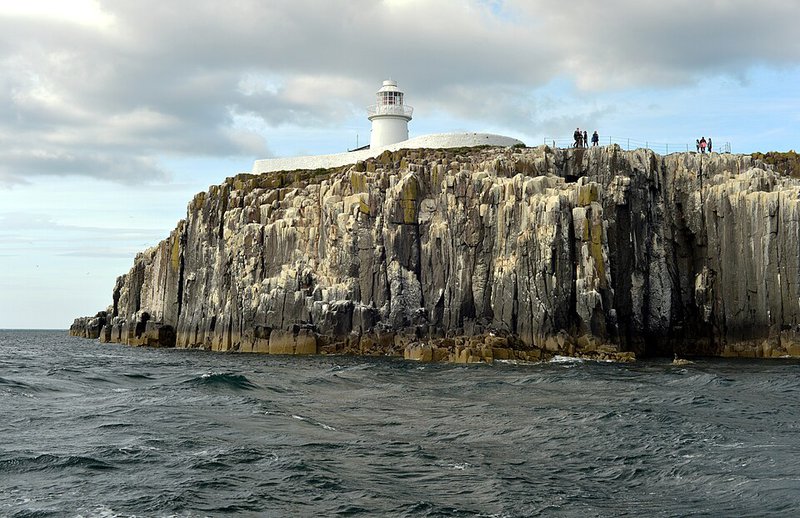
Inner Farne Lighthouse, The Farne Islands by habiloid, CC BY-SA 2.0 , via Wikimedia CommonsFamed for Grace Darling (1815–1842), the Victorian lighthouse keeper's daughter who became a national heroine for her exploit in rescuing shipwreck survivors, Northumbria’s tiny Farne Islands also have a less heroic side, as the home of stunted, “goat-riding devils” no less. Their hideous visages were said have inspired the sanctuary knocker of Durham Cathedral.
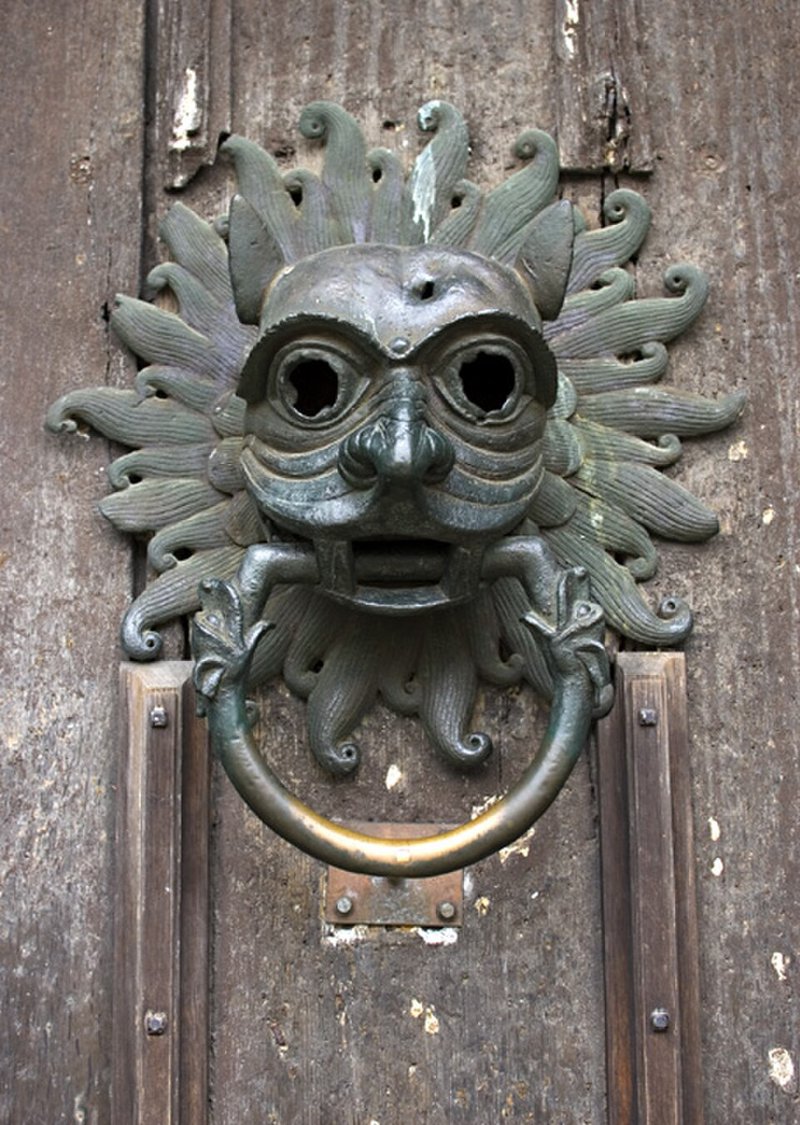
Sanctuary Knocker, Durham Cathedral by Paul Harrop, CC BY-SA 2.0 , via Wikimedia CommonsThe legend is found in Bede’s Life of Saint Cuthbert, where he reports that no one could live there in peace until the saint drove them away them from the island.
However, it is in the Life of Bartholomew, a twelfth century hermit, we find the most detailed description “clad in cowls and riding upon goats, black in complexion, short in stature, their countenances most hideous, their heads long, the appearance of the whole troop horrible. Like soldiers they brandished in their hands lances, which they darted after the fashion of war.” Following their eventual banishment, the demons went to the neighbouring islands of East & West Wideopens but were restrained and fenced in with the sign of the cross.
Theories posit the ‘devils’ are in fact descendants of early settlers or aboriginal folk cut off from the mainland; insular dwarfism is actually a recognised phenomenon. Unlikely though, as the islands are only 2 to 5 miles from the mainland.
Grace Darling is also said to haunt the islands, presumably as a supernatural warning of impending storms. I guess.
The Hilbres
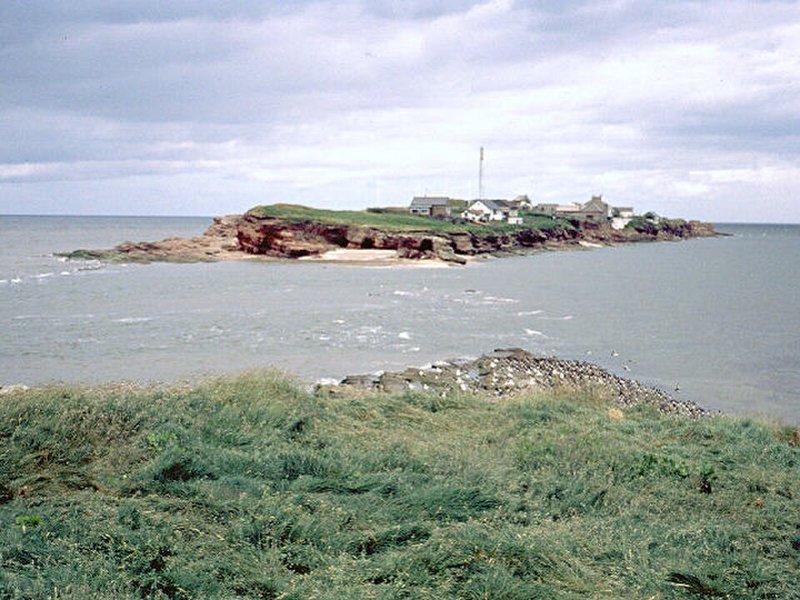
Peter Craine / Hilbre Islands at high tideThe ‘Charybdis’ of the Wirral (Merseyside)? Apparently so...
This from The Wirral Globe (February 2025)
In 1149 AD, there is a mention of a strange monster living in the sea off Hilbre Island, which manifested itself as a maelstrom or vortex, sucking people and ships towards their doom. Tales of the giant whirlpool are now thought to be exaggerated folklore, but interestingly, there have been a number of reports of a strange whirlpool in the vicinity of Hilbre Island over the years. In particular, in the summer of 1972, the Wheeler family from Frankby were enjoying a day out at Hilbre Island.
They relaxed in the sunshine and total tranquillity as they walked along the coast, collecting shells and so on, when ten-year-old David Wheeler drew his father’s attention to a strange sight. About 200 yards offshore, a vigorous whirlpool could be seen. It seemed to be very powerful and was moving northwards, heading inshore. The family became concerned when they realised that a couple, bobbing about on the waves in a rubber dinghy, were about to be caught up in the looming whirlpool. They were rowing frantically to escape, but the strength of the whirlpool was too great to resist. In desperation, they dived from the dinghy and swam desperately towards the shore. Within seconds, the whirlpool had swallowed up the dinghy, which then spiralled downwards, deep beneath the waves. Mr Wheeler was deeply disturbed by the sight. He grabbed his son and younger daughter by the hand, and the family quickly made their way south to get as far away from the destructive whirlpool as possible.
Also...
13-year-old Susan Rogers, who visited Hilbre Island in the winter of 1954 with her 18-year-old cousin, Tina Jones. Susan had a row with Tina on the island and ran off to hide. Tina searched for her cousin, calling out and warning that the tide would soon be coming in, cutting off the island from the mainland. Susan sulked into the "Ladies' Cave" on the island as the rain-laden skies darkened. She was gazing out from the cave when she heard a rattling sound. Something touched her bare ankle. She looked down and saw what appeared to be a dark brown length of cane covered in bristles, quivering between her sandals. She spun around in fright and saw something horrifying. A huge crustacean-like creature, about four feet high and six feet wide, stood on four — perhaps even six —jointed legs. It was grey and clad in segmented shells. The most frightening thing about it was its pair of huge, blood-red eyes. Susan almost fainted with fear. The "bristled cane" prodding at her was one of two antennae attached to the head of the monstrosity. Its mouth opened and closed with a rattling sound, and its legs clicked as it lunged forward. Susan leaped from the cave mouth and landed on the rocks below with a sprained ankle. She still couldn't scream, and almost blacked out twice as she scrambled across the beach, because she could hear the rattling sound in the distance. Tina found her in a sorry state on all fours, and shuddered when Susan told her about the thing' in the cave. The unknown shelled creature was allegedly seen on several more occasions at Hilbre Island in the 1960s, and there is even one report of a similar creature being washed ashore on Parkgate Promenade during a fierce storm in the late 1940s.
Drake’s Island
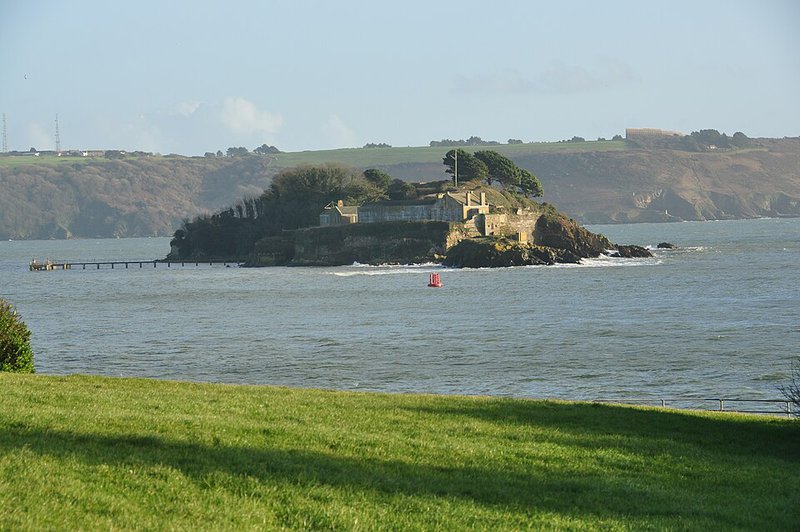
Nilfanion, CC BY-SA 4.0 , via Wikimedia Commons6.5 acre Drake's Island lies 500 metres from land in Plymouth Sound, the waters south of Plymouth in Devon. The island has a long history as a defensive bastion for the naval city.
Yet another White Lady is said to haunt the rock, as well as ghostly sentries and spooky secret army tunnels.
Burgh Island
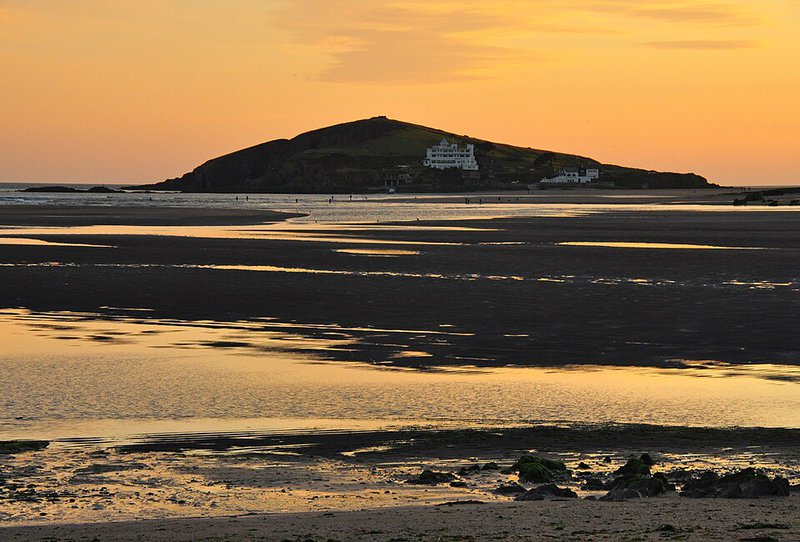
Nilfanion, CC BY-SA 3.0 , via Wikimedia CommonsBurgh Island is a small 26 acre tidal island on the coast of South Devon, with 12 residents, who look after the Art Deco Burgh Island Hotel and the Pilchard Inn, parts of which date to the 14th century. Agatha Christie used the island and its hotel as a setting and inspiration for And Then There Were None (1939) and Evil Under the Sun (1941).
In 1395 Robin Hood-esque smuggler-pirate Tom Crocker reportedly died from illness or was shot in the Pilchard Inn and haunts the pub; Tom Crocker Day is celebrated annually on August 14th. His restless shade roams Burgh Island, searching for lost treasure. Apparently.
Burgh Island (1964)
Lundy
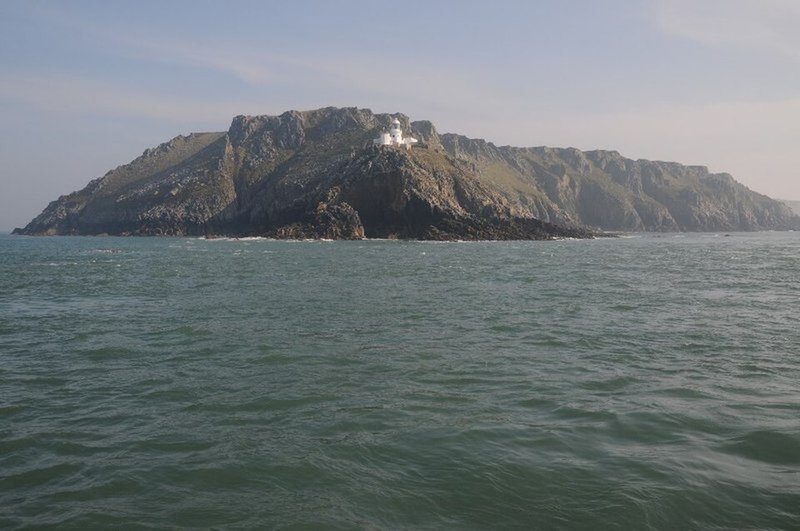
North West Point, Lundy Island by Philip Halling, CC BY-SA 2.0, via Wikimedia CommonsOnce amazingly the lair of North Africa Barbary Pirates, this 1+3⁄4 square mile island in the Bristol Channel is often shrouded by fog and has been the scene of many shipwrecks. Lundy has a storied and often violent history, dating back to the Mesolithic period.
Around 25 to 30 people live permanently on Lundy, consisting primarily of staff and volunteers employed by the Landmark Trust to manage the island's services, properties, and farm.
Supernatural phenomena on Lundy includes The Old Light: a decommissioned lighthouse is a focal point for paranormal occurrences, linked to past lighthouse keepers and their families. Millcombe House: Reports include a ghost of a young boy on the stairs. Marisco Tavern: Tales exist of a 19th-century shooting repeating itself and other strange events all reported by staff and visitors. The "White Lady": A spectral woman has been reported wandering the cliffs.
Two immense ‘Giant’s Graves’ were discovered on the island:
"During harvest time in 1851 islanders on Lundy discovered two immense granite coffins, one of them said to have been ten feet long the other eight. When these sarcophagi were opened, the excavators found the skeletons of two eight feet tall humans, seven other skeletons of normal stature and other assorted human bones. Either in the coffins themselves or beside them, sources vary, were found some pale blue stone beads and some fragments of pottery. The date attributed to the beads, and also the graves, is anywhere from Roman times to the 14th century. The beads were apparently sent to Bristol Museum but there seems to be no record of what happened to the human remains."
Lundy was also said to be an entry point to the Celtic underworld.
St Michael’s Mount
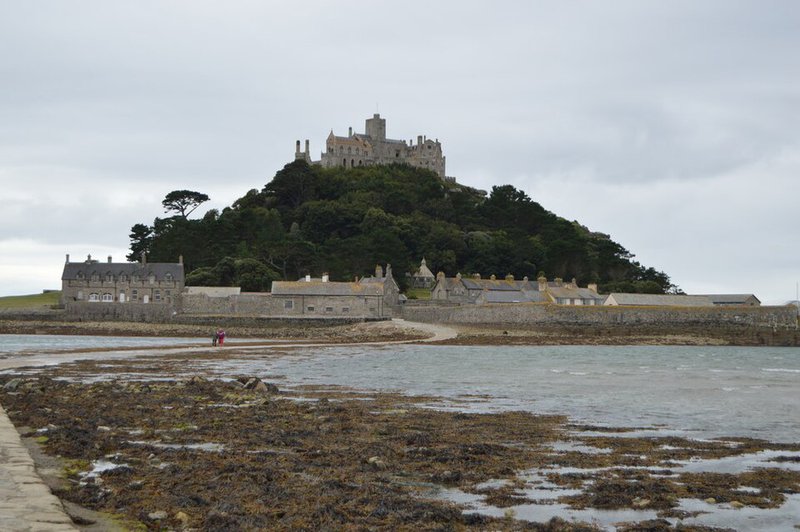
No machine-readable author provided. Wigulf~commonswiki assumed (based on copyright claims)., CC BY-SA 3.0 , via Wikimedia CommonsThe more modest Cornish sibling of Mont Saint-Michel, St Michael’s Mount has a few spooky tales to tell. The island, long associated with Arthurian legend, also was/is home to the 18ft tall giant Cormoran, who built the rock with white granite from the mainland.
This from Cornwall Live in January 2020:
An amateur photographer claims he shot a haunting image of a giant shadowy figure heading across from St Michael's Mount towards land. But not many people know that a real skeleton of an exceptionally tall 7ft 8in man was dug up during renovation work in the late 19th century. Russell, 44, who lives in nearby Marazion, said: "I was photographing St Michael's Mount yesterday afternoon at sunset and think I managed to capture an image of the ghost of Cormoran the Giant, who lived on St Michael's Mount many years ago, heading to land from the Mount. "He terrorised the inhabitants and the villagers of Marazion, until he was slain by a boy called Jack, who then became Jack the Giant killer so the story goes." Visitors to the castle will also see Cormoran’s heart set in stone among the cobbles on the long climb up the path.
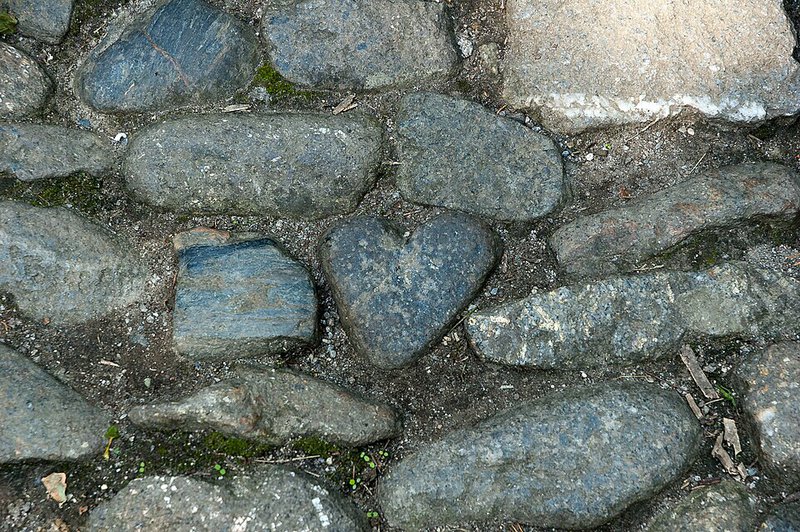
St. Michael's Mount - The Giant's heart in the cobbled path by Chris Gorringe, CC BY-SA 2.0 , via Wikimedia CommonsA Lady in Grey also supposedly haunts the Mount, but in a purely benign fashion.
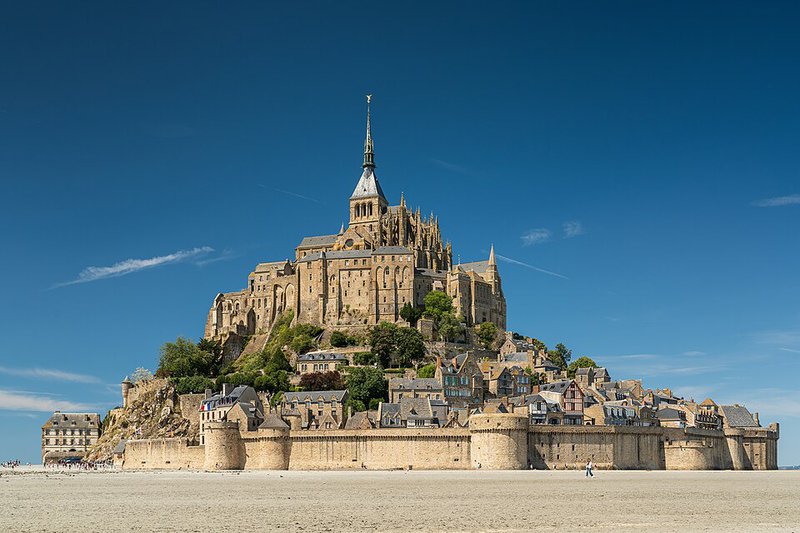
Lynx1211, CC BY-SA 4.0 , via WikimediaKent’s Isles of Sheppey, Thanet and Grain also have their own chilling tales, as does the Isle of Wight (see my PDN investigation below), and the Scilly Isles off the Cornish coast, but they (excepting the Isle of Wight) must wait for another day, some sooner than later.
LINKS
The Third Day: https://www.bbc.co.uk/news/uk-england-essex-54343382
A Ghostly Tale from Canvey Island: https://phoenixfm.com/2013/12/03/a-ghostly-tale-from-canvey-island/
The Roman Soldier who walks the Strood: https://visitmerseaisland.co.uk/do-you-believe-in-ghosts-have-you-heard-about-the-roman-soldier-who-walks-the-strood/
Ray Island and Mysterious Tales: https://visitmerseaisland.co.uk/ray-island-and-mysterious-tales/
Essex landscapes and Ghost Tales: https://thehistorypress.co.uk/article/essex-landscapes-and-ghost-tales/
Lindisfarne Legends: St Cuthbert, Ghostly Monks and the Petting Stone: https://www.icysedgwick.com/lindisfarne-legends/
Drake’s Island: https://drakes-island.com/paranormal-ghost-events
Burgh Island: https://www.devonlive.com/news/history/smugglers-ghost-haunts-devon-holiday-7218630
The Hilbre Island Thing: https://www.wirralglobe.co.uk/news/24954115.tom-slemens-haunted-wirral-hilbre-island-thing/
The Farne Island Devils: https://random-times.com/2021/02/03/the-strange-story-of-the-farne-island-devils/
Lundy: https://uk.news.yahoo.com/mysterious-devon-island-dark-history-030000553.html
Lundy Giant's Graves: https://www.lundyisleofavalon.co.uk/lundy/giantsgraves.htm
Prehistoric Lundy: https://www.landmarktrust.org.uk/lundyisland/discovering-lundy/history/prehistoric1/
The Paranormal Database - Northumberland: https://www.paranormaldatabase.com/northumberland/nhumdata.php?pageNum_paradata=3
This desolate English path has killed more than 100 people: https://www.bbc.co.uk/travel/article/20170110-why-the-broomway-is-the-most-dangerous-path-in-britain
STEPHEN ARNELL’S HISTORICAL WHODUNNIT ‘THE GREAT ONE’ IS AVAILABLE ON AMAZON KINDLE:
SAMPLE
n


No comments:
Post a Comment