Showing posts with label England. Show all posts

Monday, 13 July 2026

The Unquiet Spirits of Clacton-on-Sea

​The Essex seaside town of Clacton-on-Sea is a peculiar place; a faded former holiday resort for London’s Cockney underclass, now best known for being the constituency of former (and maybe again, if he is re-elected on August 13th) Reform MP/leader, one Nigel Farage. Two of my articles on Mr Farage are linked below in Additional Reading.

I knew the area fairly well, as both my widowed grandmothers live in the village of Little Clacton, just outside the town. I used to stay with both for a week during the summer holidays as a kid. One of my grandmothers later married a faith healer, who held free surgeries in his consulting room at her bungalow. A decent old cove, he however did say I possessed ‘The Sight’, which was slightly disturbing for an imaginative youngster to hear, but there you go.
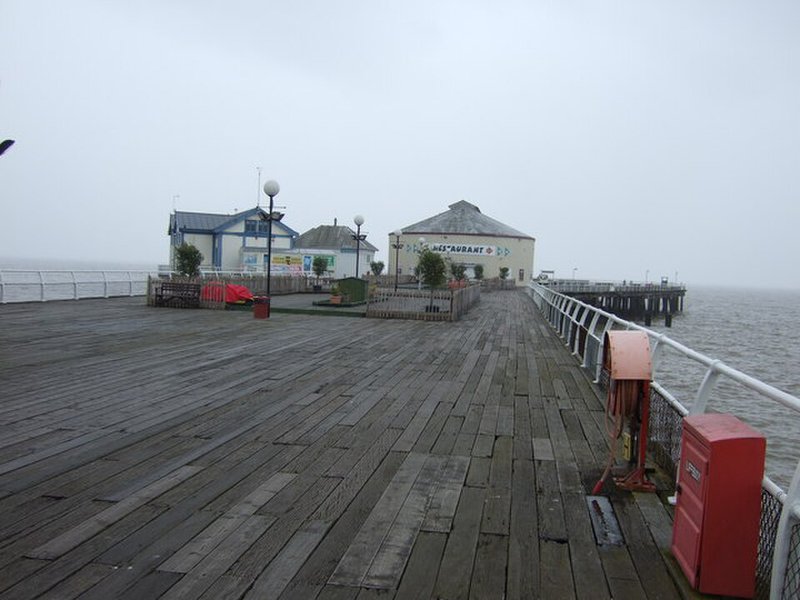
Clacton on Sea
Clacton Pier
​On Clacton Pier by JThomas, CC BY-SA 2.0 , via Wikimedia Commons

Anyway, the area has an interesting history. I was told of smuggling tunnels linking the nearby church of Saint James to the ancient cellars of local pubs The Blacksmith’s Arms, The Ship Inn and The Queen’s Head, presumably as part of a ‘Dr Syn’-style contraband operation organised by the local vicar(s). Other tunnels were rumoured to link the manor house, Giddy Hall, to the coast (unlikely, as it’s around 2.5m away), so the Clacton gentry were also presumably involved in the racket.

From Hidden East Anglia:

​From a genuine event has arisen an odd little legend. In 1806 the Cameron Highlanders were stationed in barracks at nearby Weeley. At the St. James’ Day Fair (on July 26th) a fight broke out outside the Blacksmiths Arms between villagers and some of the soldiers, with some of the latter being chased along the street. A soldier named Alexander McDonald had hurt his foot, and was caught, struck and slain. On the spot where his head hit the road, it was said that a hole appeared which could not be filled, no matter how hard people tried. His gravestone can still be seen in Weeley churchyard, with the inscription “late soldier in the First Battalion 79th Regt who in the prime of life was inhumanly murdered near Little Clacton”.

Little Clacton’s St James Church itself has a macabre history:

Prudence Lambert (1582): Prudence remarried two months after her first husband died in mysterious circumstances. Consumed by guilt, she hanged herself the morning after the wedding. As suicide was considered a grave sin, she was buried in unsanctified ground at the furthest edge of the churchyard. Legend holds this specific corner of the grounds is haunted by her restless spirit.

The Witch Trial Executions (1645): During the notorious Essex Witch Trials, local rector Henry Waite’s wife was executed for witchcraft, despite being said to be extremely pious.

Additionally, other Little Clacton women were accused of using "imps" to carry out their designs, causing long-lasting dark folklore to imprint the parish.

Nearby St Osyth's Priory is steeped in paranormal lore, most famously haunted by the ghost of its namesake, the Saxon Princess Osyth. She wanders the ancient grounds carrying her severed head after being decapitated by Viking raiders in AD 653.
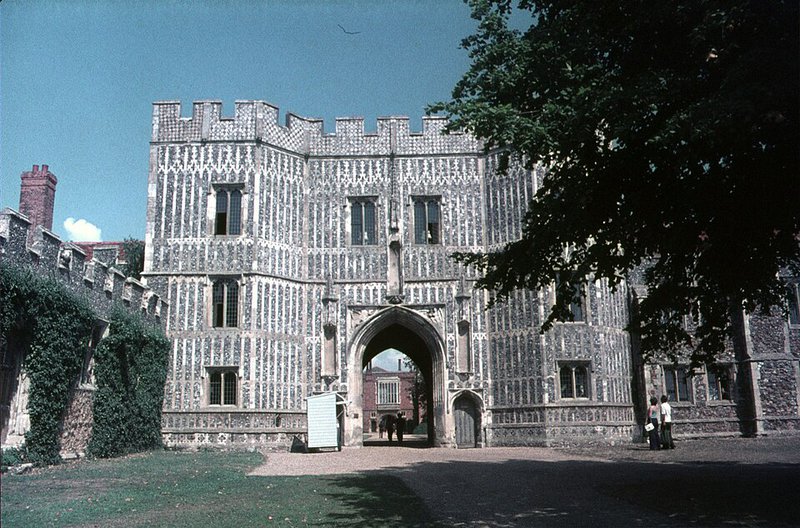
Clacton on Sea
St Osyth’Priory Gatehouse
​St Osyth's Priory Gatehouse by Marathon, CC BY-SA 2.0 , via Wikimedia Commons

Other paranormal sightings at the priory include a hooded white monk and a phantom nun who peers into local windows.

A short distance from the Priory sits a 16th-century cottage known as ‘The Cage’, which once acted as the local prison for accused witches. In 1582, Ursula Kempe and others were detained there before being tried for witchcraft. The Cage has gained modern notoriety as one of the most haunted houses in Britain. Investigations have cited both poltergeist activity (former owners reported being pushed, and CCTV has recorded slamming doors and disembodied voices) and apparitions of shadowy figures and sudden temperature drops.

Clacton itself boasts as variety of supernatural phenomena that continue to defy explanation, including the following:

West Cliff Theatre Tower Road: Both Staff and performers at West Cliff Theatre have spoken of unexplained eerie noises backstage, footfall in empty parts of the building and the feeling that they are not alone after audiences have gone home.

​Wilson House, Leas Road (no longer standing): In the late-twentieth century, a ghostly white lady was said to have been seen by several schoolgirls when this building was a dorm. Sounds of heavy footsteps could also be heard walking along the corridors late at night.

​The Kingscliff Hotel: A woman in old-fashioned clothes has reportedly been seen walking through the corridors then disappearing without trace. Unexplained footsteps, doors opening by themselves and an uneasy feeling when parts of the hotel are empty have also been reported.

​The old ballroom at former Butlin’s holiday camp: Butlin's Clacton was used as a training base when the Second World War broke out. A soldier was supposedly stabbed and killed in a fight which occurred at the ballroom and took to haunting the area. The camp was demolished and the area redeveloped in the mid-1980s; the ghost left at the same time. There are no official police or historical records of a stabbing in the Butlin's ballroom in Clacton during the 1940s.

​St Johns Road: Phantom monks seen drifting along the roads in this area of Clacton.

Clacton Pier: Spooky figures have been seen on Clacton Pier after dark, vanishing as people get closer. Workers have claimed to hear footsteps and unexplained voices when the pier is usually deserted. Probably drunk.

Old Kinema: Local history accounts say a fire was started by a projectionist who perished in the building in a suspected suicide in the 1940s. His damned shade disturbed cinemagoers and staff. The cinema was closed and demolished in early 1962.

Thornbury Road private house: In 2003, after a period of experiencing disembodied footsteps, doors opening and closing and electrical items working independently, the occupier saw the manifestation of a young girl. The occupiers were then dragged across the floor by their ankles and creeped out by the appearance of an evil old crone in the box room bed. I couldn’t find much, if any, supporting evidence.

​Jaywick Martello Tower: Visitors to this defensive tower, constructed to combat Napoleon, have reported hearing footsteps echoing through the empty fort, along with strange voices, and the feeling that someone is watching them. Sudden cold spots have also been reported.

Old Lifeboat House: During the late twentieth century, a shopkeeper who hired a room to store surplus stock reported that items would rearrange themselves overnight.

Private house along St Osyth Road: From 1975 until the building was exorcised in 1978, the family living at the house reported spectral singing, ghostly footsteps, and a wee girl, who all could hear but only their four year old son could see. No online supporting material aside from The Paranormal Database.

St John's Church: Ghostly figures have reportedly been seen strolling through the churchyard, whilst whispers and footsteps are heard when nobody else is nearby. The church dates back to the twelfth century and has inspired local ghost stories for generations. Smugglers apparently used the locale, adding to its unsavoury reputation.

Ghosts of monks, the victims of a homicidal innkeeper, a cavalier, a highwayman, and a man torn apart by a mob have all been reported at what are now the environs of the quaint Treasure Holt Garden Centre.

What Happened To Clacton-On-Sea? A Town Stuck in Time
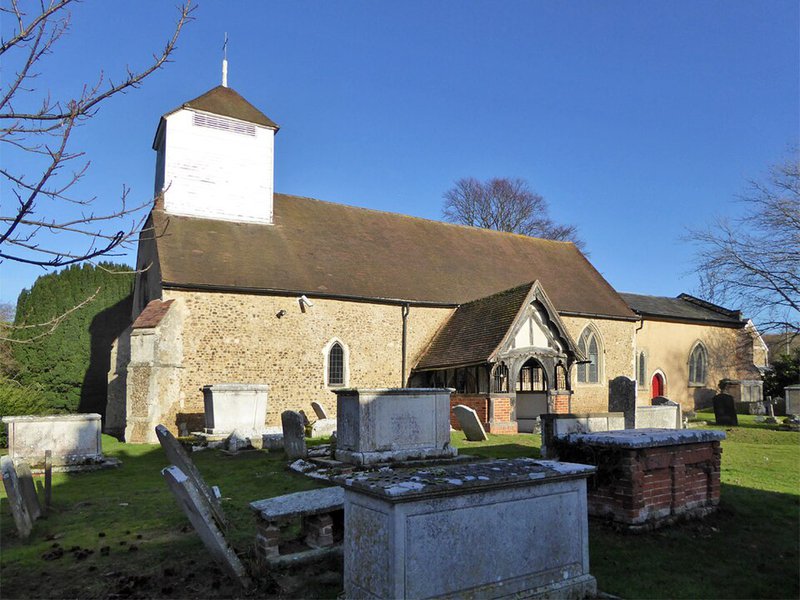
Clacton on Sea
The Parish Church of Saint James, Little Clacton
​Little Clacton church by Robin Webster, CC BY-SA 2.0 , via Wikimedia Commons

Fun Fact: The "Clacton Spear", a Neanderthal yew spear found near Clacton-on-Sea in 1911 is the world's oldest known wooden spear at approximately 420,00-450,000 years of age.

Down by the Seaside by Led Zeppelin

Additional Reading:

Nigel Farage: https://morningstaronline.co.uk/article/nigel-farage-pg-wodehouses-roderick-spode-made-flesh

Before Farage’s 5 million: https://morningstaronline.co.uk/article/farages-ps5-million-short-tour-british-sleaze

Sources include:

​The Paranormal Database: https://www.paranormaldatabase.com/essex/esspages/essedata.php?pageNum_paradata=5

The Guardian: https://www.theguardian.com/money/gallery/2015/jun/05/your-spiritual-home-in-clacton

Haunted Hosts: https://hauntedhosts.com/haunted-places/essex/clacton-on-sea/

Clacton Gazette: https://www.clactonandfrintongazette.co.uk/news/25654622.clacton-group-snaps-photo-ghost-historic-pub/

Clacton Gazette: https://www.clactonandfrintongazette.co.uk/news/1169235.web-exclusive-ghostly-going-on/

The Guardian: https://www.theguardian.com/commentisfree/2026/jul/10/clacton-byelection-nigel-farage-establishment-laurence-fox-reform

Haunted Isles: https://hauntedisles.blogspot.com/2014/10/the-ghost-of-st-osyth-october-haunting.html

Little Clacton Parish Council: https://www.littleclacton-pc.org.uk/little-clacton

St Osyth Museum: https://www.stosythmuseum.co.uk/buildings/the-cage

​The Essex Witch Trials: https://www.eastanglianwitchproject.co.uk/blog/essex1

​The Clacton Spear: https://www.exploringgb.co.uk/blog/the-clacton-spear-oldest-wooden-artefact-ever-found-in-britain

​Treasure Holt Garden Centre: https://www.treasureholt.co.uk/about-us/

Clacton-on-Sea Header image attribution:

​Mark Crombie, Public domain, via Wikimedia Commons

Sunday, 21 June 2026

‘Watch out or Annis'll get you!’ - Who Was Witchy Black Annis?

Black Annis ‘Kali’ - in Leicestershire?

Notwithstanding the large post WWII influx of immigration from the Indian subcontinent, Leicester is not the place that would boast a centuries-old legend of witch ‘Black Annis’, described as possessing the blue features mirroring the Hindu Goddess Kali.

​Black Annis (also called Black Anna or Cat Anna) was said to live in a cave in the now urbanized Dane Hills Housing Estate on the outskirts of Leicester. The first official mention of Black Annis was in 1764, in legal documents referring to an area of land ‘known by the name of Black Anny’s Bower Close’, where she has used her iron claws to dig a cave out of the side of a sandstone cliff.

​By the mouth of the cave grew a pollarded oak in which the witch hid to pounce on local kids. After capture, she sucked them dry of blood and ate their flesh, before draping their flayed skins out to dry on the oak's branches. The old oak tree is also recorded as having stood over the entrance, as was noted by local historian, William Kelly, quoted in The Leicester Mercury back in 1999:

On my last visit to the Bower Close, now several years ago, the trunk of the old tree was then standing, but I know not if it still remains," he said. “At that time, and long previously, the mouth of the cave was closed, but in my school-boy days it was open, and, with two or three companions, I recollect on one occasion snatching a fearful joy, by crawling on our hands and knees into the interior, which was some seven or eight feet long by about four or five feet wide, and having a ledge of rock, for a seat, running along each side.”

“Watch out or Annis'll get you”

Black Annis wore skirts sewn from these skins and also preyed on animals to such an extent, local shepherds blamed any lost sheep on the hag. Generations of Leicester's boys and girls, if either naughty or out after dark, were told, “watch out or Annis'll get you”.

Tales will tell you that when when Black Annis ground her sharp fangs, local people could hear her, giving them just enough time to bolt their doors and to keep away from the window. Cottages in Leicestershire were purposely built with tiny windows so that the witch could only get one withered blue arm inside. According to folklore, when Black Annis screeched, she could be heard from up to 5 miles away. On hearing her howl, villagers would fasten animal skins across the windows and place protective herbs above the sills.

Today, the cave is thought to be in a back garden of a home in Dane Hills, filled in with earth and turfed over - although the deeds to the house reportedly mention the land is named “Black Anna’s Bower Close”.

​An ancient account of Annis was supposedly told by a WWII evacuee to folklorist Ruth Tongue in 1941: Three children were sent out by their wicked step-mother to collect fire-wood. As night descended they feared to see Black Annis who only came out after dark for, it was said, 'daylight would turn her to stone'. They heard a snuffling and, through a hole in their witch-stone, saw Black Annis. Unable to escape her whilst carrying the faggots, they dropped them and ran. Annis bloodied her legs on the bundles and, mumbling and cursing to herself, went to her bower to rub her legs with salve. Then she came back for the children and caught-up with them at their cottage door. Their dad came out with an axe and hit Annis full in the face. She began to run for her cave shouting 'Blood! Blood!' but just then the Christmas bells began to peal and she fell down dead.

Leicestershire poet, John Heyrick Jnr wrote of Black Annis in the 18th century:

“Vast talons, foul with human flesh, there grew In place of hands, and features livid blue Glar'd in her visage; while the obscene waist Warm skins of human victims close embraced.”

B​lack Annis apparently confronted King Richard III on his way to the nearby Battle of Bosworth in 1485 When the King’s spurs struck a stone pillar on Leicester’s Bow Bridge, the crone declared his uncrowned head would hit the post on the way back.

After Richard lost the battle to usurper Henry Tudor, the late king’s bare-assed body was thrown across the saddle of a horse and his head, hanging down as low as the stirrups, hit the very same stone.

A tablet was put on the re-rebuilt bridge in the nineteenth century saying “his head was dashed and broken as a wise-woman had foretold, who before Richard’s going to battle being asked of his success said that where his spur struck his head would be broken”. If it indeed existed, the tablet is no longer there.

black annis
Bow Bridge Richard III Plaque
​Kerry L from London, UK, CC BY-SA 2.0, via Wikimedia Commons

Black Annis and the Blue Boar

Black Annis featured in a Victorian Melodrama called ‘Black Anna’s Bower, or The Maniac of the Dane Hills’ about the murder of the landlady of ‘The Blue Boar’ pub.

Leicester has had a Boar Inn since the Middle Ages; its latest incarnation is a micropub selling craft ales situated down a side street. The original White Boar was a much grander establishment and played host to Richard III as he made his way to Bosworth Field, possibly chosen because the castle was in a ramshackle state and, importantly, the White Boar was also Richard’s personal symbol, or sigil, as called in Game of Thrones.

The King would not sleep in strange beds and so brought his own, and had it set up in the White Boar. When Richard left Leicester, his bed remained, ready for his expected return. This, of course, never happened. After his death, the bed stayed at the re-named Blue Boar, passing from tenant to tenant until it was eventually acquired by Leicestershire Museums Service, where it is today on display at Donington Le Heath Manor House.

In 1604, the tavern’s owner, Mayor’s widow Mrs Clarke was strangled to death because of a hoard of gold coins found hidden in the bed, which had partially funded her late husband’s mayoral campaign. The criminals, Thomas Harrison and Edward Bradshaw, aided by Mrs Clark’s servant, Alice Grimbold, were quickly apprehended and Bradshaw was hanged for his crime in 1605, whilst Alice – found to be an accomplice in the robbery and murder of her mistress – was burnt at the stake for ‘petty treason’. After the murder, the bed became notorious and in 1611, ‘King Richard’s bed-sted I’ Leyster’ was on the list of English sights and exhibitions to be seen for a penny.

The thieves’ 1604 haul was worth between £300-£500. Today, it would have been valued at between $98,853.68- $164,756.14 or £76,000-£126,000.

​Shortly after Agnes Clarke’s death, the new owners and the locals noticed a white, misty apparition that resembled a woman manifesting about the Inn, presumed to be the restless spirit of Agnes Clarke. Agnes’s ghost remained peacefully enough in the Blue Boar until in 1836, when Leicester’s authorities decided the old timber medieval building was out of place in the vibrant new Leicester and demolished it.

The Blue Boar, Leicester
​The Blue Boar, Leicester by Stephen McKay, CC BY-SA 2.0, via Wikimedia Commons

Another Blue Boar Inn was built a few streets away down Southgate Street, an ordinary, everyday tavern that became very popular with the locals. However, the ghost of Agnes Clarke appeared to be haunting the new Blue Boar Inn, becoming a fixture of the pub, that is until 1958 when landlord Fred Mason took over. Mason didn’t believe in ghosts and pooh-poohed the stories, chalking up various accidents he experienced to bad luck and clumsiness.

But when he woke one night to the sight of an eerie white figure moving towards the foot of his bed, Fred Mason instantly became a firm believer in the supernatural. Agnes was apparently happy that the new landlord had acknowledged her and never bothered him again.

By the 1960’s, a post-war desire to modernize Leicester saw much of Southgate Street designated for demolition/redevelopment. By 1965, the Blue Boar was abandoned and boarded up, but Agnes’s ghost remained there in the shell of the pub.

A patrolling policeman paused outside the inn but was suddenly attacked by a volley of stones from the empty building. Doesn’t really sound like Agnes though; more likely to be local yobs. Her spirit never relocated to the other Leicester pubs that have taken up the name of the Blue Boar Inn, but the misty figure of a woman continues to be seen in Leicester’s Southgate.

At the Dane Hills, Easter Monday was also known as Black Monday, an occasion when Leicester’s Mayor and the dignitaries set off for a ‘mock-hare hunt’ at noon. The hare was in fact a dead cat, soaked in aniseed (hence the cat annis?), and tied to the tail of a horse, which dragged it from Bower Bridge, through the town streets to the Mayor’s residence. Charming.

In later years, the hunt gave way to an annual event known as the Dane Hills Fair, which lasted until the 1920s.

Black Annis is still believed to haunt the area of the Church of St. Mary de Castro and Leicester Castle specifically Prince Rupert’s Gate, where she sleeps in the castle cellars, reached from a tunnel in her cave.

Leicester_Castle,_February_2018
​Richard Nevell, CC BY-SA 4.0, via Wikimedia Commons

Black Annis identities theories

Black Annis could be related related to pre-Christian winter goddesses, faces blue with cold, who heralded cold, dissolution and death. She may be a less appealing side to Mother Goddess Anu/Danu worshipped in the cave where she supposedly dwelt. Others posit her being an aspect of Brighid or Brigantia, who took the souls of human children into her care. The Dane Hills [possibly from Danu] being the nexus of her cult. Black Annis may then represent the crone goddess who brings on winter; the dark lady holds the souls of the dead in her cold embrace.

Or

One fifteenth century woman might just be the origin of Black Annis. The Dominican nun Agnes Scott was a religious recluse described as a 'hermit of the forest'. Nearby Swithland village church boasts a brass plaque in her memory and a three foot veiled statue of her. Agnes is surmised to have lived in a cave near the Dane Hills, running a leper colony. The connection between her and Black Annis was made by Robert Graves (1895-1985), writer of I Claudius.

Links

Stephen Arnell’s novel THE GREAT ONE, is available on Amazon Kindle:

Sample:

Wednesday, 20 May 2026

Satan Summoned by Stone? England’s Ancient Demonic Rocks, Lore & Legends

The Devil, Probably?

In England, there’s a plethora of ancient stones associated with the Devil - and in many cases with related lore in how to summon him in. Here are just a few of them.

Ladies and Gentlemen, Boys & Girls, Angels & Imps, I give you... England’s Satanic Stones. This one, a mere 5 minutes by motor vehicle from my abode.

The Devil’s Boot (Soulbury, Buckinghamshire)

Not a summoning place, as such, but worth a mention; a glacial chunk of 300-million-year-old carboniferous limestone deposited from the Peak District some 450,000 years ago. Oliver Cromwell has speechified from it, tanks during WWII tried to dislodge it and boy racers have pranged it, but the Boot abides on its hillside vigil. Come the stroke of midnight and the chime of the bells at Soulbury’s All Saints Church every evening though, the object rolls down the hill to face The Boot Inn public house - and presumably then swiftly returns to its original site. Therein lies a tale. The ‘Boot’ is in fact the Devil’s Hoof, sheared off by irate Soulbury villagers after Old Nick tried to trash the church.

The Blood Stone (Wiltshire)

Near the ancient battlefield of Edington (Alfred the Great vs Guthrum’s Danes, 878 AD) in Wiltshire is The Blood Stone. This from The Witchery Arts:

“One of the smallest and most overlooked of these sites is the Blood Stone, situated in the center of a sheep infested valley between Westbury White Horse Hill and Picket Hill in Bratton, on the edge of Salisbury Plain.

The stone itself is about three feet across, two feet high and a dark, scabby red in colour. It’s said that the stone was one of those used by King Alfred’s men as a block upon which to behead Danish prisoners of war after the Battle of Ethendune of AD 878, which is how it is supposed to have got its particular shade. There are even paired indentations in the surface of the rock, which look uncannily like the marks left by a pair of front teeth.

There is archeological evidence to suggest that it really is an ancient execution site since a large pile of headless skeletons, dated to around that time, were excavated from the nearby watercress beds at the bottom of the valley in the 1970s. The skulls were found a half mile away, buried upside-down, apparently according to the Saxon tradition that if a soul escaped through the top of the head it could be thus trapped into heading straight down into the bowels of the Earth.”

The 'blood stains' are actually Iron Oxide traces. Apparently.

​The Devil's Stone (Kent)

The Devil’s Stone is noted for what appears to be a cloven strange footmark indented in it. The Devil, who so annoyed by the sound of Newington-next-Sittingbourne’s church bells, climbed the steeple with a bag over his shoulder, and nicked them.

As the fiend leapt from the tower, he slipped, and his foot hit the stone, the bells rolling out of the bag and into the nearby Libbet Stream. As a result, the well was said to continuously bubble, and bizarrely, the stone is also said to sparkle when hit. Another version of the legend blames the church wardens, who decided to sell the great bell of the church to pay for the repair of the remaining bells. Under the cover of darkness, the bell was drawn up to the roof of the bell tower in order that it could be lowered from outside. The Devil appeared, and seized it. The church wardens, after seeing that Old Nick had gone, attempted to remove the bell with grappling irons and ropes. At first, they had great success at raising the bell to the surface, but the rope broke and down went the bell! Again, they tried and again they failed. In both versions, a local witch arrived and told them that the only way in which the bell could be raised is by drawing it up by four pure white oxen. This was done, and it was almost raised to the surface until a local urchin, who was passing, shouted out at the top of his voice, 'Look at the black spot behind that bull's ear'. The rope instantly broke, and the bell was lost forever!

The Devil’s Stone in Crook (County Durham)

You must run around it seven times anticlockwise at midnight, sometimes with added, much darker rituals.

​The stone is an erratic glacial, beginning in the Lake District more than 10,000 years ago during the last Ice Age. A glacier moved it 60 miles east and dropped it on the edge of the Durham market town of Crook. It is now made up of three large lumps of igneous rock after someone blew it up looking for a diamond reputed to be hidden inside.

Chanctonbury Ring (Sussex): Run round this prehistoric ring fort three or seven times backward or naked and the devil will appear and offer a bowl of soup or porridge for your soul. Nice deal.

The Witch's Stone (Westleton, Suffolk)

Place a handkerchief or piece of straw in the grating beside the chancel door and (using the Witch’s Stone) as a base – run around the church three or seven times widdershins (or counter-clockwise) without looking at the grating; once back at the Witch’s Stone, the item in the grating will be gone and the eerie rattling of the Devil’s chains can heard from the church crypt. Cool. I guess.

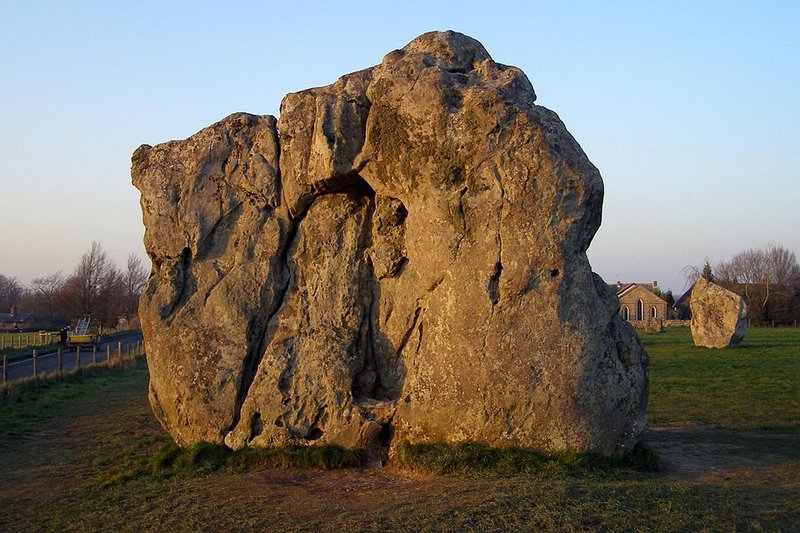
​The Devil's Chair, Avebury (Wiltshire)

devil
The Devil’s Chair
​See page for author, Public domain, via Wikimedia Commons

L​egend says that if you run around this megalithic stone at Avebury Henge one hundred times, the Devil will pop up for a chat.

​In an original ceremony devised by Philip Shallcrass of the British Druid Order in 1993, pagans assemble and divide into two groups, one the God party and the other the Goddess party. Those with the Goddess party go to the Devil's Chair, where a woman representing the spirit guardian of the site is a vessel for the voice of the Goddess.

Avebury in fiction:

​Children of the Stones (1977) - full series

The Devil’s Den (Avebury)

​A dolmen burial chamber, part of a Neolithic passage grave on Fyfield Down.

A local tradition says if water was poured into hollows on the capstone, Satan would come in the night and slurp it. Super.

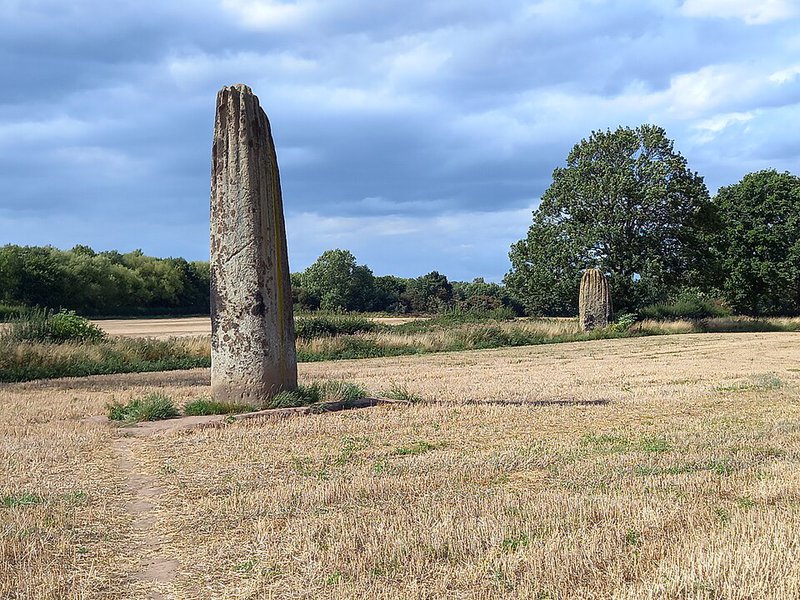
The Devil's Arrows (North Yorkshire)

Two of the Devil's Arrows
​Two of the Devil's Arrows by Gordon Hatton, CC BY-SA 2.0, via Wikimedia Commons

​These millennia-old standing stones in North Yorkshire are the second tallest in the United Kingdom, after the Rudston Monolith.

The common Dark Age belief was that the Devil was shooting or throwing arrows from a neighbouring hill at the Christian settlement of Aldborough nearby, but he fell short of his target. Human sacrifices were supposedly conducted on the top of the stones, where the bodies were left to rot.

​​The Devil's Ring and Finger (Staffordshire)

​Some posit this Neolithic pile as a Druid’s altar within a sacred grove, the circular Ring Stone an altar piece for the Sun God, who represented the power of life, of good, of increase, and the Finger representing the Serpent God, which represented evil and death - in other words Satan, to later inhabitants. The Ring Stone’s porthole, is large enough for a person to climb through, or be passed through, to increase fertility. Or is it a portal to another dimension? Faerie perhaps?

The Devil's Quoits (Oxfordshire)

​The Devil's Quoits are located in Oxfordshire, Neolithic henge and stone circle near the village of Stanton Harcourt. Folklore says the Devil threw large stones from Wytham Hill, some 8 miles away, during a game of quoits with a beggar for his soul. The beggar lost.

In a different version, Satan was actually playing solo on a Sunday and was b*llocked by God for playing games on His Holy Day. Understandably, a frustrated Old Nick threw his huge stones down in a hissy fit at Stanton Harcourt.

Traditionally, the stones were thought to resist being moved; one story tells of a stone moved to make a bridge that would not stay in place. In fact, the henge has been disturbed many times in recent history. The stone circle originally featured 36 stones, some removed during the medieval period (used as building materials); during WWII, the site was levelled for an airfield. More recently, there have been efforts to restore the henge; the remaining stones being re-erected, missing stones replaced with modern blocks, and the earthworks surrounding the circle re-dug between 2002 and 2008. So a tad ersatz then.

The Devil's Stone (Shebbear, Devon)

The stone is rolled over every November 5th to "turn the Devil away" and prevent the next year's crops failing. Also, if the stone is NOT overturned, Satan will the appear. The Shebbear Yeomanry has yet to try leaving the stone unrolled as a test, local parish records show.

​​The Nine Stones, Winterbourne Abbas (Dorset)

These sarsen stones were erected in the Bronze Age; legend claims they were the Devil, his wife, and his children and cannot be counted; others say they had once been children who were turned to stone as punishment for playing ‘Five-Stones’ on a Sunday. A bit severe.

​In 2007, the Dolmen Grove Druids claimed they’ve had to confront individuals hurling abuse at them as they performed their rituals at the Nine Stones.

The Devil’s Toenail (Bedfordshire)

​This Neolithic stone (10,000 to 4,500 BC) marks the spot where the Devil joined some local kids who were defying the sabbath by enjoying a cheeky game of leapfrog. Satan merrily participated in their game, then opened a hole in the ground into which they were cast and never seen again.

20 minutes or so from my dwelling.

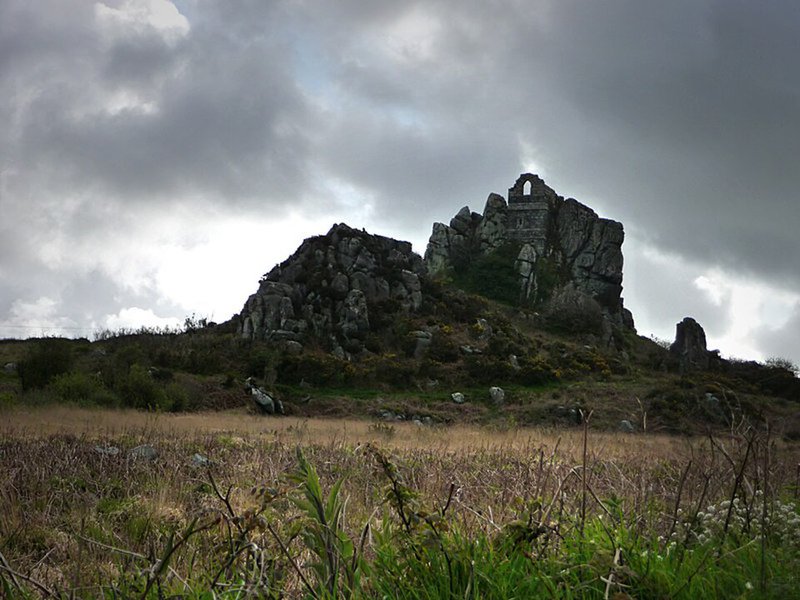
Roche Rock (Cornwall)

devil
Roche Rock
​Roche Rock by Chris Gunns, CC BY-SA 2.0, via Wikimedia Commons

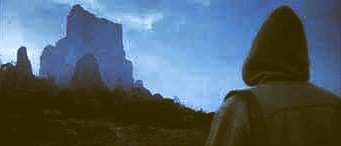
I’ve been to Cornwall’s chapel of St Michael at Roche Rock, mainly I admit from curiosity to see the location for one of the doomed killer monks attempts on Damien’s life in 1981’s Omen III: The Final Conflict than anything else.

The Chapel in Omen III: The Final Conflict (1981)

​Roche Rock features in Cornish myth; the ruined chapel that we see today was built more than 600 years ago in 1409 by the wealthy Tregarrick family. The last resident of Roche Rock is said to have been Sir John Tregarrick who hid himself there for many years after contracting leprosy. His only visitor was his daughter who brought him food and fresh water from a nearby well. 17th century magistrate Jan Tregeagle’s evil spirit was set to roam the wilds of Cornwall pursued by Satan’s demons. Tregeagle sought sanctuary in the chapel’s holy ground, but only managed to get his head stuck in the east window, with his body dangling outside to be welted by the Devil’s eager helpers. On a stormy night you can still hear the howls and tortured screams of cornered Tregeagle on the wind.

​In the time of King Arthur, it was said to have been the base of hermit/holy man Ogrin. Ogrin helped the famous star-crossed lovers Tristan and Isolde in their attempted escape from an enraged King Mark, hiding the couple with him on the rock.

Devil's Chimney (Gloucestershire)

The Devil, cheesed off by the many Christian chapels in the area, took to perching on Leckhampton Hill, mocking and hurling rocks at those who attended church on a Sunday. But the treacherous, turncoat rocks rebelled and drove Satan back beneath the ground, preventing him from harassing the pious villagers any further.

The mass of stones then formed a chimney to hell - as can be seen by tendrils of smoke that waft from the structure at night. Visitors still leave a coin among the stones, to protect them from the wrath of the Devil.

​The Devil's Lapstone (Durham)

The Devil himself offered to help build Durham Cathedral but with the wicked intention of constructing foundations of such crumbly rock, the building would soon collapse, killing anyone inside. Naughty Satan.

Lucifer would fly up and down the length of the River Dene, collecting stones for the cathedral, but one day, his leather apron snapped and the stone within plummeted to earth. The Devil snatched at it, trying to catch it again and again, leaving deep scratches and Satanic blood in the rock. If you ever see the Devil’s Lapstone, take a close look, as you can still see the rents and blood left by The Horned One in his fury.

LINKS:

​The Blood Stone at Luccombe: https://www.gothichorrorstories.com/journal/folk-horror-from-wiltshire-the-blood-stone-at-luccombe-spring-starving-out-the-vikings-at-bratton-camp-the-white-horse-of-westbury-and-the-nature-of-folklore/

​The Devil’s Boulder: https://www.shebbearvillage.co.uk/people/the-devils-stone/

​Soulbury Stone: https://www.bbc.co.uk/news/uk-england-beds-bucks-herts-36024009

​Sitting in The Devil’s Chair: https://marywoodenglandandireland2015.wordpress.com/2015/05/29/sitting-in-the-devils-chair-erasure-of-ancient-culture-and-fear-of-the-other/

​Devil's Toenail: Bedfordshire's frightening version of Stonehenge: https://www.bedfordshirelive.co.uk/news/history/devils-toenail-bedfordshires-frightening-version-5808785

​Ritual Protection Marks & Ritual Practices - The Devil’s Stone: https://ritualprotectionmarks.com/2022/10/31/a-chill-tale-for-halloween-the-legend-of-the-devils-stone/

​The Devil's Den and Fyfield Down: https://www.hiddenwiltshire.com/post/the-devil-s-den-and-fyfield-down

​The Devil in Westleton: The Westleton Witch’s Stone: https://withthefaeries.wordpress.com/2022/11/27/the-devil-in-westleton-the-westleton-witchs-stone/

The British Druid Order: https://web.archive.org/web/20120808075032/http://www.druidry.co.uk/bdocaerabiri.html

​The Devil’s Ring and Finger: https://thehistorydetective.org/2019/02/15/the-devils-ring-and-finger/

​The Devil's Quoits: https://www.darkoxfordshire.co.uk/explore/the-devils-quoits/

​Pagans suffer ritual abuse: https://www.dorsetecho.co.uk/news/1267293.Pagans_suffer_ritual_abuse/

​The Nine Stones of Winterbourne Abbas: https://shows.acast.com/dark-darzet/episodes/the-nine-stones-of-winterbourne-abbas

​Devil's Lapstone: https://www.atlasobscura.com/places/devils-lapstone

​Roche Rock: https://www.cornwalls.co.uk/st-austell/roche-rock

​A tale of rocks and rogues: https://www.boltholeretreats.co.uk/blog/a-tale-of-rocks-and-rogues/#

​Why not visit the enigma of the Devil's chimney: https://www.bbc.co.uk/gloucestershire/content/articles/2005/06/17/devils_chimney_feature.shtml

​A look at devil-lore in Gloucestershire and Oxfordshire: https://www.greatbritishlife.co.uk/magazines/cotswold/24329332.look-devil-lore-gloucestershire-oxfordshire/

STEPHEN ARNELL’S NOVEL THE GREAT ONE IS AVAILABLE ON AMAZON KINDLE NOW:

SAMPLE:

Monday, 6 October 2025

The Vertical Plane Revisited: Inside the Dodleston Messages

Most ghost stories walk familiar ground. Someone complains about a cold draft that has no source, or they glimpse a shadow moving where no person stands, or maybe a staircase groans as if carrying a hidden weight. People nod along because that’s what they expect from such tales. Dodleston messages refused to follow that script. In the 1980s, in that quiet Cheshire village, the haunting skipped the attic and the corridor. It showed up instead on a BBC Micro computer, lines of text glowing in green, as though someone from another century had discovered the keyboard.

Meadow Cottage and the Early Disturbances

​Meadow Cottage looked ordinary enough when Ken Webster and his partner Debbie moved in during the autumn of 1984. It was the kind of place you might picture in a postcard, quiet evenings, steady routines, nothing remarkable at all. Yet the stillness didn’t last. Within weeks, odd disturbances began to chip away at that sense of calm.

​Cans of food were discovered stacked in precarious towers. Chalk lines appeared on the walls with no explanation. They even noticed prints in the dust, shaped like feet but with six toes, not five. Anyone who knew their folklore would have thought straight away of poltergeists, those restless spirits famous for pranks and noise. For a time, that seemed the most sensible answer, but it did not hold for long.

The First Messages

Dodleston Messages

​Among the cottage’s possessions was a BBC Micro Model B computer, a workhorse of the 1980s. One day, Webster found new files saved in its word processor program. No one in the household had written them. Inside were lengthy passages in odd, old-fashioned English.

​The writer introduced himself as “L.W.,” later switching to “Lukas.” He said he was a man of the sixteenth century, living on the same ground where Meadow Cottage now stood. His words were inconsistent, sometimes awkward, yet carried a conviction that suggested a living voice behind them.

​After weeks of exchanges, the writer revealed himself as Thomas Harden. He spoke of tending his garden, of neighbors whose suspicion weighed heavily on him, and of living under the eyes of the sheriff’s men who accused him of witchcraft. His words painted a man torn between learning and faith, watching his back at every turn.

​What startled the Websters most was Harden’s apparent ability to glimpse their world. He once wrote about a photograph of a Jaguar car left on a table, describing it as if it were some bizarre contraption. He commented on furnishings in the cottage, objects he could not possibly have known about if the story were nothing more than a fantasy.

​A Tudor’s Glimpse of the Present

​As the correspondence unfolded, Harden’s curiosity about the modern age grew. He puzzled over light without fire, over warmth in the rooms when no hearth burned, and over food kept in vessels he did not recognize. Things the Websters considered normal read like enchantments to him.

​Harden’s letters showed more than fear; they showed fascination. Once he wrote about Debbie’s clothing in a way that made her seem like a stranger dropped from another world. Modern fabrics and colors appeared otherworldly to him. These descriptions gave the correspondence an almost dreamlike texture, as though the centuries were folding into one another right there in the cottage.

The Arrival of 2109

​Then came a third voice. This one signed itself “2109.” It did not write in Tudor rhythms, nor in warm conversational tones. Instead, the words arrived clipped, abrupt, almost like orders.

​2109 told the Websters that the strange exchange was part of an experiment. They were warned not to interfere, since the balance of events across centuries could be damaged. The notes carried an unnerving authority. Little was revealed about who or what 2109 was, only that “we are watching, we are guiding, we are correcting.”

​Sometimes, 2109 broke into ongoing conversations between Harden and the Websters. The effect was jarring: a Tudor villager begging for reassurance, a modern couple struggling to respond, and a brusque presence from the future interrupting to remind everyone of the rules.

A Dialogue Across Three Centuries

​By then the whole thing had shifted. It was no longer just about a ghost sending odd notes. The dialogue stretched across three fronts: a Tudor man writing in fear, a modern couple trying to keep up, and a cryptic voice from a future century that offered few answers.

​It was not the sort of haunting anyone could have predicted. Instead, it became a conversation stretched across time, entangling three worlds at once.

Dodleston Messages
The Vertical Plane by Ken Webster

The Vertical Plane

​In 1989, Webster set down the account in a book called The Vertical Plane. It introduced readers to a haunting where old-fashioned poltergeist mischief gave way to spectral conversations through a word processor. Harden’s archaic voice, the eerie presence of 2109, and the surreal image of a ghost communicating through a computer made the book unlike anything that had come before.

​The book fascinated its readers, but it did not stay in print. Over time, it slipped into obscurity. Secondhand copies became scarce. Word spread among enthusiasts, and collectors began hunting it down, speaking of it as if it were a rare prize worth chasing.

​Then in 2022, a new edition appeared. The response was immediate. Podcasts devoted episodes to the Dodleston Messages. YouTube channels dramatized the text. Online forums dissected every claim. The story was reborn in an era more accustomed to the idea of digital hauntings.

Support and Skepticism

​Believers pointed to Harden’s language as too convincing to be the work of an amateur. Webster consulted Peter Trinder, a local teacher with a background in English, who supported the authenticity of the phrasing. To those inclined to believe, this seemed like evidence the case was genuine.

Skeptics had plenty to say. They pointed out awkward spellings, clumsy archaisms, and phrases that sounded closer to parody than to Tudor English. A few even noticed that Harden’s sentences echoed Webster’s own style, suggesting the book might be more literary trick than paranormal breakthrough.

​The Society for Psychical Research briefly considered the case but never published a full report. Without their stamp of investigation, the Dodleston Messages remained in the gray zone, unproven, but not dismissed either.

Digital Folklore and Echoes of the Present

​From today’s perspective, the Dodleston case feels ahead of its time. In the 1980s, the thought of a ghost typing into a computer was almost absurd. Now, with artificial intelligence producing convincing text and myths spreading across the internet in hours, the idea does not seem quite so ridiculous.

​Hauntings have always adapted to the tools of their age. Spirits once scratched on walls or knocked on tables. Later, they spoke through radios or appeared in ghost photographs. In Dodleston, they left files on a BBC Micro. In our own age, stories of digital hauntings and uncanny algorithms feel like a continuation of the same pattern.

Dodleston Messages
Second Edition includes additional material and further thoughts by the author, thirty-six years later.

​The Mystery’s Legacy

​By 1986, Webster and Debbie had left Meadow Cottage. Harden’s final message was a farewell. 2109 announced their work was complete. No more files appeared.

​The lack of closure only deepened the fascination. Believers continue to see it as evidence of time-spanning communication. Skeptics continue to treat it as a hoax. And others remain in the middle, seeing it less as proof than as a powerful story about possibility, imagination, and fear.

​Decades later, The Vertical Plane still refuses to fade. The Dodleston Messages endure not because anyone solved them but precisely because they remain unsolved. They remind us that hauntings change shape with the times, that the line between past and present can blur in unexpected ways, and that the strangest stories may not drift from attics or ruined halls at all, but blink into life on the screen of a machine.

​References

​HowStuffWorks. “Did a 16th-Century Ghost Haunt a 1980s Computer in the Dodleston Messages?” Last modified July 2021. https://science.howstuffworks.com/dodleston-messages.htm

​Ruffles, Tom. Ghost Images: Cinema of the Afterlife. Jefferson: McFarland, 2004.

​Society for Psychical Research. “Dodleston Messages.” Case files and reviews, 1985–1989.

​Webster, Ken. The Vertical Plane. London: Grafton/HarperCollins, 1989.

​The Vertical Plane, Second Edition. Norwich: Iris Publishing, 2022.

​Woolley, Matthew. “The Haunted BBC Micro: Revisiting the Dodleston Messages.” Journal of Digital Folklore 12, no. 3 (2019): 44–58.

​YouTube. “The Dodleston Messages Explained.” Posted by Bedtime Stories, March 2023.