Showing posts with label witchcraft. Show all posts

Monday, 13 July 2026

The Unquiet Spirits of Clacton-on-Sea

​The Essex seaside town of Clacton-on-Sea is a peculiar place; a faded former holiday resort for London’s Cockney underclass, now best known for being the constituency of former (and maybe again, if he is re-elected on August 13th) Reform MP/leader, one Nigel Farage. Two of my articles on Mr Farage are linked below in Additional Reading.

I knew the area fairly well, as both my widowed grandmothers live in the village of Little Clacton, just outside the town. I used to stay with both for a week during the summer holidays as a kid. One of my grandmothers later married a faith healer, who held free surgeries in his consulting room at her bungalow. A decent old cove, he however did say I possessed ‘The Sight’, which was slightly disturbing for an imaginative youngster to hear, but there you go.
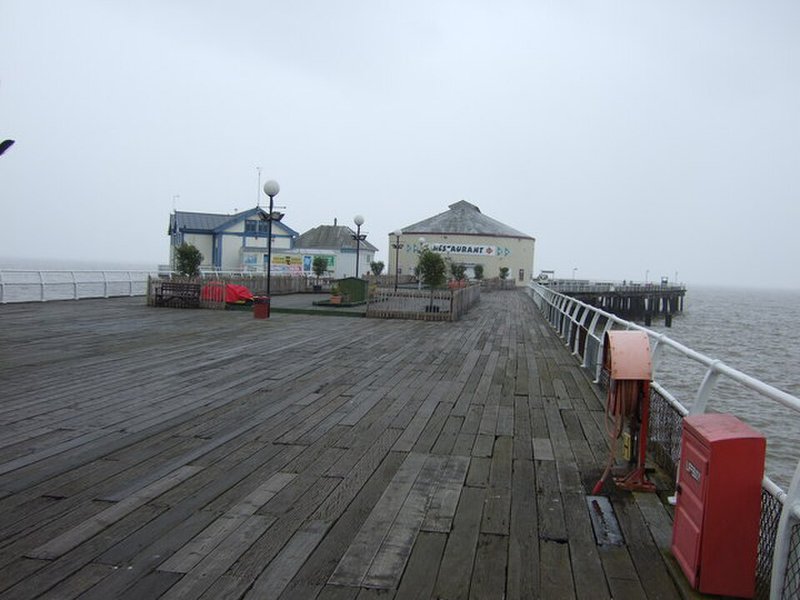
Clacton on Sea
Clacton Pier
​On Clacton Pier by JThomas, CC BY-SA 2.0 , via Wikimedia Commons

Anyway, the area has an interesting history. I was told of smuggling tunnels linking the nearby church of Saint James to the ancient cellars of local pubs The Blacksmith’s Arms, The Ship Inn and The Queen’s Head, presumably as part of a ‘Dr Syn’-style contraband operation organised by the local vicar(s). Other tunnels were rumoured to link the manor house, Giddy Hall, to the coast (unlikely, as it’s around 2.5m away), so the Clacton gentry were also presumably involved in the racket.

From Hidden East Anglia:

​From a genuine event has arisen an odd little legend. In 1806 the Cameron Highlanders were stationed in barracks at nearby Weeley. At the St. James’ Day Fair (on July 26th) a fight broke out outside the Blacksmiths Arms between villagers and some of the soldiers, with some of the latter being chased along the street. A soldier named Alexander McDonald had hurt his foot, and was caught, struck and slain. On the spot where his head hit the road, it was said that a hole appeared which could not be filled, no matter how hard people tried. His gravestone can still be seen in Weeley churchyard, with the inscription “late soldier in the First Battalion 79th Regt who in the prime of life was inhumanly murdered near Little Clacton”.

Little Clacton’s St James Church itself has a macabre history:

Prudence Lambert (1582): Prudence remarried two months after her first husband died in mysterious circumstances. Consumed by guilt, she hanged herself the morning after the wedding. As suicide was considered a grave sin, she was buried in unsanctified ground at the furthest edge of the churchyard. Legend holds this specific corner of the grounds is haunted by her restless spirit.

The Witch Trial Executions (1645): During the notorious Essex Witch Trials, local rector Henry Waite’s wife was executed for witchcraft, despite being said to be extremely pious.

Additionally, other Little Clacton women were accused of using "imps" to carry out their designs, causing long-lasting dark folklore to imprint the parish.

Nearby St Osyth's Priory is steeped in paranormal lore, most famously haunted by the ghost of its namesake, the Saxon Princess Osyth. She wanders the ancient grounds carrying her severed head after being decapitated by Viking raiders in AD 653.
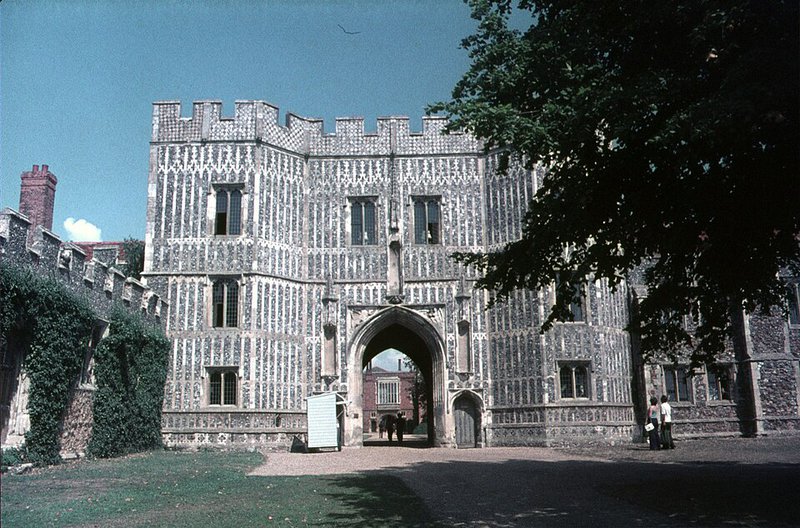
Clacton on Sea
St Osyth’Priory Gatehouse
​St Osyth's Priory Gatehouse by Marathon, CC BY-SA 2.0 , via Wikimedia Commons

Other paranormal sightings at the priory include a hooded white monk and a phantom nun who peers into local windows.

A short distance from the Priory sits a 16th-century cottage known as ‘The Cage’, which once acted as the local prison for accused witches. In 1582, Ursula Kempe and others were detained there before being tried for witchcraft. The Cage has gained modern notoriety as one of the most haunted houses in Britain. Investigations have cited both poltergeist activity (former owners reported being pushed, and CCTV has recorded slamming doors and disembodied voices) and apparitions of shadowy figures and sudden temperature drops.

Clacton itself boasts as variety of supernatural phenomena that continue to defy explanation, including the following:

​West Cliff Theatre Tower Road: Both Staff and performers at West Cliff Theatre have spoken of unexplained eerie noises backstage, footfall in empty parts of the building and the feeling that they are not alone after audiences have gone home.

​Wilson House, Leas Road (no longer standing): In the late-twentieth century, a ghostly white lady was said to have been seen by several schoolgirls when this building was a dorm. Sounds of heavy footsteps could also be heard walking along the corridors late at night.

​The Kingscliff Hotel: A woman in old-fashioned clothes has reportedly been seen walking through the corridors then disappearing without trace. Unexplained footsteps, doors opening by themselves and an uneasy feeling when parts of the hotel are empty have also been reported.

​The old ballroom at former Butlin’s holiday camp: Butlin's Clacton was used as a training base when the Second World War broke out. A soldier was supposedly stabbed and killed in a fight which occurred at the ballroom and took to haunting the area. The camp was demolished and the area redeveloped in the mid-1980s; the ghost left at the same time. There are no official police or historical records of a stabbing in the Butlin's ballroom in Clacton during the 1940s.

​St Johns Road: Phantom monks seen drifting along the roads in this area of Clacton.

​Clacton Pier: Spooky figures have been seen on Clacton Pier after dark, vanishing as people get closer. Workers have claimed to hear footsteps and unexplained voices when the pier is usually deserted. Probably drunk.

Old Kinema: Local history accounts say a fire was started by a projectionist who perished in the building in a suspected suicide in the 1940s. His damned shade disturbed cinemagoers and staff. The cinema was closed and demolished in early 1962.

Thornbury Road private house: In 2003, after a period of experiencing disembodied footsteps, doors opening and closing and electrical items working independently, the occupier saw the manifestation of a young girl. The occupiers were then dragged across the floor by their ankles and creeped out by the appearance of an evil old crone in the box room bed. I couldn’t find much, if any, supporting evidence.

​Jaywick Martello Tower: Visitors to this defensive tower, constructed to combat Napoleon, have reported hearing footsteps echoing through the empty fort, along with strange voices, and the feeling that someone is watching them. Sudden cold spots have also been reported.

Old Lifeboat House: During the late twentieth century, a shopkeeper who hired a room to store surplus stock reported that items would rearrange themselves overnight.

Private house along St Osyth Road: From 1975 until the building was exorcised in 1978, the family living at the house reported spectral singing, ghostly footsteps, and a wee girl, who all could hear but only their four year old son could see. No online supporting material aside from The Paranormal Database.

St John's Church: Ghostly figures have reportedly been seen strolling through the churchyard, whilst whispers and footsteps are heard when nobody else is nearby. The church dates back to the twelfth century and has inspired local ghost stories for generations. Smugglers apparently used the locale, adding to its unsavoury reputation.

Ghosts of monks, the victims of a homicidal innkeeper, a cavalier, a highwayman, and a man torn apart by a mob have all been reported at what are now the environs of the quaint Treasure Holt Garden Centre.

​What Happened To Clacton-On-Sea? A Town Stuck in Time
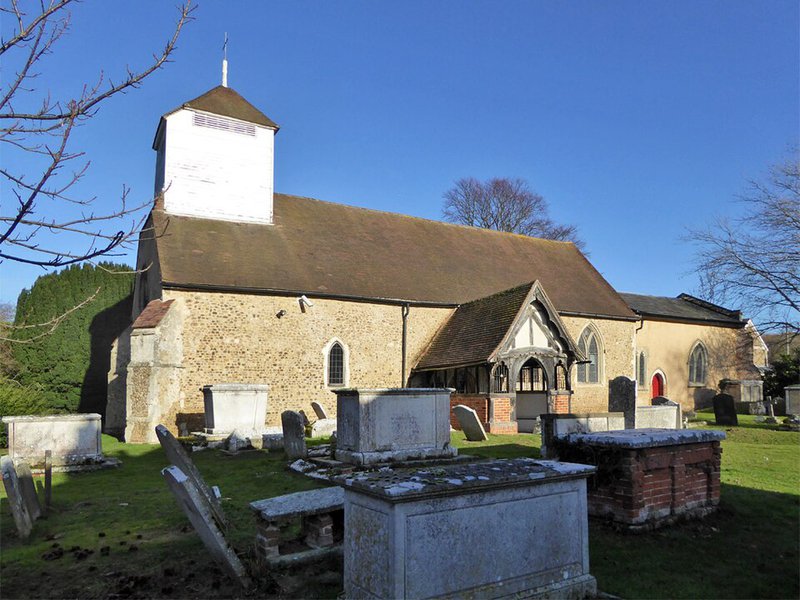
Clacton on Sea
The Parish Church of Saint James, Little Clacton
​Little Clacton church by Robin Webster, CC BY-SA 2.0 , via Wikimedia Commons

​Fun Fact: The "Clacton Spear", a Neanderthal yew spear found near Clacton-on-Sea in 1911 is the world's oldest known wooden spear at approximately 420,00-450,000 years of age.

Down by the Seaside by Led Zeppelin

Additional Reading:

Nigel Farage: https://morningstaronline.co.uk/article/nigel-farage-pg-wodehouses-roderick-spode-made-flesh

Before Farage’s 5 million: https://morningstaronline.co.uk/article/farages-ps5-million-short-tour-british-sleaze

Sources include:

​The Paranormal Database: https://www.paranormaldatabase.com/essex/esspages/essedata.php?pageNum_paradata=5

The Guardian: https://www.theguardian.com/money/gallery/2015/jun/05/your-spiritual-home-in-clacton

Haunted Hosts: https://hauntedhosts.com/haunted-places/essex/clacton-on-sea/

Clacton Gazette: https://www.clactonandfrintongazette.co.uk/news/25654622.clacton-group-snaps-photo-ghost-historic-pub/

Clacton Gazette: https://www.clactonandfrintongazette.co.uk/news/1169235.web-exclusive-ghostly-going-on/

The Guardian: https://www.theguardian.com/commentisfree/2026/jul/10/clacton-byelection-nigel-farage-establishment-laurence-fox-reform

Haunted Isles: https://hauntedisles.blogspot.com/2014/10/the-ghost-of-st-osyth-october-haunting.html

Little Clacton Parish Council: https://www.littleclacton-pc.org.uk/little-clacton

St Osyth Museum: https://www.stosythmuseum.co.uk/buildings/the-cage

​The Essex Witch Trials: https://www.eastanglianwitchproject.co.uk/blog/essex1

​The Clacton Spear: https://www.exploringgb.co.uk/blog/the-clacton-spear-oldest-wooden-artefact-ever-found-in-britain

​Treasure Holt Garden Centre: https://www.treasureholt.co.uk/about-us/

Clacton-on-Sea Header image attribution:

​Mark Crombie, Public domain, via Wikimedia Commons

Thursday, 18 June 2026

When Supernatural Monsters Like Vampires Stopped to Count

The Forgotten Folklore of Seeds, Salt, and Supernatural Weaknesses

Many supernatural monsters in folklore were believed to possess strange weaknesses. From vampires and witches to troublesome spirits and fairies, stories from around the world describe creatures that could be distracted or delayed by seeds, grains, salt, and other curious objects. These unusual beliefs reveal a lesser-known side of traditional monster folklore.

​A Strange Detail That Wouldn't Go Away

The first reference occupied no more than a few lines.

I nearly skipped past it.

A vampire. A handful of seeds. And a suggestion that the creature would stop to count them.

That was all.

I made a note and carried on with whatever I had originally been researching. Folklore collections are full of odd details. Most turn out to be local curiosities that never seem to appear anywhere else.

At least, that is what I assumed.

Then the same idea surfaced in another source.

Not exactly the same story. Not even the same country.

But close enough.

A supernatural being confronted with a collection of small objects and somehow compelled to count them.

I started keeping notes.

Finding examples was not as straightforward as I expected. Many references were brief. Others appeared almost in passing, tucked away among discussions of completely different subjects. Still, the list slowly grew.

The subject of Vampires and their behavior drifted into the background for a while until recently, when I attended a talk on vampire folklore and the sometimes surprising measures communities once used to protect themselves from suspected vampires.

The old note came back to mind.

So did the seeds.

The Supernatural Monster Who Had To Count

Today there is a word for an obsessive need to count.

Arithmomania

The term belongs to modern psychology rather than folklore, but it provides a convenient label for something that appears surprisingly often in traditional stories.

The details vary.

The creatures vary.

Yet the basic idea remains remarkably consistent.

Present certain supernatural beings with enough objects to count and they become distracted from whatever they were doing.

For a modern reader, it feels like an odd weakness.

For the people who preserved these stories, it was often a useful one.

Salt appeared frequently in protective folklore. Beyond its practical value, scattered grains could also become a challenge for troublesome spirits and other supernatural visitors.

supernatural monsters: Vampires
In parts of Eastern Europe, poppy seeds and other grains were sometimes scattered to distract vampires, buying precious time until dawn.

A Handful of Seeds and a Vampire

The clearest examples tend to involve vampires.

Across parts of Eastern Europe, particularly within Slavic traditions, seeds were sometimes associated with protection against the undead. Poppy seeds appear frequently, although millet and other grains can also be found in the stories.

The reasoning was simple.

Scatter enough seeds and the vampire begins counting.

One grain.

Then the next.

Then another.

And another.

It is not how most of us picture a vampire.

Popular culture has given us elegant aristocrats, dark castles, flowing capes, and dramatic confrontations.

Traditional folklore could be much stranger.

The vampire remained dangerous, but it also seemed constrained by peculiar rules. In some stories, seeds were scattered over graves suspected of harboring the restless dead. In others, they might be thrown behind a fleeing traveler.

The goal was not necessarily victory.

A delay could be enough.

A few minutes might help somebody reach shelter.

A few hours might carry the night toward dawn.

And dawn was often the thing a vampire feared most.

Nets, Knots, and Other Problems

The more examples I found, the more often another object appeared.

Fishing nets.

At first they seem unrelated.

Then the connection becomes obvious.

A net contains countless openings.

According to some traditions, a supernatural intruder confronted by a fishing net would become occupied counting every gap before proceeding.

Similar ideas appear elsewhere.

  • Knots.
  • Threads.
  • Tangled cords.

Sometimes the creature is counting. Sometimes it is untangling. Sometimes it is simply trapped in an endless repetitive task.

The details change.

The principle remains familiar.

Keep the creature busy.

Let time do the rest.


Witches at the Threshold

The same motif appears in traditions concerning witches.

In parts of Italy, sieves and colanders occasionally acquired a protective role. Left near a doorway or entrance, they supposedly forced a witch to stop and count the many holes before entering.

  • Every hole mattered.
  • Every hole had to be counted.
  • By then, the night might be nearly over.

As with much folklore, it is difficult to know how literally such stories were taken. What matters is that the idea survived.

Versions of the belief later appeared in parts of Appalachia after European traditions crossed the Atlantic. Details shifted from place to place, but the central theme remained recognizable.

The witch encounters something that demands counting.

The counting becomes the trap.

According to some traditions, witches could be delayed by objects containing numerous holes, such as sieves or colanders, forcing them to count until sunrise.

Fairies Were Not Always Friendly

The fairies found in older folklore can be surprisingly unpleasant.

Many were blamed for spoiled milk, missing household items, frightened livestock, and various forms of everyday mischief.

People responded accordingly.

In several traditions, grains, flax seeds, or salt could be scattered around places frequented by troublesome spirits. The being would supposedly become occupied counting rather than causing trouble.

One note in particular caught my attention.

It concerned a mischievous spirit from Spain known as the Trasgu.

Descriptions vary from region to region, but the creature is usually portrayed as an energetic household nuisance. It moves objects, creates disorder, and generally makes life difficult for the people sharing its home.

One recurring detail is especially curious.

The Trasgu is often described as having holes in its hands.

As a result, small objects slip through its fingers. Certain tasks become impossible to complete.

Stories frequently place the spirit in situations where this weakness works against it. It is assigned impossible jobs, repetitive tasks, or challenges involving tiny objects that continually escape its grasp.

The result is less a confrontation than an exercise in frustration.

Why Salt Appears Everywhere

At a certain point I began noticing another recurring feature.

Salt.

It turns up repeatedly in folklore.

  • On thresholds.
  • Across windowsills.
  • Around doorways.
  • Within protective rituals.

That probably should not be surprising.

For most of human history, salt was far more valuable than many of us appreciate today. It preserved food, supported trade networks, and helped communities survive difficult seasons.

People depended on it.

Folklore tends to attach meaning to things that matter.

Salt also appeared to resist corruption. Food preserved with salt lasted longer. Decay slowed. Spoilage could be delayed.

Then there is the counting element.

Unlike a stone or a piece of iron, salt can be scattered into thousands of individual grains.

A protective substance.

A symbolic purifier.

And, according to some traditions, a counting challenge.

All in the same handful.

supernatural monsters
Salt appeared frequently in protective folklore. Beyond its practical value, scattered grains could also become a challenge for troublesome spirits and other supernatural visitors.

More Than Just Superstition

A bag of seeds is a curious thing to carry as protection.

Yet the idea appears often enough that it must have appealed to people for a reason.

The stories may differ, but they all arrive at roughly the same place.

The creature can be delayed.

The night can be bought a little time.

That is what interests me most.

Not whether vampires counted poppy seeds.

Not whether witches paused outside a doorway to count holes in a sieve.

But the way these stories impose rules on something frightening.

The supernatural threat remains dangerous.

Yet it becomes predictable.

A weakness exists.

A loophole can be found.

Sometimes that loophole is nothing more than a handful of seeds dropped onto a dark road.

The Last Grain

I originally assumed the reference was a local oddity.

It turned out not to be.

  • A vampire distracted by seeds.
  • A witch counting holes in a sieve.
  • A troublesome spirit trapped by an impossible task.

The stories are separated by geography, language, and centuries.

Yet somehow they arrive at the same strange conclusion.

Give a monster enough things to count and, for a while at least, it may leave you alone.

Today most people know vampires through novels, movies, and television. They recognize the fangs, the coffins, and the dramatic entrances.

Few remember the seeds.

Yet the seeds remained in the stories long after many other details changed.

That, perhaps, is worth counting.


Further Reading

Briggs, Katharine. An Encyclopedia of Fairies

Dundes, Alan (ed.). The Vampire: A Casebook

Guiley, Rosemary Ellen. The Encyclopedia of Vampires, Werewolves, and Other Monsters

Kligman, Gail. The Wedding of the Dead: Ritual, Poetics, and Popular Culture in Transylvania

Simpson, Jacqueline and Steve Roud. A Dictionary of English Folklore

Summers, Montague. The Vampire in Europe

Westwood, Jennifer and Jacqueline Simpson. The Lore of the Land

Tuesday, 21 October 2025

Witchcraft, Shapeshifting And Familiars

Humans have always had a powerful desire to learn what the future holds and, if possible, control it. As early as prehistory, people developed any number of practices and associated beliefs to try to accomplish this. People have employed various types of divination, oracular consultations, witchcraft, and the use of witch familiars throughout time to attempt to discern and influence the future.

The custom of observing animal or bird behavior as omens or indications of things to come is ancient. This practice in the British Isles is at least as old as Druidic times. But observation itself is limited to gathering information. The next logical step is to attempt some sort of control. Here is where the notion of the familiar is born. If a falconer trains a bird to hunt and return to the glove, why couldn’t a witch command an animal to do his or her bidding?

witchcraft and familiars

Accused witches, like most people, lived with pets. Once a person was suspected of witchcraft, the accusers stigmatized this pet as a ‘familiar’ (also known sometimes as an ‘imp’) and believed it to be able to assist the witch in the practice of witchcraft. People suspected that many small animals, which could live in a household, were familiars. Witch trial transcripts in Britain as early as 1566 cite cats, dogs, rats, mice, toads, moles, rabbits, ferrets, and even insects as familiars.

Familiars - Cats and the Devil

Cats have been common household pets for hundreds of years. Accusers understandably often suspected them of being familiars. Although several other animals could be familiars, people most often associated cats with witches. Some people believed that witches were able to turn themselves into cats. Other people believed a witch had the power to command her cat to cast curses or to spy or inflict other mischief on her behalf. Still others believed the cat belonged to the devil, to whom the witch had pledged her soul, and that the devil could use it to cause evil. People also sometimes believed familiars to be minor demonic spirits that took the shape of cats or other animals and could assist the witch in evil doing.

In a famous witch trial headed by King James himself, Agnes Sampson was tortured and executed as a witch in Scotland in 1591. King James suspected that his fiancĂ©, Anne of Denmark, had been unable to reach Scotland by boat due to storms caused by curses. After torture, Agnes Sampson confessed that she and other witches had prevented Anne’s boat from reaching Scotland by throwing bewitched cats into the North Sea. Such were beliefs at the time that no one found this explanation questionable, including the King.

Consider the following story, taken from Witchcraft in England by Christina Hole:

Rutterkin the Cat Familiar

Margaret Flower was employed as a charwoman at Belvoir Castle, where she resided in the servant’s quarters. The Earl of Rutland owned the castle. His heir was his son, Lord Rosse. In early 1618, the Earl terminated her employment with charges that she took things she had no right to and was lax in her duties. Margaret decided to take revenge for her dismissal because she had lost both her residence and income.

cat familiars

Margaret asked for help from her mother, Joan Flower, a reputed witch with a cat familiar called Rutterkin. Joan herself held the Earl of Rutland in low regard as a result of former dealings and was eager to help her daughter in this matter. She instructed Margaret to steal a glove from Lord Rosse and give it to her mother. Joan stroked Rutterkin with the glove, dipped it in boiling water, pricked it and buried it. Subsequently, Lord Rosse fell ill and eventually died.

Trial documents indicate that Joan may have alluded to revenge in conversation with someone. At any event, people discovered their actions, and both mother and daughter were arrested. After torture, Margaret Flower confessed. She was hanged in March 1619. Her mother refused to admit guilt. Instead, she asked for bread and butter, invoking an ancient “test of ordeal” involving a prayer to God that the bread ‘would not go through her’ if she were guilty. Fascinatingly, she choked on the bread and died on the way to jail.

The Witch’s Teat or Devil’s Mark

The story of Margaret Flower is typical of testimonies about familiars given at witch trials in the seventeenth century. The Devil could gift a familiar to a witch. A witch could inherit a familiar. Another witch might gift a familiar to her. People believed the witch would feed the familiar with his or her blood. Either the familiar sucked directly from some part of her body, or she mixed her blood into its food. Evidence of any sort of mark on a witch’s body, often called a ‘witch’s teat’ or a ‘Devil’s mark,’ proved that she fed her familiar with her blood. A ‘witch’s teat’ could be any sort of mole, birthmark, discoloration, skin tag, or other skin anomaly.

Over time, people connected black cats in particular with a witch’s familiar. In the Scottish Highlands people still tell stories of the cat sith (pronounced ‘cot she’), a large black cat (think the size of a dog) with a white patch on its chest. The cat sith has the special ability to slip between our world and the realm of the fairies and sometimes serves as a guardian of the fairy realm. Seventeenth-century Scots took fairies very seriously. People were keen to avoid fairies, since they could trap you underground in their realm or do you other harm. It was best to avoid the cat sith as well, since it might be aiding fairies in their mischief, or was perhaps a kind of fairy itself.

Fairy Darts

Among their other activities, Scots believed that fairies roamed the Scottish countryside in search of sustenance. These fairies used ‘fairy darts’ or ‘elf darts’ to hunt game for food. (Such darts were associated with prehistoric arrowheads found throughout Scotland.) The fairies often used humans as archers for shooting their darts, since humans were stronger than fairies. Fairies were also often in league with witches, who were delighted to become their archers.

One of the most famous of all Scottish witches, Isobel Gowdie, claimed to shoot ‘elf-darts’ in her 1662 trial testimony. Witches such as Isobel could make use of these darts to harm or kill their enemies, which Isobel testified that she had done. Humans who were shot with such a dart and did not immediately bless themselves would sicken and die. Also, witches who followed the fairies in their feasting and processions through the countryside could gain magical benefits. Isobel claimed to have feasted with the fairy king and queen under the local hills.

witchcraft

Whether a fairy, a fairy guardian, a shapeshifting witch, or some other supernatural being, the cat sith lurked in moors and lonely pathways. A wise traveler would avoid such paths, especially at night or in other times of poor visibility. Fairies, with the help of the cat sith , collected human souls. The Highlanders carefully guarded their dead before burial so that the cat sith could not steal their souls before they were able to get to Heaven. The living mourners played games outside the home where their dead were laid out in order to distract the cat sith from going inside. Firelight would attract the cat sith, so mourners avoided lighting fires at all cost.

Shapeshifting Witches

Another common belief was that a witch could transform or shapeshift into her familiar. There were whispers that the cat sith might be a witch who could transform into a cat nine different times before she became stuck in cat form. Might that be why we say a cat has nine lives?

Julian Goodare, in Scottish Witches and Witch Hunters, speaks of Isobel Elliot and Marion Veitch who, in 1678, flew in the shape of bees. Thomas Lindsay, in 1697, confessed that “if he pleased, he could fly in the likeness of a crow.” In Glasgow in 1699, William Scott accused Margaret Duncan, Janet Gentleman, and Marion Ure of appearing in his bedchamber as a sow, a cat and an ape, where they danced around his bedstead. In the same book, Lauren Martin tells of Christian Grintoun, who in 1629 left his house in the shape of a cat.

The belief in shapeshifting is ancient and was once widespread throughout the world. Early cave paintings depict shapeshifting. Similar to the oracular interpretation of animal behavior, belief in shapeshifting has persisted and has been passed down throughout cultures. People associate shapeshifting with shamanism and with magical powers. Though often denied by the learned, in the seventeenth century the majority of ordinary people considered the ability to shapeshift as irrefutable. The idea that witches possessed such powers of transformation seemed self-evident.

Today it seems absurd to our rational minds that these beliefs could have been widespread. Very few people alive now would believe throwing cats into the North Sea could cause storms. Perhaps a few more would believe that people could turn into animals in shamanistic rituals. At the same time, there are a small but significant number of people who feel uncomfortable around black cats, especially at Halloween. Perhaps in some tiny dark corner of our minds, a certain resonance with such suspicions still lingers.


Susan Finkleman is currently working on a historical novel about the Crook of Devon witch trials in 1662. For more stories, please check out her substack (here)

Friday, 18 October 2024

Samhain: A Witch’s Sacred Power Source

samhain
Photographer: freestocks | Source: Unsplash

The Power of Interior Investigation

Today my fiancĂ© asked me how humans could ever get organized enough to fix the many colossal problems in the world. She said that even if substantially sized groups banded together to work on worthy humanitarian causes, she probably wouldn’t trust them. I feel that.

Groups of humans can so quickly become cultish, power-hungry, vapid, and out of touch. An astounding number of the most seemingly heart-centered nonprofits are run by corrupt CEOs who have the same defunct moral compasses as their corporate counterparts. Numerous spiritual collectives swiftly transform into vampiric MLMs, demoralizing pyramid schemes, or divisive churches and cults. Even well-intended creative organizations will cave to the seductive call of late-stage capitalism and sell out their original target mission for a fat check or fast cash.

She followed up her observation with, “So how will we ever get out of this mess we’re in?”

After some marination, a thought emerged:

I don’t think we’re going to get out of this mess and through these discordant evolutionary growing pains via groups, gurus, or mass organizations. At least not at first.

That’s not to say I don’t believe in the power of protests, activist movements, and covens. They are badass and necessary. But I think the central work of this astrological moment is overwhelmingly and surprisingly, solo. For eons, we have traversed the cycles of corruption, wars, and revolution. My intuition (and the ancestors I work with) tell me this time is different.

It feels like there’s some supremely witchy shit on the horizon.

Even within the cacophony of noise in central LA (where I currently live), I can feel it.

The Aquarian Age and the resurgence of feminine power call for surrender, wisdom, and radical interior investigation. That means, this time, the revolution must come from within.

Samhain Harm Ye None

This isn’t a new concept. During the Occupy Wall Street and Women’s March movements, a similar idea was frequently thrown around. And before them, it was popular amidst the waves of activism in the 1960s and 1970s. Both Gandhi’s and Martin Luther King’s movements were driven by the core of this ideology, radical non-violence. Non-violence is a beautiful concept and can be understood intellectually with ease. But to live non-violently in a consistent manner requires cultivated wisdom, empathy, inner compassion, and connectedness. This is far more difficult to achieve and it stems from prioritizing internal change and personal revolution over external change and global revolution.

That much-needed wisdom and reflection come only from that interior investigation. It comes from meditation, communion with nature, shamanic journeys, and/or other healing practices that can trigger the memories of our unfathomable connection to each other, the divine feminine, the sacred Earth and Star spirits, and the original breath of our earliest existence.

The Aquarian Age has valuable messages for us, perhaps the most important among them being the death of guru outside of oneself. This is the point in our collective growth when the bravest among us will let go of the rigidity and pressure of our very civilization and embark on billions of vision quests. One by one.

Only then can we truly evolve.

jack o'lantern
Photographer: David Menidrey | Source: Unsplash

Connections to Samhain

So what does this have to do with Samhain (more commonly known as Halloween)? As the veil between realms gets thinner, as it does every year at this time, we can use this energetic opening to spur our own vision quests. We can celebrate this ancient Celtic festival by turning off our phones, sitting in dark, liminal spaces, and listening for answers from within. There are unseen spirits, guides, and entities all around us, waiting and willing to aid in our spiritual development. Especially during Scorpio season.

Samhain is the Witch’s new year. It marks the end of the harvest season and the beginning of the darkest part of the year, in the northern hemisphere. It is an intrinsically introverted and liminal time, which makes this solo interior work more accessible. The lessons gleaned from deep, meaningful shadow-work, although immensely uncomfortable, can be absorbed more quickly at this time. Because our spirits and ancestors have more access to us, they can powerfully aid in unraveling old and stubborn karmic knots, if we are open and allow.

book open surrounded by lights and leaves
Photographer: Natalia Y | Source: Unsplash

My Witch’s Charge

Identifying as a Witch and practicing the Craft have different meanings for different people. For me being a witch is about three central aspects (I think of them as sides to a sacred triangle):

The first is Bravery (Maiden):

Bravery to face the inner layers of the self.

Bravery to admit both our deepest, ugliest folly and internal power that’s beyond measure.

Bravery to rise against the waves of patriarchy by invoking the Divine Feminine.

Bravery to be resilient in the face of the often excruciating contrast of this binary planet.

Bravery to stay awake enough to refocus on the Magick of love, laughter and compassion.

Bravery to remember the reality that exists beneath all realities.

The second is Power (Mother):

Power in knowing that we co-create uncountable realities, thousands of times each day.

Power in service of the receptive Feminine Spirit that binds us all.

Power in a lineage that we both revere and make manifest, simultaneously.

Power in the sacred act of original creativity (birth).

The third is Wisdom (Crone):

Wisdom of radical compassion especially projected to those who seem not to deserve it.

Wisdom of the ancestors, spirits and entities of all realms, both seen and unseen.

Wisdom of cultivated humility when bestowed with Magickal power.

Wisdom of the elements and cosmos in ritual workings.

Wisdom of Great Grandmother Spirit.

Final Thoughts

So, when October comes around each year, I am reminded of the sacred responsibility of this path. This is our time to journey within and connect with the deepest, truest versions of our sacred selves. If throughout your days you often feel disconnected from a happier, livelier version of yourself, use the power of Samhain to remember who you are.

I am reminded that for us to collectively evolve, I must be brave, powerful and wise enough to look within and listen closely. Only there, in the quiet, innermost crevices of our being, can we conjure the necessary spells to break our subconscious bonds to the outdated, destructive patriarchal beast.

Make no mistake, to be a Witch is to be a warrior.

But, unlike the traditional warriors of the past, we know the real battle is fought within.

On Samhain, when the power is high, and the veil is thin, So Mote It Be.