England’s infamous Clayton Tunnel rail disaster struck on Sunday August 25th 1861, five miles from Brighton on the Sussex coast. A train ran into the back of another inside the tunnel, killing 23 people and injuring 176, the worst ever accident on the British railway system at that time.
At the southern entrance to Clayton Tunnel, an automatic signal failed to return to danger after the first train passed, allowing the second train to follow at speed into the tunnel. The signal-man (named Killick) at the south end of the tunnel waved a red flag in an attempt to stop the second train, but believed it had not been seen. But the driver of the second train actually saw the flag and stopped his train inside the tunnel. The signaller misunderstood a 'line clear' telegraph message from the north end signal box as referring to the second train instead of the first, then signalled a third train into the tunnel. The second train was pushed forward, with the locomotive of the third train destroying the guard's van of the second train before smashing into its last carriage. The third train’s locomotive rode up over the carriage roof and smashed its chimney against the tunnel roof before stopping; most of the 23 deaths were in that carriage, where passengers were burned alive or scalded to death by the shattered engine.
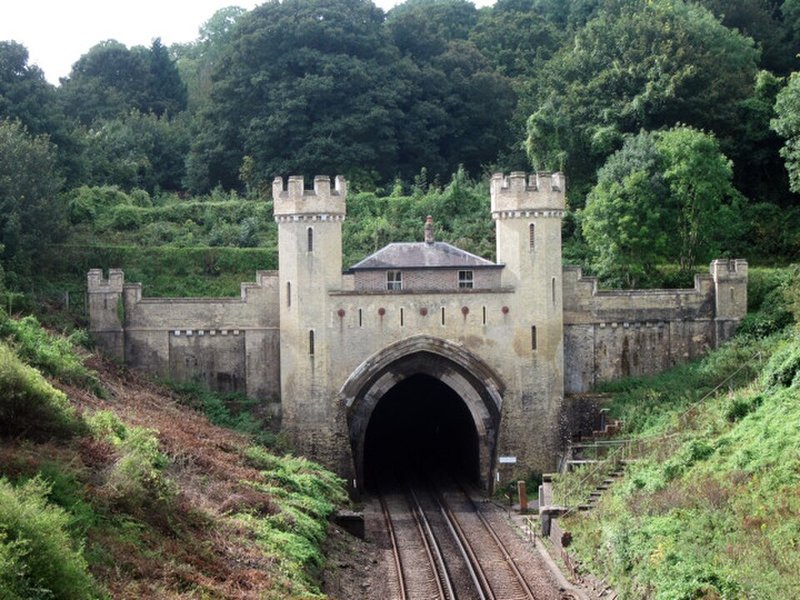
Clayton Tunnel North Portal by Oast House Archive, CC BY-SA 2.0 , via Wikimedia CommonsA nine-day inquest into the deaths concluded that Charles Legg, the assistant stationmaster of Brighton station, was guilty of manslaughter because of his negligence in starting three trains so close together, against company rules. The jury did not find any negligence by either signalman; Legg was committed to trial for manslaughter, but found innocent, despite the earlier inquest.
Signal-man Killick had been working a continuous 24-hour shift that day, instead of the regulation 18 hours, in order have a complete day off duty. A report on the accident stated, "it was disgraceful that a man in so responsible a position as Signalman Killick should be compelled to work for twenty-four hours at a stretch in order to earn one day of rest a week."
For many years visitors and local residents have reported eerie echoes inside and around the tunnel, with spectral screams and piteous cries, coupled with the screeching of crunching metal. Former residents of the tunnel keeper's cottage claim to have heard unexplained footsteps, sighs, heavy breathing and snuffling emanating from a sealed-off inspection tunnel linked to the ventilation shafts. Nicknamed "Charlie", local folklore posits it could be the ghost of a labourer who died and was trapped in a closed ventilation shaft during the original construction of the Victorian bore, rather than a crash victim.
Ghostly figures have occasionally been reported near the cutting, attributed in local stories to the shades of those unfortunates who perished in the disaster. An unnatural glow has been spotted on one of the towers, not a Will o’ the Wisp light, but the outline of a man of medium height, seen both at dusk and later at night. There was also apparently a White Lady, rarely seen, but noted to possess an unnerving presence. In the garden of Tunnel House railway cottage there is a noticeably melancholic atmosphere - unsurprising since the corpses of the crash were brought out and laid on this stretch of grass.
In 1926, there was a minor accident in the tunnel but in 1973, three Territorial Army soldiers were killed by an express train whilst hiding in the tunnel during a war game exercise. This incident received little reportage that has survived. But the spirits of the three part-time soldiers have also been seen in the tunnel.
The 1861 crash and his presence at the 1865 Staplehurst Rail Crash inspired Charles Dickens's chilling 1866 ghost story, ‘The Signal-Man’.
The 1865 Staplehurst Rail Crash: Dickens, then aged 53, survived this later horrific derailment in Kent. Despite his first-class carriage hanging precariously over a viaduct gap, the author escaped unhurt, dedicating hours recovering the bodies of dead and tending to the injured and dying. His son later noted that Dickens was "never the same man" after the trauma.
Incidentally, within mere minutes from where I abide in rural Bedfordshire are the sites of two other rail calamities - 1931’s Linslade Railway Disaster and the 1982 Linslade Tunnel Derailment. In 1931, the Royal Scot express train derailed after hitting points during track repairs; six people died and five others were seriously hurt. 1982’s accident saw a freight train lose part of its cargo, which hit the Linslade Tunnel and fell onto the next track. At 2:02 AM, a northbound passenger train hit the debris. The electric locomotive derailed, hit the tunnel wall and crashed into a bridge pier, killing the driver and injuring his relief colleague; one passenger was hurt.
No paranormal activity has been associated with either crash, although the tunnel (opened in 1837) bears an eerie resemblance to Clayton, with similar Gothic turrets and crenellations. During the evenings in late night reveries, I often listen to the echoing sound of trains emerging from the tunnel.
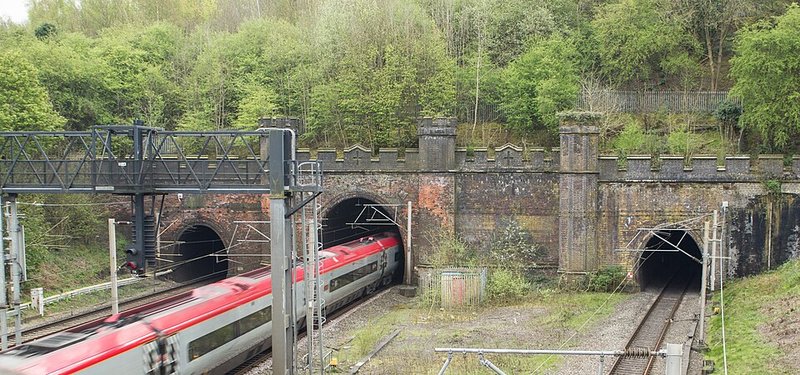
User:Cj1340, CC BY-SA 3.0 , via Wikimedia Commons
LINKS
Clayton Tunnel: The haunted railway tunnel near Brighton where 'screams can still be heard'https://www.sussexlive.co.uk/news/sussex-news/haunted-clayton-railway-tunnel-crash-4920993
The 1931 Linslade Railway Disaster https://bedsarchives.bedford.gov.uk/CommunityHistories/Linslade/The1931LinsladeRailwayDisaster.aspx
THEGHOSTS OF CLAYTON TUNNEL. BY JOHN MARKS https://www.theretirees.co.uk/PDF/Clayton%20Tunnel.pdf
Clayton Tunnel North Portal Tunnel Cottage https://historicengland.org.uk/listing/the-list/list-entry/1025594
3 Killed in War Games https://www.nytimes.com/1973/07/29/archives/3-killed-in-war-games.html
Ghosts galore: Brighton's most haunted places: https://www.theargus.co.uk/news/18760758.ghosts-galore-brightons-haunted-places/
RH’s Spookiest Spots Revealed https://www.rhuncovered.co.uk/haunted-caves-and-ghostly-pubs-rhs-spookiest-spots-revealed/
Morbid Monday: Deadly Trains https://www.atlasobscura.com/articles/morbid-monday-deadly-trains
1841: Another melancholy accident at Clayton Tunnel https://www.cuckfieldconnections.org.uk/post/1841-another-melancholy-accident-at-clayton-tunnel
Report on the Derailment that occurred on 9th December 1982 at Linslade Tunnel, Leighton Buzzard in the London Midland Region British Railways https://www.railwaysarchive.co.uk/docsummary.php?docID=801
Cover Image: London News Staplehurst Rail Crash Attribution:
Illustrated London News, Public domain, via Wikimedia Commons

No comments:
Post a Comment