Showing posts with label cult. Show all posts

Friday, 31 July 2026

200 Years Before Christianity: Rome’s Persecution of the Cult of Bacchus

​2,211 years ago. Rome, 186 BC. 7,000 men and women of all classes (including slaves) faced the death penalty for their participation in the secret nocturnal cult festival known as the Bacchanalia, where drunken orgies, sexual perversions, poisoning, forgery, human sacrifice and political conspiracies were all alleged to take place.

​“At night both men and woman, their minds having been set aflame with wine, of greater tender youths, had destroyed all distinction of shame, all kinds of corruption began to happen, since at the time they were prone to obtaining their natural pleasure. There was not only one kind of crime; but here was a great deal of arbitrary rape of females, also false witnesses, forged signing of wills and evidence, all were issued from the same place: from the same place also came poisoning and internal assassinations, so that not even bodies existed for burial…The violence was covered because of the howling and crash of drums and cymbals so no citizens cries were to be heard during their violent rape and slaughter.” - Livy
cult
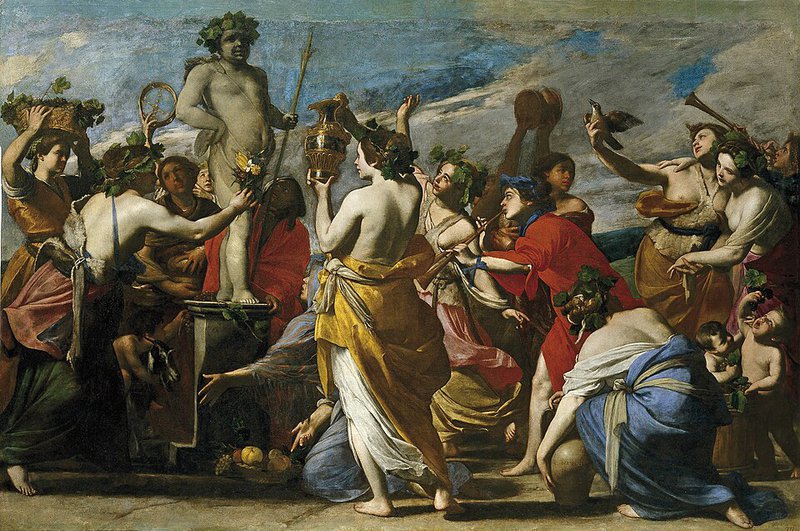
Sacrifice to Bacchus (1634) by Massimo Stanzione
​Massimo Stanzione, Public domain, via Wikimedia Commons

The cult sprang from increased Greek cultural influence (especially Dionysus, their version of the wine god Bacchus, or vice versa) with the Roman conquest of the Hellenic cities of southern Italy (’Magna Graecia’), the appointment of Greek slaves as educators to the children of elites, and the huge of influx of wealth after the defeat of Carthage in 201 BC. The rigid Senatorial class was disturbed by the dangerously egalitarian aspects of the Bacchic cult, seeing the phenomenon as something that could break their grip on the Republic.

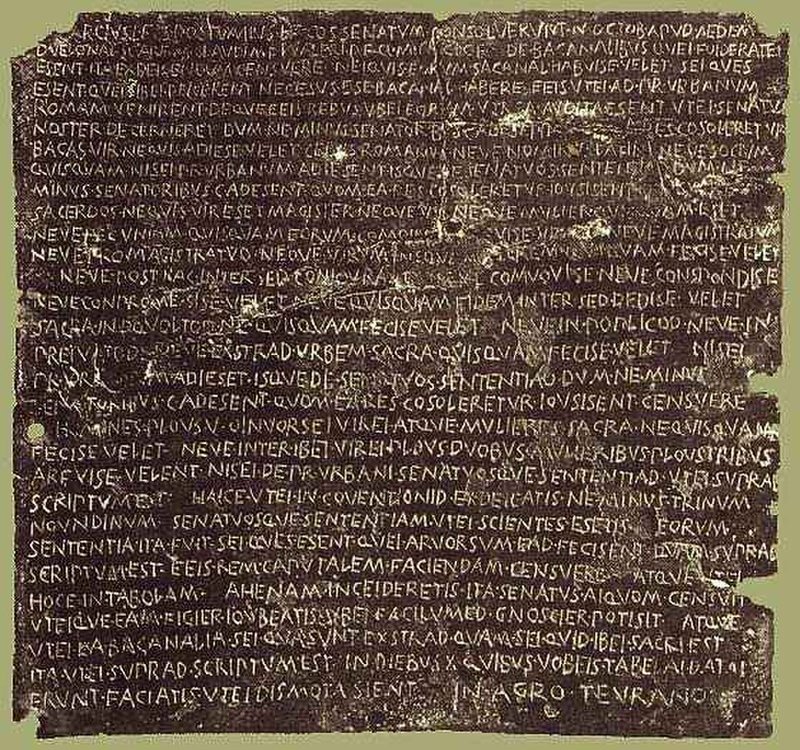
​To crack down on this potentially society-upending movement, the Roman Senate issued the legal decree the Senatus consultum de Bacchanalibus:
cult
​See page for author, Public domain, via Wikimedia Commons

​Amazingly, a brass rubbing of the decree still exists; translated to English it says:

​"The Consuls Quintus Marcius, the son of Lucius, and Spurius Postumius, the son of Lucius, consulted the senate on the Nones of October (7th), at the temple of the Bellona. Marcus Claudius, son of Marcus, Lucius Valerius, son of Publius, and Quintus Minucius, son of Gaius, were the committee for drawing up the report. Regarding the Bacchanalia, it was resolved to give the following directions to those who are in alliance with us: No one of them is to possess a place where the festivals of Bacchus are celebrated; if there are any who claim that it is necessary for them to have such a place, they are to come to Rome to the praetor urbanus, and the senate is to decide on those matters, when their claims have been heard, provided that not less than 100 senators are present when the affair is discussed.

No man is to be a Bacchantian, neither a Roman citizen, nor one of the Latin name, nor any of our allies unless they come to the praetor urbanus, and he in accordance with the opinion of the senate expressed when not less than 100 senators are present at the discussion, shall have given leave. Carried.

No man is to be a priest; no one, either man or woman, is to be an officer (to manage the temporal affairs of the organization); nor is anyone of them to have charge of a common treasury; no one shall appoint either man or woman to be master or to act as master; henceforth they shall not form conspiracies among themselves, stir up any disorder, make mutual promises or agreements, or interchange pledges; no one shall observe the sacred rites either in public or private or outside the city, unless he comes to the praetor urbanus, and he, in accordance with the opinion of the senate, expressed when no less than 100 senators are present at the discussion, shall have given leave. Carried.

No one in a company of more than five persons altogether, men and women, shall observe the sacred rites, nor in that company shall there be present more than two men or three women, unless in accordance with the opinion of the praetor urbanus and the senate as written above. See that you declare it in the assembly (contio) for not less than three market days; that you may know the opinion of the senate this was their judgment: if there are any who have acted contrary to what was written above, they have decided that a proceeding for a capital offense should be instituted against them; the senate has justly decreed that you should inscribe this on a brazen tablet, and that you should order it to be placed where it can be easiest read; see to it that the revelries of Bacchus, if there be any, except in case there be concerned in the matter something sacred, as was written above, be disbanded within ten days after this letter shall be delivered to you. In the Teuranian field."

​When members of the elite began to participate in the Mysteries, information was presented to the Senate by the impoverished noble Publius Aebutius and his lover, the courtesan Hispala Faecenia,

The author Livy, writing over 150 years later, claims that Hispala said the following words in her testimony:

​”Paculla Minia, a Campanian, when priestess, made an alteration in every particular, as if by the direction of the Gods. For she first introduced men; changed the time of celebration, from day to night; and, instead of three days in a year, appointed 5 days of initiation in each month. From the time that the rites thus made common, and men were intermixed with women, and the licentious freedom of the night was added, there was nothing wicked, nothing flagitious, that had not been practiced among them. There was more frequent pollution of men with each other than with women. If any were less patient in submitting to this dishonour, or more averse to the commission of vice, they were sacrificed as victims. To think nothing unlawful was the grand maxim of their religion. The men, as if bereft of reason, uttered predictions, with frantic contortions of their bodies; The women, in the habit of Bacchantes, with their hair dishevelled, and carrying blazing torches, ran down to the Tiber, where, dipping their torches in the water, they drew them up again with the flame unextinguished, being composed of native sulphur and charcoal. Their number was exceedingly great now, almost a second state in themselves, and among them were many men and women of noble families.”

​The Bacchanalia cult in Rome was based in the grove of Stimula on the western slope of the Aventine Hill, close to The Tiber. The Aventine was ethnically mixed and particularly identified with Rome's lower plebeian class, together with strange new foreign cults. Livy claimed the faction held particular appeal to those of uneducated and fickle mind (levitas animi) - the young, plebeians, women and homosexuals but also some belonging to Rome's highest class.

The sect was held to be a threat to the security of the state, so investigators were appointed, rewards offered to snitches and the official suppression of the cult swept throughout Italy. According to Livy, many committed suicide to avoid punishment; the penalty for those who led the cult was death. He also stated that there were far more executions than imprisonments.

Methods of Execution

Public execution for men: Convicted male ringleaders found guilty of capital crimes (such as forced initiation, violence, or conspiracy) were put to death in public spaces in Rome and across Italy. Probably by beheading.

Private domestic punishment for women: Rather than public execution, convicted female cult members were handed over to their male household heads (patria potestas) or close relatives to receive private punishment behind closed doors.

Forced suicide: Anticipating arrest, trial, and formal sentencing under the Senatus consultum de Bacchanalibus, many chose to take their own lives rather than face the ordeal of formal state prosecution.

Despite this, the Bacchanalia lingered in the still Greek-influenced south of Italy and was revived in a less threatening form in the later years.

Mark Antony famously identified with the wine god, and was known as the "New Dionysus" to legitimise his rule and charm the Greek and Eastern provinces he controlled. He went as far as to dress in Dionysian garb, complete with ivy crowns and thyrsus staffs. When he toured Greece and Asia Minor, cities ecastically welcomed him with processions of ‘satyrs’ and bacchantes, hailing him as "Dionysus the Benefactor" and "Bringer of Joy".

The wily Octavian harked back to 186 BC in framing Antony's adoption of divine kingship as a total betrayal of Roman values, setting the stage for the final civil war and Antony's defeat at Actium (30 BC).

Memories of the cult’s supposed excesses were reflected in criticism of the new Christian faith. Minuncius Felix Octavius, writing in 197 AD, claimed they were falsely accused of recognising:

“One another by secret signs and marks; they fall in love almost before they are acquainted; everywhere they introduce a kind of religion of lust, a promiscuous ‘brotherhood’ and ‘sisterhood’ by which ordinary fornication, under cover of a hallowed name, is converted to incest. An infant, cased in dough to deceive the unsuspecting, is placed beside the person to be initiated. The novice is thereupon induced to inflict what seem to be harmless blows upon the dough, and unintentionally the infant is killed by his unsuspecting blows; the blood – oh, horrible – they lap up greedily; the limbs they tear to pieces eagerly.”

The Bacchantes (1961)
cult
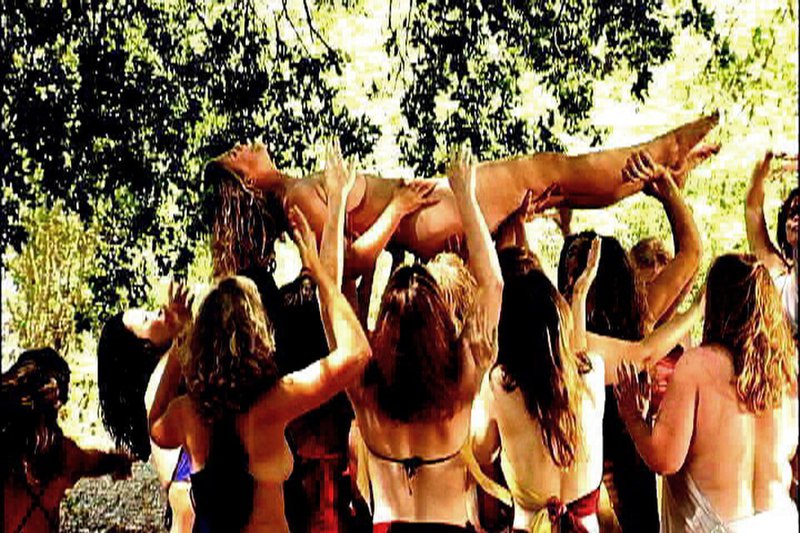
The opening ritual from The Bacchae, directed by Brad Mays, 2000
​Bradmays, CC BY-SA 3.0 , via Wikimedia Commons

​"All the World's a Stage" - Enter Dionysus (1984): Terence Stamp stars as Dionysus in a recorded extract of Euripides' ancient Greek tragedy The Bacchae

Note: the Romans also persecuted the Celtic Druids for a variety of reasons, some political, some ethical, although the condemnation of ritual human sacrifice is a tad hypocritical coming from those who lapped up Gladiatorial combat.

SOURCES INCLUDE

​The Cult of Bacchus and Pliny’s Christian Conundrum: https://anerdyethos.wordpress.com/2013/04/01/the-cult-of-bacchus-and-the-christian-conundrum/

​Bacchanalia – the first persecutions?: https://imperiumromanum.pl/en/curiosities/bacchanalia-the-first-persecutions/

​The Cult of Bacchus: http://avirtualmuseum.org/exhibits/roman_wineii/bacchic/bacchus_intro.html

​The thrill and the ecstasy: the mysteries of the Dionysian cult in ancient Rome:https://www.planetpompeii.com/en/blog/the-thrill-and-the-ecstasy-the-mysteries-of-the-dionysian-cult-in-ancient-rome.html

​How the Cult of God Bacchus was Banned in Ancient Rome:https://greekreporter.com/2023/08/18/god-bacchus-ancient-rome/

​THE BACCHANALIAN AFFAIR: https://lawexplores.com/the-bacchanalian-affair/

​The Suppression of the Bacchanalia: https://necropolisnow.blogspot.com/2016/10/the-suppression-of-bacchanalia.html

​The Bacchanalia: A Greek Dionysian Mystery Cult in Ancient Rome: https://brewminate.com/the-bacchanalia-a-greek-dionysian-mystery-cult-in-ancient-rome/

​The Octavius of Minucius Felix: https://www.tertullian.org/fathers2/ANF-04/anf04-34.htm#P5579_831897

​Under the Spell of the Druids: https://www.historytoday.com/miscellanies/under-spell-druids

​Why Did the Romans Destroy the Druids?: https://medium.com/@ancient.rome/why-did-the-romans-destroy-the-druids-1861c20e3942

STEPHEN ARNELL’S NOVEL THE GREAT ONE IS AVAILABLE ON AMAZON KINDLE:

SAMPLE:

Thursday, 16 July 2026

Cleopatra’s Needles: Cursed Obelisks in London & New York

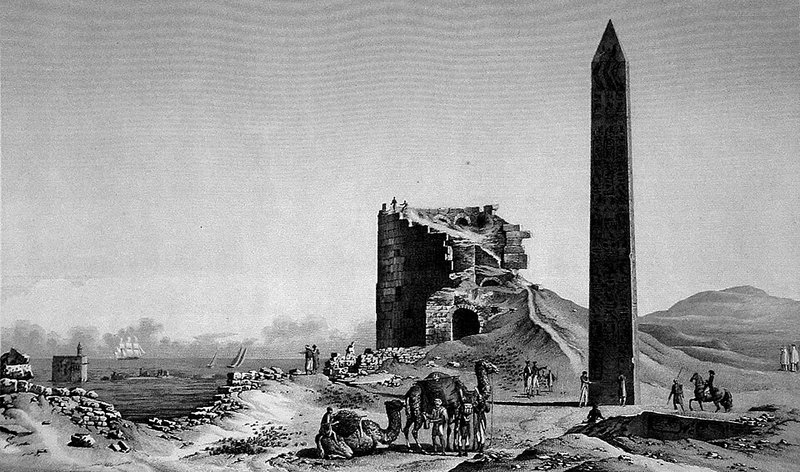
​A pair of obelisks, together named Cleopatra's Needles, were taken in the 19th century from the ruins of the Caesareum of Alexandria in Egypt; one to the London Embankment and the other to New York’s Central Park.

Inscribed by Thutmose III and later Ramesses II of the Egyptian New Kingdom, the obelisks were first moved in 12 BC to Alexandria, remaining there for over 1,800 years.

Cleopatra's needles and the Tower of the Romans, drawn c.1798,
Public domain, via Wikimedia Commons

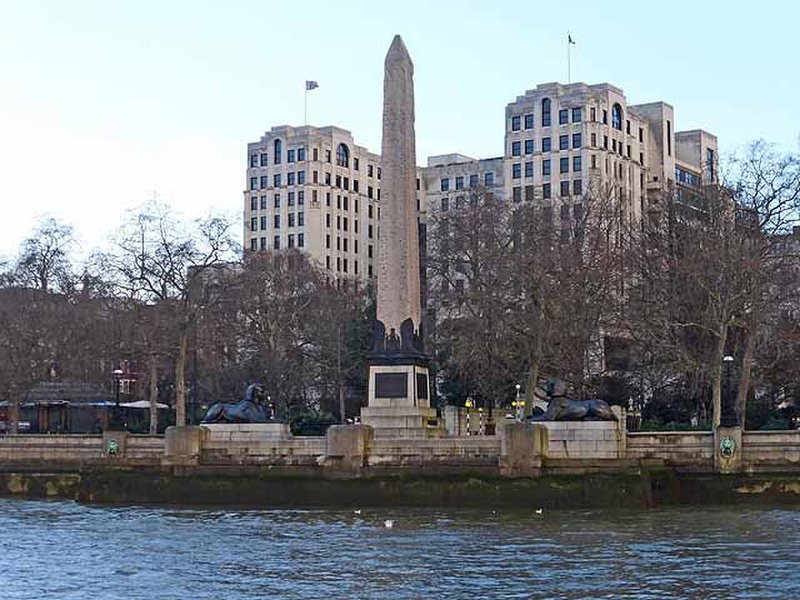
Cleopatra’s Needle - London

cleopatra's needle
Cleopatra’s Needle
​Cleopatra's Needle and the Victoria Embankment by Oliver Dixon, CC BY-SA 2.0 , via Wikimedia Commons

​The obelisk that was eventually re-erected in London was presented to the Prince Regent in 1819 by Egyptian ruler Muhammad Ali, a gift to mark British beating the French at the Battle of the Nile in 1798 and in 1801’s Battle of Alexandria.

​The obelisk remained in Alexandria until 1877 when anatomist and dermatologist Sir William James Erasmus Wilson sponsored its transportation to London at the cost of £10,000, around £1,553,000 in today’s money.

​The 224 ton artifact was encased in a iron cylinder, 92 feet long and 16 feet wide, dubbed Cleopatra, commanded by one Captain Carter, towed to London by the ship Olga, under Captain Booth. On October 14th 1877, a violent storm in the Bay of Biscay caused the Cleopatra to list uncontrollably, forcing the tow ropes to be cut. The Olga launched a rescue boat with six volunteers but the boat capsized, and all crew members died. Captain Carter his five shipmates aboard Cleopatra were eventually rescued though.

​The paddle tug Anglia was then commissioned to tow the Cleopatra to London where it arrived in January 1878 and set up with some pomp at the Embankment on September 12th 1878.

​Cleopatra's Needle is flanked by George John Vulliamy’s two faux-Egyptian bronze sphinxes, made at the Eccleston Iron Works in Pimlico in 1881. The sphinxes bear hieroglyphic inscriptions that say “netjer nefer men-kheper-re di ankh”, meaning "the good god, Thuthmosis III given life". Oddly, they are looking at the Needle rather than guarding it - or are they?

Possibly their role was NOT to stop harm from coming to the obelisk but rather to prevent anything supernatural from escaping, a task in which they appear to have singularly failed.The Embankment boasts other Egyptian touches, such as the well-endowed winged female sphinxes gracing the armrests of nearby benches.

​A time capsule was concealed in the front part of the pedestal, containing twelve candid photographs of the most attractive English women of the day, hairpins, cigars, tobacco pipes, a set of imperial weights, a baby's bottle, children's toys, a razor, a hydraulic jack and some samples of the cable used in the erection, a 3-foot (90-centimetre) bronze model of the monument, and a complete set of contemporary British coins.

A rupee, a portrait of Queen Victoria, a history of the transport of the monument plans, a translation of the inscriptions, the Bible in several languages, a copy of John 3:16 in 215 languages, Whitaker's Almanack, a Bradshaw Railway Guide, a map of London, daily newspapers and finally, a twenty-four inch metal ruler, were also squirrelled away in the capsule.

It has been posited that the pictures of women and a razor amongst the items deposited beneath the monolith emitted waves of evil occult energy that eventually resulted in the crimes of Jack the Ripper decades later.

As The Ripper puts it in Alan Moore’s From Hell (1999): “They call it Cleopatra’s Needle. He who’d wield it would the BEST of tailors be, to do its work, increase the Sun God’s sovereignty … encoded in this city’s stones are symbols thunderous enough to rouse the sleeping Gods submerged beneath the sea-bed of our dreams.”

In 1977, my school Nower Hill High secreted a time capsule, which was (typically) forgotten about until accidentally rediscovered in 2013.

Cleopatra’s Needle: Shades of Ancient Egypt Gather

Soon, eerie unexplained events began to unfold around London’s Cleopatra monument, including the following;

​The Spectral Seaman

The ghost of a naked man has been seen on a number of occasions, leaping from out behind the obelisk and throwing himself into the River without making a splash. The first sighting of this apparition occurred only a few weeks after the installation of the obelisk, leading many to conjecture it was the shade of one of the sailors who drowned in the Bay of Biscay. Or it was simply a ‘flasher’ with a taste for the theatrical?

​Aleister Crowley Was ‘Ere

It is said that the notorious occultist Aleister Crowley performed dark rituals late one evening at the base of the obelisk in order to release the trapped spirit of the Pharoah Rameses. The ceremony supposedly involved animal blood and a human skeleton. Crowley failed in his endeavour, which was accompanied by the sound of Rameses mocking guffaws. File under: unlikely.

Suicide Isn’t Painless

Cleopatra’s Needle soon became a site associated with suicide. A policeman claimed a hysterical woman approached the officer, urging him to come to the banks of the Thames by the obelisk to prevent someone from hurling themselves into the water. As he left her and reached the area, he saw the same woman leap into the river, cackling as she did so.

​The Laughing Man-Fish

In Elliott O’Donnell’s Haunted Waters (1957) he recounts, “the spot where Cleopatra’s Needle stands was well-know to be haunted. None of the outcasts would venture near it. Two of them told me that one night they saw a tall, nude, shadowy figure, with a pear-shaped head and a body covered with what looked like scales, suddenly appear by the needle, wave a long arm at them and leap over the wall into the river. They said that they sometimes heard unearthly groans and hellish, mocking laughter in the river.”

​The Ancient World in London - Egyptomania in London

Near where I used to live in Islington:

Cleopatra’s Needle - New York

cleopatra's needle
Greywacke Knoll, Central Park, New York
​Ingfbruno, CC BY-SA 3.0 , via Wikimedia Commons

​New York’s Needle was gifted in May 1877 to United States Consul General by Cairo Judge Elbert E. Farman, as thanks from the Khedive for the US remaining a friendly neutral as France and Britain vied for control of Egypt and the Suez Canal. Transportation costs were largely paid by the railroad magnate William Henry Vanderbilt, eldest son of Cornelius Vanderbilt.

The obelisk was transported seven miles to Alexandria and then put into the modified hold of the steamship SS Dessoug, which set sail June 12th, 1880. The Needle and its accompanying 50-ton pedestal arrived at the Quarantine Station in New York a month later. The ground was flattened so the obelisk could be rolled out of the ship and transported to an interim location off Fifth Avenue. Finally a steam engine pushed the object across a specially built trestle bridge from Fifth Avenue to Greywacke Knoll, just across from the Metropolitan Museum of Art.

It took a mammoth 112 days to move the obelisk from Quarantine Station to its current location.

Jesse B. Anthony, Grand Master of Masons in the State of New York, presided as the cornerstone for the obelisk was laid in place with full Masonic ceremony on October 2nd, 1880. Over 9,000 Masons paraded up Fifth Avenue from 14th Street to 82nd Street. The official ceremony for erecting the obelisk was held January 22, 1881. A time capsule buried beneath the obelisk contains an 1870 U.S. census, a Bible, a Webster's Dictionary, the complete works of William Shakespeare, a guide to Egypt, and a copy of the United States Declaration of Independence.

A small chest was also placed in the capsule, but its contents remain unknown to this very day.

The wonderfully named Henry Honeychurch Gorringe, who supervised the movement of the obelisk, claimed the prime advantage of the Knoll was its "isolation", and it was elevated, with the foundation firmly anchored in local bedrock, supposedly preventing collapse if Manhattan suffered "some violent convulsion of nature."

The League of Shadows

​In 1885 Gorringe died at the age of 43 as a result of injuries when he fell (or was he pushed?) from a moving train. 1885 was the year in which Gorringe published his book Egyptian Obelisks, which mainly explored his acquisition of Cleopatra’s Needle for Central Park. Gorringe was buried in Rockland Cemetery, Sparkhill, New York State. His memorial stone declares: “His crowning work was the removal of Cleopatra’s Needle from Egypt to the United States, a feat of engineering without parallel.” In 1886, his friends erected a replica of Cleopatra’s Needle over his grave, the unveiling drawing 500 people. Like the original obelisk in Central Park – it stands on its own knoll, overlooking the Hudson River.

There are far less stories of ghosts and curses linked to the New York obelisk than its London sibling, attributed by some to the elaborate Masonic ceremonies that prepared the plinth for the monument’s arrival, which may have pacified any unquiet ancient spirits.

​In 2011, the pollution-blighted Needle was inspected by Zahi Hawass (Minister of Egypt’s Supreme Council of Antiquities) who declared: “If the Central Park Conservancy and the City of New York cannot properly care for the obelisk, I will take the necessary steps to bring this precious artefact home and save it from ruin.” The London obelisk is in a better condition, but in 2018 Hawass also weighed in, “I went to see it yesterday and I was ashamed … If they don’t care, they should return it.”

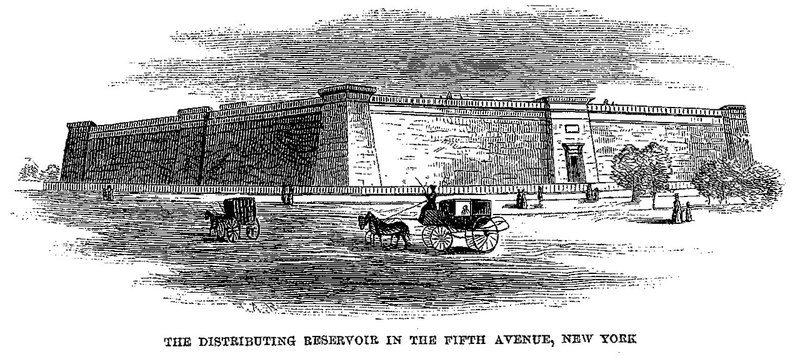
Note: The 50-foot granite walls of Manhattan’s now demolished Croton Reservoir (completed in 1842) were constructed in the Egyptian style popular at the time.

cleopatra's needle
New York
​unidentified illustrator of an article by T. Addison Richards, Public domain, via Wikimedia Commons

Cleopatra (1999)

​Kenneth Anger’s Lucifer Rising (1972); film director Donald Cammell was the god Osiris; Marianne Faithfull plays primordial she-demon Lilith:

LINKS

​Cleopatra’s Needle – London & New York’s Cursed & Haunted Egyptian Obelisks: https://www.davidcastleton.net/cleopatras-needle-london-new-york-city-central-park-obelisk-cursed-haunted-ancient-egypt/

​Hidden Alignments Documentary – NYC Masonic Obelisks: http://glasscapsule.com/2015/12/hidden-alignments-documentary-nyc-masonic-obelisks/

​The Mystery of the Central Park Obelisk: https://www.boweryboyshistory.com/2020/10/cleopatras-needle-and-secret-of-new.html

​NYC – Cleopatra’s Needle: https://imagerysmith.wordpress.com/

​How Cleopatra’s Needle came to London: https://www.londonmuseum.org.uk/collections/london-stories/how-cleopatras-needle-came-london/

​The Curse of Cleopatra’s Needle: https://hauntedpalaceblog.com/2022/06/07/the-curse-of-cleopatras-needle/

STEPHEN ARNELL’S ROMAN MYSTERY THE GREAT ONE IS AVAILABLE NOW ON AMAZON KINDLE:

SAMPLE

Cover image of London’s Cleopatra Needle attribution: Canva Pro

Thursday, 18 June 2026

When Supernatural Monsters Like Vampires Stopped to Count

The Forgotten Folklore of Seeds, Salt, and Supernatural Weaknesses

Many supernatural monsters in folklore were believed to possess strange weaknesses. From vampires and witches to troublesome spirits and fairies, stories from around the world describe creatures that could be distracted or delayed by seeds, grains, salt, and other curious objects. These unusual beliefs reveal a lesser-known side of traditional monster folklore.

​A Strange Detail That Wouldn't Go Away

The first reference occupied no more than a few lines.

I nearly skipped past it.

A vampire. A handful of seeds. And a suggestion that the creature would stop to count them.

That was all.

I made a note and carried on with whatever I had originally been researching. Folklore collections are full of odd details. Most turn out to be local curiosities that never seem to appear anywhere else.

At least, that is what I assumed.

Then the same idea surfaced in another source.

Not exactly the same story. Not even the same country.

But close enough.

A supernatural being confronted with a collection of small objects and somehow compelled to count them.

I started keeping notes.

Finding examples was not as straightforward as I expected. Many references were brief. Others appeared almost in passing, tucked away among discussions of completely different subjects. Still, the list slowly grew.

The subject of Vampires and their behavior drifted into the background for a while until recently, when I attended a talk on vampire folklore and the sometimes surprising measures communities once used to protect themselves from suspected vampires.

The old note came back to mind.

So did the seeds.

The Supernatural Monster Who Had To Count

Today there is a word for an obsessive need to count.

Arithmomania

The term belongs to modern psychology rather than folklore, but it provides a convenient label for something that appears surprisingly often in traditional stories.

The details vary.

The creatures vary.

Yet the basic idea remains remarkably consistent.

Present certain supernatural beings with enough objects to count and they become distracted from whatever they were doing.

For a modern reader, it feels like an odd weakness.

For the people who preserved these stories, it was often a useful one.

Salt appeared frequently in protective folklore. Beyond its practical value, scattered grains could also become a challenge for troublesome spirits and other supernatural visitors.

supernatural monsters: Vampires
In parts of Eastern Europe, poppy seeds and other grains were sometimes scattered to distract vampires, buying precious time until dawn.

A Handful of Seeds and a Vampire

The clearest examples tend to involve vampires.

Across parts of Eastern Europe, particularly within Slavic traditions, seeds were sometimes associated with protection against the undead. Poppy seeds appear frequently, although millet and other grains can also be found in the stories.

The reasoning was simple.

Scatter enough seeds and the vampire begins counting.

One grain.

Then the next.

Then another.

And another.

It is not how most of us picture a vampire.

Popular culture has given us elegant aristocrats, dark castles, flowing capes, and dramatic confrontations.

Traditional folklore could be much stranger.

The vampire remained dangerous, but it also seemed constrained by peculiar rules. In some stories, seeds were scattered over graves suspected of harboring the restless dead. In others, they might be thrown behind a fleeing traveler.

The goal was not necessarily victory.

A delay could be enough.

A few minutes might help somebody reach shelter.

A few hours might carry the night toward dawn.

And dawn was often the thing a vampire feared most.

Nets, Knots, and Other Problems

The more examples I found, the more often another object appeared.

Fishing nets.

At first they seem unrelated.

Then the connection becomes obvious.

A net contains countless openings.

According to some traditions, a supernatural intruder confronted by a fishing net would become occupied counting every gap before proceeding.

Similar ideas appear elsewhere.

  • Knots.
  • Threads.
  • Tangled cords.

Sometimes the creature is counting. Sometimes it is untangling. Sometimes it is simply trapped in an endless repetitive task.

The details change.

The principle remains familiar.

Keep the creature busy.

Let time do the rest.


Witches at the Threshold

The same motif appears in traditions concerning witches.

In parts of Italy, sieves and colanders occasionally acquired a protective role. Left near a doorway or entrance, they supposedly forced a witch to stop and count the many holes before entering.

  • Every hole mattered.
  • Every hole had to be counted.
  • By then, the night might be nearly over.

As with much folklore, it is difficult to know how literally such stories were taken. What matters is that the idea survived.

Versions of the belief later appeared in parts of Appalachia after European traditions crossed the Atlantic. Details shifted from place to place, but the central theme remained recognizable.

The witch encounters something that demands counting.

The counting becomes the trap.

According to some traditions, witches could be delayed by objects containing numerous holes, such as sieves or colanders, forcing them to count until sunrise.

Fairies Were Not Always Friendly

The fairies found in older folklore can be surprisingly unpleasant.

Many were blamed for spoiled milk, missing household items, frightened livestock, and various forms of everyday mischief.

People responded accordingly.

In several traditions, grains, flax seeds, or salt could be scattered around places frequented by troublesome spirits. The being would supposedly become occupied counting rather than causing trouble.

One note in particular caught my attention.

It concerned a mischievous spirit from Spain known as the Trasgu.

Descriptions vary from region to region, but the creature is usually portrayed as an energetic household nuisance. It moves objects, creates disorder, and generally makes life difficult for the people sharing its home.

One recurring detail is especially curious.

The Trasgu is often described as having holes in its hands.

As a result, small objects slip through its fingers. Certain tasks become impossible to complete.

Stories frequently place the spirit in situations where this weakness works against it. It is assigned impossible jobs, repetitive tasks, or challenges involving tiny objects that continually escape its grasp.

The result is less a confrontation than an exercise in frustration.

Why Salt Appears Everywhere

At a certain point I began noticing another recurring feature.

Salt.

It turns up repeatedly in folklore.

  • On thresholds.
  • Across windowsills.
  • Around doorways.
  • Within protective rituals.

That probably should not be surprising.

For most of human history, salt was far more valuable than many of us appreciate today. It preserved food, supported trade networks, and helped communities survive difficult seasons.

People depended on it.

Folklore tends to attach meaning to things that matter.

Salt also appeared to resist corruption. Food preserved with salt lasted longer. Decay slowed. Spoilage could be delayed.

Then there is the counting element.

Unlike a stone or a piece of iron, salt can be scattered into thousands of individual grains.

A protective substance.

A symbolic purifier.

And, according to some traditions, a counting challenge.

All in the same handful.

supernatural monsters
Salt appeared frequently in protective folklore. Beyond its practical value, scattered grains could also become a challenge for troublesome spirits and other supernatural visitors.

More Than Just Superstition

A bag of seeds is a curious thing to carry as protection.

Yet the idea appears often enough that it must have appealed to people for a reason.

The stories may differ, but they all arrive at roughly the same place.

The creature can be delayed.

The night can be bought a little time.

That is what interests me most.

Not whether vampires counted poppy seeds.

Not whether witches paused outside a doorway to count holes in a sieve.

But the way these stories impose rules on something frightening.

The supernatural threat remains dangerous.

Yet it becomes predictable.

A weakness exists.

A loophole can be found.

Sometimes that loophole is nothing more than a handful of seeds dropped onto a dark road.

The Last Grain

I originally assumed the reference was a local oddity.

It turned out not to be.

  • A vampire distracted by seeds.
  • A witch counting holes in a sieve.
  • A troublesome spirit trapped by an impossible task.

The stories are separated by geography, language, and centuries.

Yet somehow they arrive at the same strange conclusion.

Give a monster enough things to count and, for a while at least, it may leave you alone.

Today most people know vampires through novels, movies, and television. They recognize the fangs, the coffins, and the dramatic entrances.

Few remember the seeds.

Yet the seeds remained in the stories long after many other details changed.

That, perhaps, is worth counting.


Further Reading

Briggs, Katharine. An Encyclopedia of Fairies

Dundes, Alan (ed.). The Vampire: A Casebook

Guiley, Rosemary Ellen. The Encyclopedia of Vampires, Werewolves, and Other Monsters

Kligman, Gail. The Wedding of the Dead: Ritual, Poetics, and Popular Culture in Transylvania

Simpson, Jacqueline and Steve Roud. A Dictionary of English Folklore

Summers, Montague. The Vampire in Europe

Westwood, Jennifer and Jacqueline Simpson. The Lore of the Land

Saturday, 23 May 2026

Mackenzie Crook's SMALL PROPHETS Rekindles the Eerie World of Homonculi

​Mackenzie Crook's critically lauded BBC2 comedy-drama Small Prophets has sparked renewed interest in ‘Homunculi’ - the strange sperm, blood and horse manure created tiny artificial humans or human-like beings of legend...or reality?

prophets
Sammelbilder - Homunculus hovering above_Faust (scene from Goethe's Faust, second part)
​Carole Raddato from FRANKFURT, Germany, CC BY-SA 2.0, via Wikimedia Commons

​In the show, DIY store worker Michael Small (Pearce Quigley) is inspired by his aged father Brian’s esoteric tales of National Service in Egypt to attempt to create his own prophesying creatures. Why?

To discover what happened to his girlfriend Clea, who disappeared without explanation seven years ago on Christmas Eve:

What are Homunculi - and what are their origins?

​Psychiatrist, psychotherapist, and psychologist Carl Jung (1875-1961) believed that the concept of an (as yet unnamed as such) ‘Homunculus’ first appeared in the Visions of Zosimos, written in the third century AD. Zosimos was born in Panopolis in the south of Roman Egypt (a connection with Small Prophets) and wrote the oldest known books on alchemy, calling them "Cheirokmeta," for "things made by hand."

In the 1973 motion picture The Golden Voyage of Sinbad, evil sorcerer Koura creates a Homunculus to spy on Sinbad:

How can I create a Homonculus?

​Swiss alchemist Paracelsus (1493–1541), in his De natura rerum (1537) outlines how to create Homunculi, not something to be taken lightly.

The sperm of a man be putrefied by itself in a sealed cucurbit for forty days with the highest degree of putrefaction in a horse's womb warmed by "venter equinus, warm, fermenting horse dung", or at least so long that it comes to life and moves itself, and stirs, which is easily observed. After this time, it will look somewhat like a man, but transparent, without a body. If, after this, it be fed wisely with the Arcanum of human blood, and be nourished for up to forty weeks, and be kept in the even heat of the horse's womb, a living human child grows therefrom, with all its members like another child, which is born of a woman, but much smaller.

​The homunculus was a potentially powerful but also somewhat limited creature; only thriving for any time within its glass container and sustained only on a particular strain of blood known only to alchemists.

The homunculus acted as seer, protector and servant, not as a weapon; neither good nor evil, counted on only to follow the will of their master, be it for pure means or ill.

The Chymical Wedding of Christian Rosenkreutz (1616), concludes with the creation of a male and female Homunculi duo, suggesting the ultimate goal of alchemy is not transmutation of metal but the creation of artificial humans. In 1775, Count Johann Ferdinand von Kufstein, assisted by the cleric/mystic Abbé Geloni, created ten homunculi with the ability to foresee the future (see also Small Prophets), kept in glass containers at the Vienna’s Masonic lodge.

​From The Strange Experiments of Count Kuefstein: The Man Who Made Ten Homunculi by Rade Kolbas (2024):

They worked on creating ten spirits, which they claimed to have successfully captured in glass jars. Each spirit was unique: there was a king, a queen, a knight, a monk, a seraph, a nun, a miner, an architect, and two other spirits, one blue and one red, that were only visible through specific rituals. The spirits were said to be small, initially just a few inches in size, and were captured in jars filled with a clear liquid, possibly holy water. The jars were sealed with a special ox bladder and a sigil, believed to prevent the spirits from escaping. Abbé Geloni assured Count Kuefstein that the spirits would grow, which they allegedly did, eventually reaching a length of over a foot. The captured spirits were then dressed and assigned certain roles, the king wore a crown, the knight carried a shield, and so on.

​The captured spirits played a role in the Count’s interactions with other members of the Freemason and Rosicrucian orders. On several occasions, he invited prominent members of these secret societies to Greillenstein Castle to witness the spirits in action. These demonstrations were highly secretive, with only a select few allowed to attend. The spirits, according to witnesses, would move within their jars, change color, and even “speak” in a faint, barely audible voice. While some attendees were convinced of the spirits’ authenticity, others suspected that the Count and Geloni were using clever tricks to create the illusion of supernatural activity.

​Not everything went smoothly during Count Kuefstein’s experiments. One notable incident involved the breaking of the jar containing the monk spirit. During an attempted ritual, Count Kuefstein accidentally knocked the jar over, causing it to shatter and the spirit to “die.” The Count’s attempts to replace the monk spirit with a new creation, an “admiral” spirit, ended in failure, as the new entity lacked the vitality of its predecessors. Another failed experiment involved an attempt to create a spirit that could provide more direct and accurate answers to questions posed by the Count. This spirit, which was supposed to be a “sage,” never fully formed, and the liquid in its jar remained cloudy and inert.

Dr. Emil Besetzny's 1873 Masonic handbook, Die Sphinx, devoted a chapter to the wahrsagenden Geister (scrying ghosts), apparently a form of Homunculi.

The Golem and Mandrakes

Homunculi have been compared to Jewish folklore’s protective Golem, a lofty animated anthropomorphic artificial being created from mud/clay.

The most well-known account of the golem is The Golem of Prague created by Judah Lowe ben Bezalel, in the 16th century.

The homunculus may have also been inspired by the German folk tradition of the mandragora (mandrake). Author Jean-Baptiste Pitois (1811-1877) likened the creation of a mandragora to that of a homunculus, writing:

“Would you like to make a Mandragora, as powerful as the homunculus so praised by Paracelsus? Then find a root of the plant called bryony. Take it out of the ground on a Monday (the day of the Moon), a little time after the vernal equinox. Cut off the ends of the root and bury it at night in some country churchyard in a dead man’s grave. For 30 days, water it with cow’s milk in which three bats have been drowned. When the 31st day arrives, take out the root in the middle of the night and dry it in an oven heated with branches of verbena; then wrap it in a piece of a dead man’s winding-sheet [burial shroud] and carry it with you everywhere.”

prophets
Homunculus_Faust
​See page for author, Public domain, via Wikimedia Commons

An Homunculus also featured in 2005’s The League of Gentlemen's Apocalypse, created by 17th-century sorcerer Dr. Erasmus Pea (played by David Warner):

BCrttemberg Kunstkammer-Schmuckkasettep1190
​See page for author, Public domain, via Wikimedia Commons

​"Scenes with Witches: Morning, Day, Evening and Night" by Salvator Rosa (1645 to 1649). A witch pours candle wax into her brew as it boils atop a fire, while another witch holds a book of spells. A demon (or, maybe even the Devil) looks on.

LINKS

Stephen Arnell’s novel THE GREAT ONE, is available on Amazon Kindle

SAMPLE:

Thursday, 21 May 2026

Dare You Meet the Owlman of Mawnan?

​“The owls are not what they seem.” Twin Peaks

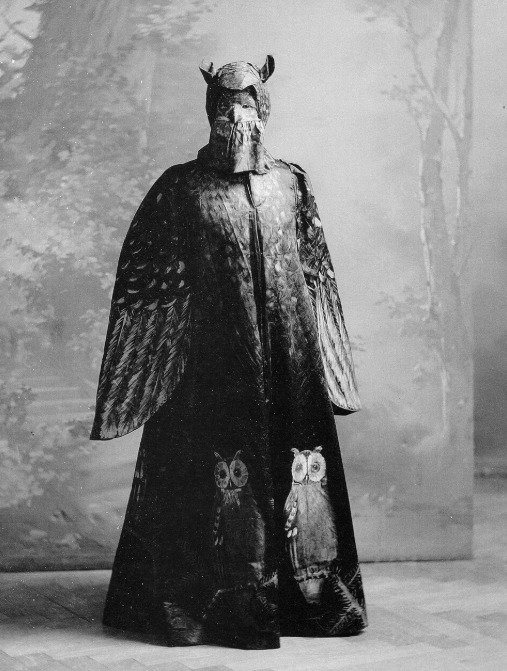
Cornish folklore tells of the cryptid Owlman (Kowanden in Kernowek), an owl-like humanoid creature first seen in 1926 in the quaint, but somehow forbidding, coastal village of Mawnan Smith, located in the south of the peninsula.

Johannes_Meiner_Eulenkost
​Johannes Meiner, Public domain, via Wikimedia Commons

The Cornish ‘Mothman’ if you will.

The most famous appearance of The Owlman was in 1976

Surrealist artist, magician and writer Tony "Doc" Shiels (1938-2024), had a reputation as something of a trickster/hoaxer, and was already associated with a series of Cornish ‘monster-raising’ tall-tales in 1976 (sometimes aided by his coven of nude ‘witches’).

In the Spring of that year, he claimed to have investigated the curious story of two young girls on holiday who apparently witnessed a large, red-eyed, winged humanoid creature hovering above the tower of St Mawnan and St Stephen's Church on April 17th 1976.

mawnan owlman
St Mawnan and St Stephen's Church, Mawnan
​Simon Burchell, CC BY-SA 4.0, via Wikimedia Commons

The girls - June (12) and Vicky Melling (9), were so rattled by the "feathered bird-man" their dad immediately cut their family holiday short and took them all home. Shiels said one of girls gave him her drawing of the beast, which he called "Owlman". The events were recounted in Anthony Mawnan-Peller’s (Mawnan?) pamphlet Morgawr: The Monster of Falmouth Bay, circulated throughout Cornwall the same year.

Sheils claimed "Owlman" was reported again a few months later on July 31st by two 14-year-old girls Sally Chapman and Barbara Perry, who had heard of the supposed creature. The pair were camping when they encountered "a big owl with pointed ears, as big as a man" boasting glowing red eyes and black, pincer-like claws, reminiscent of Spring-Heeled Jack, subject of a previous investigation of mine.

Irregular sightings of the beast in the vicinity of the church were shared in 1978, 1979, 1989, and 1995. According to local hearsay, a "loud, owl-like sound" was heard at night in the church yard during the year 2000.

​The 1995 incident was witnessed by an American tourist, who sent a letter to the then night editor of the Western Morning News, Simon Parker:

Dear Sir,

I am a student of marine biology at the Field Museum, Chicago on the last day of a summer vacation in England. Last Sunday evening I had a most unique and frightening experience in the wooded area near the Old Church at Mawnan, Cornwall. I experienced what I can only describe as a ‘vision from hell’. The time was 15 minutes after 9, more or less. And I was walking along a narrow track through the trees. I was halted in my tracks when about 30m ahead I saw a monstrous ‘Birdman’ thing. It was the size of a man with a ghastly face, a wide mouth, glowing eyes and pointed ears. It had huge clawed wings and was covered in feathers of silver grey colour. The thing had long bird legs which terminated in large black claws. It saw me and rose, floating towards me. I just screamed then turn and ran for my life. The whole experience was totally irrational and dreamlike. Friends tell me that there is a tradition of a Phantom Owlman in that District. Now I know why. I have seen the phantom myself. Please don’t publish my real name and address. This could adversely affect my career. Now I have to rethink my ‘worldview’ entirely.

Yours very sincerely scared Eyewitness.

​The creature was quiet for a few years but there were other strange occurrences recorded in Mawnan. In 1996 a woman reported a ball of light floating above the church. In 2003, two teenage girls (again) were listening to music in the church car park late at night (possibly indulging in some herbal recreation):

They too saw a glowing, pulsating globe of light hovering over the church. The girls said that they watched it for a while until it just vanished. The most recent sighting (that I know of ) was in September of 2009. It was reported that a 12 year old girl named Jessica Wilkins (or Wilkinson) saw the Owlman of Mawnan for the first time this century. Why all these strange happenings have occurred in the vicinity of Mawnan church is a mystery. There is some suggestion that the sightings are due to an escaped Great Grey Owl which can have a wing span of nearly 2m, has huge talons and can stand around 4.5ft tall. The only problem with this theory is the length of time over which the Owlman has been seen. Another theory is that the stories have something to do with the church standing in the centre of an ancient earthworks. Or perhaps because some researchers have detected a ley line (earth energy line) passing through the site? Other writers have said that sensitive and perceptive visitors have also described Mawnan Woods as being ‘alive’ with energy. Could that natural Earth energy be connected to the reports of the Owlman? (The Cornish Bird: Cornwall’s Hidden History Blog)

Tony Shiels - from Magonia Archive

​Shiels seems to be an admirer of John Keel, the British edition of whose classic The Mothman Prophecies appeared in 1976. As if in affectionate imitation there then came report of a Cornish counterpart, Owlman. This entity showed himself only to adolescent girls on holiday, who afterwards would chance to meet Doc Shiels, tell him their stories, and never be seen again. Three of the girls produced drawings of what they had seen, though there is some doubt about one variously described as "by June Melling", or "based on the sketch by June Melling", which is not the same thing. If it is her original, then like the other two, she had remarkably excellent draughtsmanship for a pre-teenager; in fact one might have guessed all of the pictures to have been the work of a professional artist (e.g. Doc Shiels).

Barbara Perry and Sally Chapman both wrote a brief description of the 'monster' underneath their drawings. Their handwriting is of interest. Graphologists know that there are some writing habits that can be consciously altered, for instance whether the letters are joined up or not, whereas others are very difficult to disguise. Chapman's and Perry's hands are very different in their alterable habits; Perry joins up some of her letters but Chapman does not but are remarkably similar in their unalterable ones. The ways they wrote "monster" are virtually identical, and they share several other habits, both putting the dot over the i to the right of the letter and beginning the crossbar of the t at the upright stroke. One could almost conclude they were one person pretending to be two.

Years later Jonathan Downes, the portly Devonshire cryptozoologist, did his own investigation of Owlman and located a man who said he had seen it when a boy; though his sketch of it looks like an imitation of the originals rather than an independent drawing from life. The same is true of a letter sent by an American student who had seen it while on holiday. Though she gave an address in Chicago and stated herself to be a student of marine biology, when Downes tried to contact her she was not registered as living there, and no department chief he spoke to on the telephone had heard of her. Downes' best known contribution was to star in the Owlman video, which also featured the director's wife as a naked lesbian Witch, while a professional sceptic was depicted as a maniac gay Nazi.

​But... back to 1926

From Sarah Coomer’s ​100 Ghosts: The Owlman of Mawnan (May 2021)

There had been reports of a very large angry bird type thing in the churchyard as far back as the 1920s, whose reputation was enough to attract the attention of loved up Surrealists Leonora Carrington and Max Ernst who allegedly performed rituals to try to summon the beast in 1937. But the most famous sighting of the Owlman occurred in 1976 - whilst holidaying in Cornwall, two (probably v bored) young girls caught sight of what they described as a very large bird with glowing red eyes and claws like blacksmith’s pincers hovering over the church, as reported to monster investigator, storyteller, magician and all round character Tony ‘Doc’ Shiels. A number of other sightings were sporadically recorded but dismissed as having been engineered by Shiels, who had a bit of a reputation as a hoaxer. It’s all so obviously utter nonsense, and easily explained away (er, it’s a big owl) but there’s something about it which has captured the imagination of fans of the unexplained / Surrealist painters for decades. The idea itself is terrifying, the environs evocative and a bit spooky and the name of the place is a gift, like something out of Lord of the Rings.

And this from The Cornish Bird: The Cornish Hidden History Blog

​In 1926 the Cornish Echo newspaper reported that two boys had been chased by what was described as a very large and ferocious bird. The terrified boys managed to escape and took cover behind a large steel grating. This first sighting attracted the attention of surrealist painters Max Ernst and Leonora Carrington. The couple visited Mawnan in 1937. There they are said to have performed rituals to try and summon up the half man half bird they called a ‘therianthorpes’. The Owlman featured heavily in both their artworks for the remainder of their lives.

​Lord Of Tears (2013) - In the film, the Owlman represents Canaanite god Moloch, who particularly savoured child sacrifice. Moloch has been connected to Bohemian Grove, a sinister ‘gentlemen’s club’ for wealthy elites who gather in the San Francisco woods and stand each summer before a giant moss-covered 40ft wooden owl statue erected there.

​The Owl Service

The Owl Service Episode One - transmitted Sunday, 21 December 1969, based on the Welsh legend of Blodeuwedd, turned into an owl for betraying her husband to death (all episodes available on YouTube)

​The Mothman Prophecies (2002)

Links:

Hieronymus Bosch - Garden of Earthly Delights
​Hieronymus Bosch, Public domain, via Wikimedia Commons

Night Owl (full version) - Gerry Rafferty

Bird Song - Lene Lovich

​Blood Sweat and Tears - Suite from The Owl & The Pussycat (1970)

Stephen Arnell’s novel THE GREAT ONE is available on Amazon Kindle:

SAMPLE: