Showing posts with label ritual. Show all posts

Wednesday, 5 August 2026

The Mysterious Ash Tree - Beware or Befriend?

​In my front garden stands a typically fast-growing Ash tree, one whose roots are perilously close to destroying the garage.

Which got me thinking about the Ash tree in folklore and in the paranormal world; my cultural touchstone being M.R. James’ disturbing tale The Ash Tree (1904); links to two BBC2 versions are linked below.

The Ash (or Fraxinus) is generally regarded as a positive member of a genus of plants in the olive and lilac family, or Oleaceae. Indeed, in Norse mythology, the World Tree Yggdrasil is held to be a sacred Ash tree and was regarded across Northern Europe as a symbol of cosmic connection, healing, and strength.
ash tree
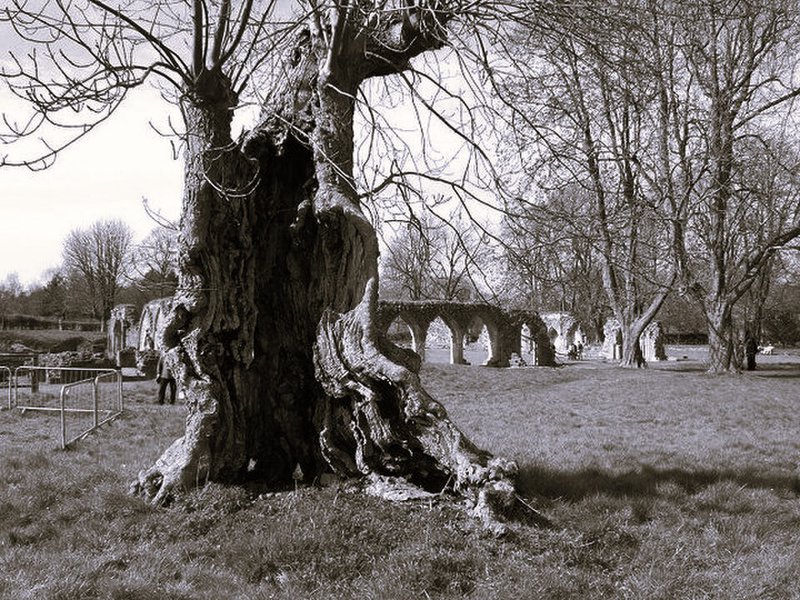
The Old Ash Tree
​Symon Parsley / Old Ash Tree

In popular culture, the World Tree recently featured in season 2 of Marvel’s LOKI (2023).

For the Vikings, the first man, Askr, was formed from an Ash, whilst the first woman Embla was made from an elm. In the Norse poem Hávamál, Odin described hanging himself from a "wind-swept (Ash) tree" for nine nights, wounded by a spear, in a self-sacrifice to himself to gain wisdom and learn the secrets of the runes.

​In Celtic and British folklore, the Ash is one of the three sacred trees, along with Oak and Thorn; a healing tree, particularly used in rituals to cure poorly children.

For the ancient Greeks, the Meliae were nymphs associated with the Ash tree, born from the blood of Uranus falling onto Gaia.

​The Askafroa (wife of the Ash tree), or in Danish ‘Askefrue’ is the guardian of the Ash tree, a malicious creature. To appease her, it was necessary to make a sacrifice every Ash Wednesday by pouring water on her roots and declaring: "I am offering to you so that you do us no harm".

​Ash Wednesday, while nowadays of course, a Christian observance marking the start of Lent, has roots in pagan customs of purification, mourning, and the return of spring, including using ash for protection, fertility, and renewal. Ashes were used to mark the forehead for Odin’s protection often done on "Odin's Day" (Wednesday). In Celtic tradition, ashes were used to bless livestock and ensure fertility during the transition from winter to spring, frequently associated with Imbolc celebrations.

There are fictional takes on less than benevolent Ash trees, including in the 1990 3-part BBC television adaptation of Kingsley Amis’s novel, The Green Man (1969), where it puts in a truly terrifying appearance at the beginning of the first episode:

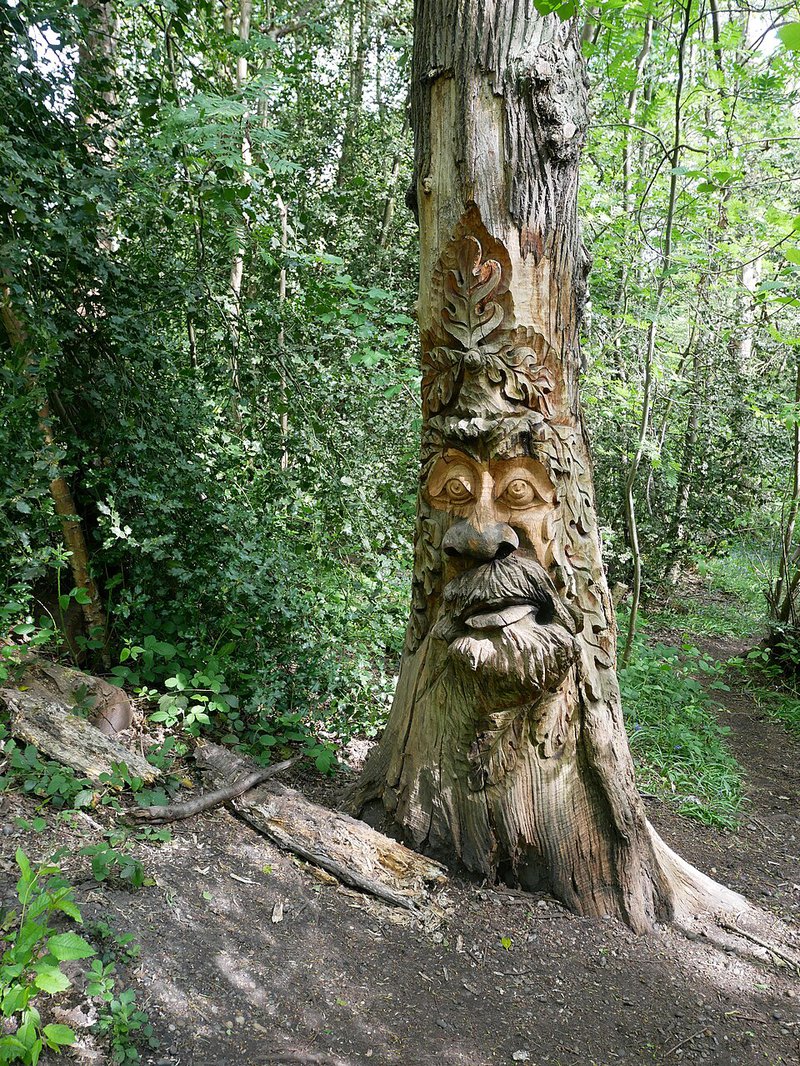
​Note: Green Man sculptures are often created from fallen Ash trees.
ash tree
The Green Man in Lesnes Abbey Woods, London Borough of Bexley.
​Ethan Doyle White, CC BY-SA 4.0 , via Wikimedia Commons

The UK - in ‘real’ life?

1869’s Haunted Ash of Lampits (Scotland), part of The Ghosts of Carnwath series of supernatural reportage

An account in Scotland’s Hamilton Advertiser of 28th August 1869 detailed a melancholy apparition and haunted Ash tree near Lampits Farm, to the east of Carstairs Junction in South Lanarkshire:

“There long stood a solitary, melancholy-looking ash tree in a field on the Lampits Farm, in the vicinity of Cockysyetts, which was cut down to make way for the Queen’s branch of the Caledonian Railway, and which was still more melancholy, in my imagination, from its dismal associations; for here, on one of the branches of this dowie-looking tree, a poor heart-broken girl of Cockysyetts closed her earthly sorrows and her earthly pilgrimage. No mavis or blackbird was ever seen to nestle in it scanty foliage, no merry note of music was ever heard from its dull half-blasted branches; the raven might croak and the pyot chatter there by day, and the owl scream by night, but no other merriment, dear tree, was thine. Ghosts love the darkness and the shade, and the ghost of poor Jessie was often seen gliding at midnight among the shadows of the fearsome neuk.”

Today, few trees grow on the flat windswept carseland around Lampits. There remains, however, a solitary ancient ash tree that commands a view across the flat fields towards the Caledonian Railway. Many of its upper branches have been lost to past storms, and disease ravages others, however new growth continues to sprout from a gnarled and weathered old trunk.

With scanty foliage and half-blasted branches it has an uncanny resemblance to the melancholy old ash tree described in the newspaper article over 150 years ago. Ash trees can live for up to three hundred years, therefore it’s possible that the surviving tree could have witnessed Jessie’s melancholy end, early in the 19th century. It might even have sprung from a seed of the haunted ash.

The Hardy Tree (St Pancras Old Church, London)
ash tree
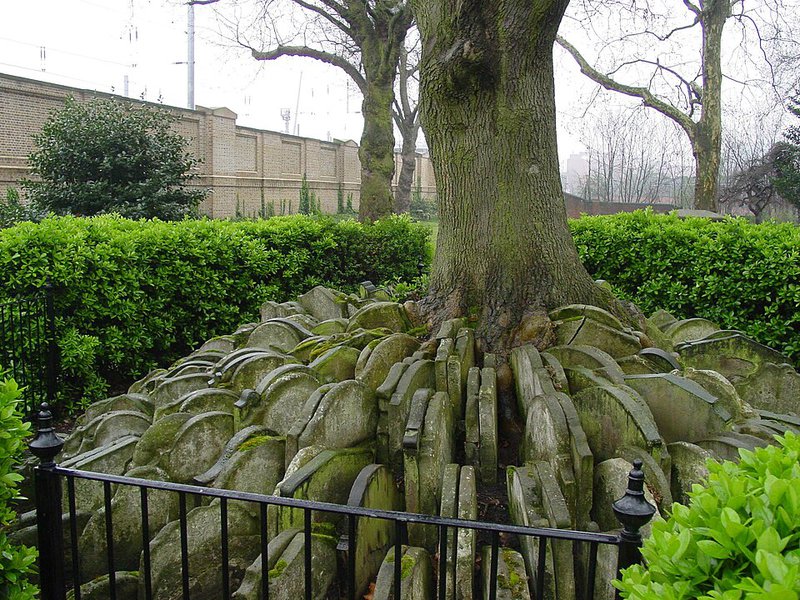
​David Edgar, CC BY-SA 3.0 , via Wikimedia Commons

The Hardy tree was an Ash tree located in the very ancient, possibly Roman St Pancras Old Church's churchyard in London. Notable for the stacked gravestones embedded at its base in around 1860, when graves were moved by writer-then-architect Thomas Hardy to make way for the Midland Railway to run through the churchyard.

In 2014, the tree was infected with fungus, and with storms further weakening it, the tree fell in December 2022.

The Hell Tree

From: The Mysterious Hardy Tree | Graves that Circle a Tree….(2021)

It’s thought that during his time here, Hardy actually uncovered the body of a two-headed man during the excavations. Thomas never documented anything regarding and this and more recent photographs of the tree has encouraged speculation if he ever had anything to do creating the design at all. He did write a poem named Levell’d Churchyard. Thomas’s poem suggests that he didn’t have fond memories of the work he did here but its hardly surprising given the job he was expected to do.

In letters that were written by the St Pancras Old Church vicar John Tweed in 1859 to his wife Charlotte, he appeared to have witnessed a supernatural manifestation. The vicar detailed how his churchyard was home to a mass gathering of apparitions and how tombstones seem to appear at the Ash tree and that he had even seen them moving towards this tree by a unseen force.

In December 1859 he wrote to Charlotte: More missing headstones. Increasingly certain of connection with my guests. Today I traced strange lines of disturbed earth across the graveyard. Each lead to the Ash Tree. Are they being dragged there? And then where? The ash tree itself is looking increasingly unhealthy, possibly diseased. I don’t like to get too close to it.”

And then:If I hadn’t seen such as I have seen these past months I may not have trusted my eyes, but trust them I must. I shall record it in as plain a manner as I know how: By the light of the moon last night I saw a gravestone, moving with some speed, and quite of its own accord, across the graveyard. It hurtled towards the ash tree, at the base of which it disappeared, as if plunging in to the very bowels of the tree.” Finally: “Good God. Hundreds of them, of all shapes, just pouring into the tree.” He later refers to the tree being a gateway and it’s believed by some that he felt it could have possibly been a hell gate.

​“Dearest Charlotte, I do so love hearing your news from the vale, it pains me to have to recount the horrors of my life here… At night I am plagued by nightmares so vivid and dreadful that I am afraid to sleep at all. I have been nailed to the cursed iron frontage of a flame-licked and hell-bound locomotive. I have walked through the dark miasma and fetid slime of a London choked by death. I have seen the flagstones of the church floor thrust violently upwards by a sudden eruption of uncertain origin. And these are only the visions I have the constitution to retell… I begin to suspect that it is not just the lost ones that are being dragged down to that place. For how to account for the sheer number I watch descend every night? Where will it end? Must every dead soul in the parish, every dead soul in London be reclaimed for damnation?! No Charlotte, I shall not see it happen.”

​Allegedly John Tweed closed the hell gate in 1860 by burying a Bible under the tree, and scans of the Ash tree show a large book buried within the roots… but nobody has ever been allowed to dig the area. No reports were made from Tweed after 1860, when he lost the ability to record his findings; his writing hand apparently useless.

​And...this from Exit Strategy for the Restless Dead: The Hell Tree of St Pancras (2017)

He wrote to Charlotte: “Every thief, vagabond and ne’er-do-well in London seems to have wound up buried at St P. Which would be all well and good, except that the digging up of late seems to have unearthed more than just bones. Judging by the number of lost souls drifting about the place in one spirit form or another, I would offer that many of my guests are far from welcome in Heaven. I can only assume that having been buried in consecrated ground further precludes them from the other place, which leaves them, it is my horror to say, stuck in the churchyard with me”.

Tweed was not entirely without sympathy for his ghostly companions, going on to tell his wife that they were: “Sad seeming things. I feel quite sorry for them. I don’t suppose I should mind at all if only they kept their mournful meanderings to the night-time hours. Last Sunday I was midway through service when a wraith came down the aisle – an infernal thing, it stalked among the shadows between the shafts of morning light, wailing and moaning like a baleful cat. There were already murmurings amongst the parishioners about the foul stench from the digging up. Dearest Charlotte, I am not sure how much longer I can pacify them.”

The Beatles at Old St Pancras (1968)

Although St Pancras Old Church is in central London, minutes away from the great Victorian Gothic pile of a station, the area can be quite a haunting, lonely place, perched on a hill overlooking the railway junctions of St Pancras and King’s Cross. I remember visiting in the snows and blizzards of Winter 2015, when the church grounds felt like something from one of Grimm’s tales.

The Lively Arts: Thomas Hardy - A Haunted Man (1978)

The Ash Tree - Vampire/Zombie Killer

​In folklore, an ash stake is traditionally used to kill vampires, especially in Slavic, Russian, and Baltic traditions. Ash wood represents protective, "life" energy in Norse mythology, where it can help destroy the Draugr (Undead), or at least weaken their supernatural powers. The Viking version of vampires/zombies are described as bloated “death-blue/black” revenants who ferociously protect their treasure, with the ability to grow to giant sizes and shapeshift.

Note: other words for the Undead or Vampires in Norse legend include:

Aptrgangr (Again-walker): One who walks again.

Haugbúi (Barrow-dweller): One that dwells within its burial mound (howe).

Gjenganger: A ghost or revenant.

​In Bram Stoker’s Dracula (1897), Abraham Van Helsing utilizes wooden stakes associated with specific woods like ash or white oak to impale vampires by piercing their Undead hearts.

Three BBC adaptations of The Ash Tree by M.R James

The Ash-Tree (1986)

And a later telling from 2000; my idea but ripped off by a then senior BBC colleague:

​A Ghost Story for Christmas: The Ash Tree (1975) - The big reveal...

​Ash Wednesday (1973) full movie

LINKS

​The Haunted Ash of Lampits: https://clydesdalesheritage.org.uk/article/the-haunted-ash-of-lampits/

​Askafroa: https://www.stronghold-nation.com/history/myth/askafroa

​Ash Wednesday and its pagan origins: https://susannesanlier.wordpress.com/2015/02/18/ash-wednesday-and-its-pagan-origins/

​What is Imbolc? The Celtic fire festival that welcomes spring—in February: https://www.nationalgeographic.com/culture/article/imbolc-celtic-celebration-brigid

​Draugr, Haugbui And Aptrgangr – The Undead of Norse Myths: https://vikingr.org/other-beings/undead-viking-age?srsltid=AfmBOooD9FPhdZ_fGZNJpou74mRFiwpS_qX8UmyR39HCDmJHrj0w4hDj

​Thomas Hardy: Gravestone-encircled tree falls in Camden: https://www.bbc.co.uk/news/uk-england-london-64110086

​The Mysterious Hardy Tree | Graves that Circle a Tree….:https://paranormalhauntings.blog/2021/12/26/the-mysterious-hardy-tree-graves-that-circle-a-tree/

​Exit strategy for a restless dead: The Hell Tree of St Pancras: https://portalsoflondon.com/2017/01/20/the-hell-tree-of-st-pancras/

STEPHEN ARNELL’S HISTORICAL NOVEL THE GREAT ONE IS AVAILABLE ON AMAZON KINDLE:https://www.amazon.co.uk/Great-One-Secret-Memoirs-Pompey-ebook/dp/B0BNLTB2G7

SAMPLE:

Thursday, 16 July 2026

Cleopatra’s Needles: Cursed Obelisks in London & New York

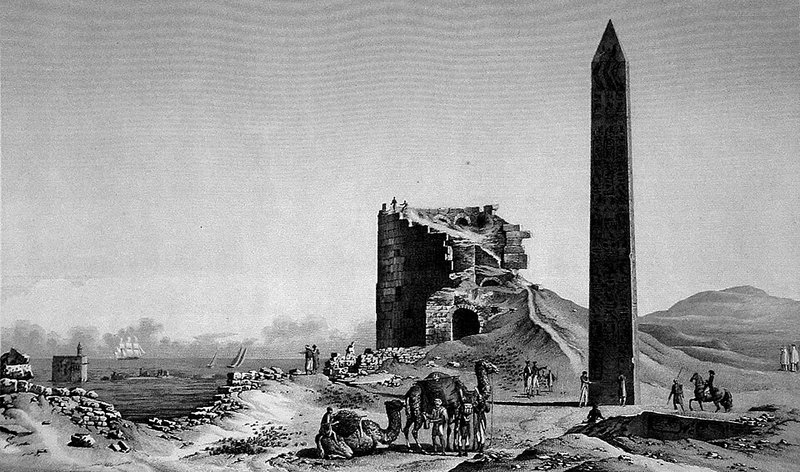
​A pair of obelisks, together named Cleopatra's Needles, were taken in the 19th century from the ruins of the Caesareum of Alexandria in Egypt; one to the London Embankment and the other to New York’s Central Park.

Inscribed by Thutmose III and later Ramesses II of the Egyptian New Kingdom, the obelisks were first moved in 12 BC to Alexandria, remaining there for over 1,800 years.

Cleopatra's needles and the Tower of the Romans, drawn c.1798,
Public domain, via Wikimedia Commons

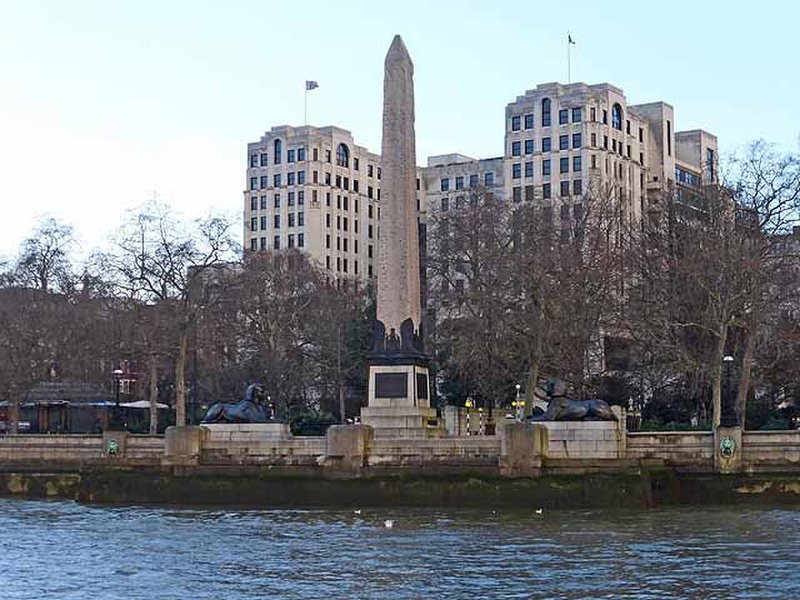
Cleopatra’s Needle - London

cleopatra's needle
Cleopatra’s Needle
​Cleopatra's Needle and the Victoria Embankment by Oliver Dixon, CC BY-SA 2.0 , via Wikimedia Commons

​The obelisk that was eventually re-erected in London was presented to the Prince Regent in 1819 by Egyptian ruler Muhammad Ali, a gift to mark British beating the French at the Battle of the Nile in 1798 and in 1801’s Battle of Alexandria.

​The obelisk remained in Alexandria until 1877 when anatomist and dermatologist Sir William James Erasmus Wilson sponsored its transportation to London at the cost of £10,000, around £1,553,000 in today’s money.

​The 224 ton artifact was encased in a iron cylinder, 92 feet long and 16 feet wide, dubbed Cleopatra, commanded by one Captain Carter, towed to London by the ship Olga, under Captain Booth. On October 14th 1877, a violent storm in the Bay of Biscay caused the Cleopatra to list uncontrollably, forcing the tow ropes to be cut. The Olga launched a rescue boat with six volunteers but the boat capsized, and all crew members died. Captain Carter his five shipmates aboard Cleopatra were eventually rescued though.

​The paddle tug Anglia was then commissioned to tow the Cleopatra to London where it arrived in January 1878 and set up with some pomp at the Embankment on September 12th 1878.

​Cleopatra's Needle is flanked by George John Vulliamy’s two faux-Egyptian bronze sphinxes, made at the Eccleston Iron Works in Pimlico in 1881. The sphinxes bear hieroglyphic inscriptions that say “netjer nefer men-kheper-re di ankh”, meaning "the good god, Thuthmosis III given life". Oddly, they are looking at the Needle rather than guarding it - or are they?

Possibly their role was NOT to stop harm from coming to the obelisk but rather to prevent anything supernatural from escaping, a task in which they appear to have singularly failed.The Embankment boasts other Egyptian touches, such as the well-endowed winged female sphinxes gracing the armrests of nearby benches.

​A time capsule was concealed in the front part of the pedestal, containing twelve candid photographs of the most attractive English women of the day, hairpins, cigars, tobacco pipes, a set of imperial weights, a baby's bottle, children's toys, a razor, a hydraulic jack and some samples of the cable used in the erection, a 3-foot (90-centimetre) bronze model of the monument, and a complete set of contemporary British coins.

A rupee, a portrait of Queen Victoria, a history of the transport of the monument plans, a translation of the inscriptions, the Bible in several languages, a copy of John 3:16 in 215 languages, Whitaker's Almanack, a Bradshaw Railway Guide, a map of London, daily newspapers and finally, a twenty-four inch metal ruler, were also squirrelled away in the capsule.

It has been posited that the pictures of women and a razor amongst the items deposited beneath the monolith emitted waves of evil occult energy that eventually resulted in the crimes of Jack the Ripper decades later.

As The Ripper puts it in Alan Moore’s From Hell (1999): “They call it Cleopatra’s Needle. He who’d wield it would the BEST of tailors be, to do its work, increase the Sun God’s sovereignty … encoded in this city’s stones are symbols thunderous enough to rouse the sleeping Gods submerged beneath the sea-bed of our dreams.”

In 1977, my school Nower Hill High secreted a time capsule, which was (typically) forgotten about until accidentally rediscovered in 2013.

Cleopatra’s Needle: Shades of Ancient Egypt Gather

Soon, eerie unexplained events began to unfold around London’s Cleopatra monument, including the following;

​The Spectral Seaman

The ghost of a naked man has been seen on a number of occasions, leaping from out behind the obelisk and throwing himself into the River without making a splash. The first sighting of this apparition occurred only a few weeks after the installation of the obelisk, leading many to conjecture it was the shade of one of the sailors who drowned in the Bay of Biscay. Or it was simply a ‘flasher’ with a taste for the theatrical?

​Aleister Crowley Was ‘Ere

It is said that the notorious occultist Aleister Crowley performed dark rituals late one evening at the base of the obelisk in order to release the trapped spirit of the Pharoah Rameses. The ceremony supposedly involved animal blood and a human skeleton. Crowley failed in his endeavour, which was accompanied by the sound of Rameses mocking guffaws. File under: unlikely.

Suicide Isn’t Painless

Cleopatra’s Needle soon became a site associated with suicide. A policeman claimed a hysterical woman approached the officer, urging him to come to the banks of the Thames by the obelisk to prevent someone from hurling themselves into the water. As he left her and reached the area, he saw the same woman leap into the river, cackling as she did so.

​The Laughing Man-Fish

In Elliott O’Donnell’s Haunted Waters (1957) he recounts, “the spot where Cleopatra’s Needle stands was well-know to be haunted. None of the outcasts would venture near it. Two of them told me that one night they saw a tall, nude, shadowy figure, with a pear-shaped head and a body covered with what looked like scales, suddenly appear by the needle, wave a long arm at them and leap over the wall into the river. They said that they sometimes heard unearthly groans and hellish, mocking laughter in the river.”

​The Ancient World in London - Egyptomania in London

Near where I used to live in Islington:

Cleopatra’s Needle - New York

cleopatra's needle
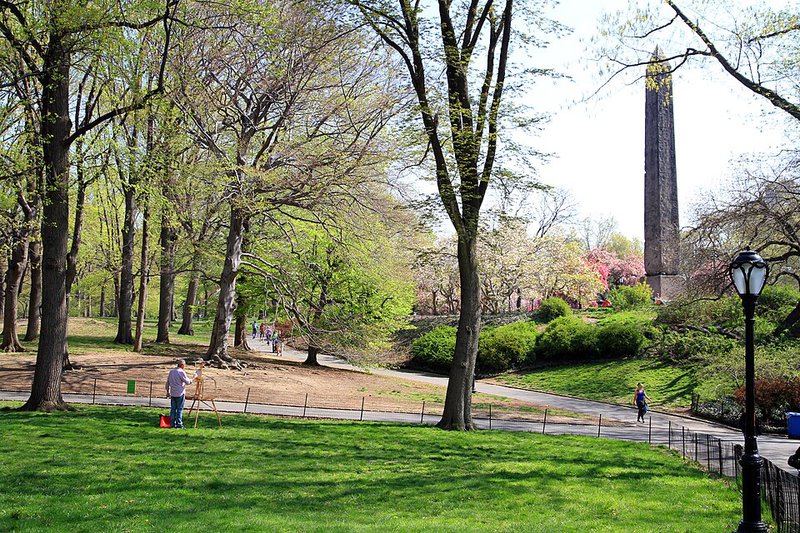
Greywacke Knoll, Central Park, New York
​Ingfbruno, CC BY-SA 3.0 , via Wikimedia Commons

​New York’s Needle was gifted in May 1877 to United States Consul General by Cairo Judge Elbert E. Farman, as thanks from the Khedive for the US remaining a friendly neutral as France and Britain vied for control of Egypt and the Suez Canal. Transportation costs were largely paid by the railroad magnate William Henry Vanderbilt, eldest son of Cornelius Vanderbilt.

The obelisk was transported seven miles to Alexandria and then put into the modified hold of the steamship SS Dessoug, which set sail June 12th, 1880. The Needle and its accompanying 50-ton pedestal arrived at the Quarantine Station in New York a month later. The ground was flattened so the obelisk could be rolled out of the ship and transported to an interim location off Fifth Avenue. Finally a steam engine pushed the object across a specially built trestle bridge from Fifth Avenue to Greywacke Knoll, just across from the Metropolitan Museum of Art.

It took a mammoth 112 days to move the obelisk from Quarantine Station to its current location.

Jesse B. Anthony, Grand Master of Masons in the State of New York, presided as the cornerstone for the obelisk was laid in place with full Masonic ceremony on October 2nd, 1880. Over 9,000 Masons paraded up Fifth Avenue from 14th Street to 82nd Street. The official ceremony for erecting the obelisk was held January 22, 1881. A time capsule buried beneath the obelisk contains an 1870 U.S. census, a Bible, a Webster's Dictionary, the complete works of William Shakespeare, a guide to Egypt, and a copy of the United States Declaration of Independence.

A small chest was also placed in the capsule, but its contents remain unknown to this very day.

The wonderfully named Henry Honeychurch Gorringe, who supervised the movement of the obelisk, claimed the prime advantage of the Knoll was its "isolation", and it was elevated, with the foundation firmly anchored in local bedrock, supposedly preventing collapse if Manhattan suffered "some violent convulsion of nature."

The League of Shadows

​In 1885 Gorringe died at the age of 43 as a result of injuries when he fell (or was he pushed?) from a moving train. 1885 was the year in which Gorringe published his book Egyptian Obelisks, which mainly explored his acquisition of Cleopatra’s Needle for Central Park. Gorringe was buried in Rockland Cemetery, Sparkhill, New York State. His memorial stone declares: “His crowning work was the removal of Cleopatra’s Needle from Egypt to the United States, a feat of engineering without parallel.” In 1886, his friends erected a replica of Cleopatra’s Needle over his grave, the unveiling drawing 500 people. Like the original obelisk in Central Park – it stands on its own knoll, overlooking the Hudson River.

There are far less stories of ghosts and curses linked to the New York obelisk than its London sibling, attributed by some to the elaborate Masonic ceremonies that prepared the plinth for the monument’s arrival, which may have pacified any unquiet ancient spirits.

​In 2011, the pollution-blighted Needle was inspected by Zahi Hawass (Minister of Egypt’s Supreme Council of Antiquities) who declared: “If the Central Park Conservancy and the City of New York cannot properly care for the obelisk, I will take the necessary steps to bring this precious artefact home and save it from ruin.” The London obelisk is in a better condition, but in 2018 Hawass also weighed in, “I went to see it yesterday and I was ashamed … If they don’t care, they should return it.”

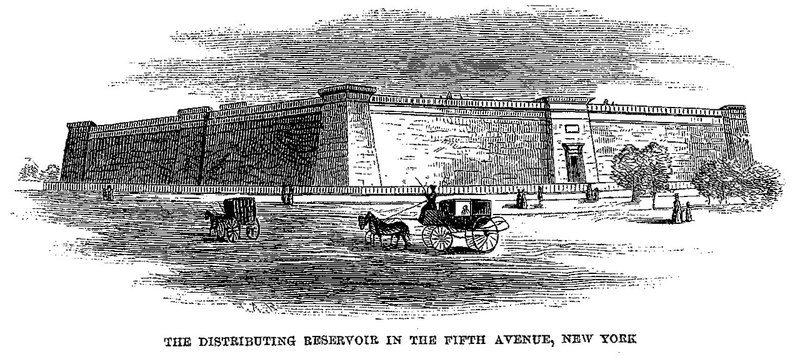
Note: The 50-foot granite walls of Manhattan’s now demolished Croton Reservoir (completed in 1842) were constructed in the Egyptian style popular at the time.

cleopatra's needle
New York
​unidentified illustrator of an article by T. Addison Richards, Public domain, via Wikimedia Commons

Cleopatra (1999)

​Kenneth Anger’s Lucifer Rising (1972); film director Donald Cammell was the god Osiris; Marianne Faithfull plays primordial she-demon Lilith:

LINKS

​Cleopatra’s Needle – London & New York’s Cursed & Haunted Egyptian Obelisks: https://www.davidcastleton.net/cleopatras-needle-london-new-york-city-central-park-obelisk-cursed-haunted-ancient-egypt/

​Hidden Alignments Documentary – NYC Masonic Obelisks: http://glasscapsule.com/2015/12/hidden-alignments-documentary-nyc-masonic-obelisks/

​The Mystery of the Central Park Obelisk: https://www.boweryboyshistory.com/2020/10/cleopatras-needle-and-secret-of-new.html

​NYC – Cleopatra’s Needle: https://imagerysmith.wordpress.com/

​How Cleopatra’s Needle came to London: https://www.londonmuseum.org.uk/collections/london-stories/how-cleopatras-needle-came-london/

​The Curse of Cleopatra’s Needle: https://hauntedpalaceblog.com/2022/06/07/the-curse-of-cleopatras-needle/

STEPHEN ARNELL’S ROMAN MYSTERY THE GREAT ONE IS AVAILABLE NOW ON AMAZON KINDLE:

SAMPLE

Cover image of London’s Cleopatra Needle attribution: Canva Pro

Thursday, 21 May 2026

Dare You Meet the Owlman of Mawnan?

​“The owls are not what they seem.” Twin Peaks

Cornish folklore tells of the cryptid Owlman (Kowanden in Kernowek), an owl-like humanoid creature first seen in 1926 in the quaint, but somehow forbidding, coastal village of Mawnan Smith, located in the south of the peninsula.

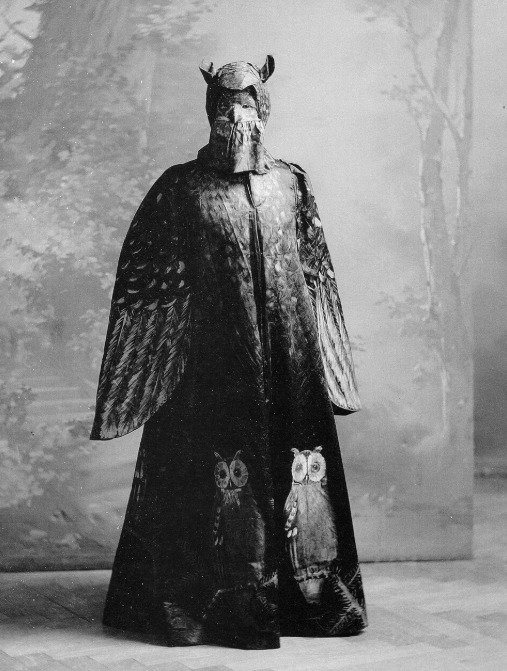
Johannes_Meiner_Eulenkost
​Johannes Meiner, Public domain, via Wikimedia Commons

The Cornish ‘Mothman’ if you will.

The most famous appearance of The Owlman was in 1976

Surrealist artist, magician and writer Tony "Doc" Shiels (1938-2024), had a reputation as something of a trickster/hoaxer, and was already associated with a series of Cornish ‘monster-raising’ tall-tales in 1976 (sometimes aided by his coven of nude ‘witches’).

In the Spring of that year, he claimed to have investigated the curious story of two young girls on holiday who apparently witnessed a large, red-eyed, winged humanoid creature hovering above the tower of St Mawnan and St Stephen's Church on April 17th 1976.

mawnan owlman
St Mawnan and St Stephen's Church, Mawnan
​Simon Burchell, CC BY-SA 4.0, via Wikimedia Commons

The girls - June (12) and Vicky Melling (9), were so rattled by the "feathered bird-man" their dad immediately cut their family holiday short and took them all home. Shiels said one of girls gave him her drawing of the beast, which he called "Owlman". The events were recounted in Anthony Mawnan-Peller’s (Mawnan?) pamphlet Morgawr: The Monster of Falmouth Bay, circulated throughout Cornwall the same year.

Sheils claimed "Owlman" was reported again a few months later on July 31st by two 14-year-old girls Sally Chapman and Barbara Perry, who had heard of the supposed creature. The pair were camping when they encountered "a big owl with pointed ears, as big as a man" boasting glowing red eyes and black, pincer-like claws, reminiscent of Spring-Heeled Jack, subject of a previous investigation of mine.

Irregular sightings of the beast in the vicinity of the church were shared in 1978, 1979, 1989, and 1995. According to local hearsay, a "loud, owl-like sound" was heard at night in the church yard during the year 2000.

​The 1995 incident was witnessed by an American tourist, who sent a letter to the then night editor of the Western Morning News, Simon Parker:

Dear Sir,

I am a student of marine biology at the Field Museum, Chicago on the last day of a summer vacation in England. Last Sunday evening I had a most unique and frightening experience in the wooded area near the Old Church at Mawnan, Cornwall. I experienced what I can only describe as a ‘vision from hell’. The time was 15 minutes after 9, more or less. And I was walking along a narrow track through the trees. I was halted in my tracks when about 30m ahead I saw a monstrous ‘Birdman’ thing. It was the size of a man with a ghastly face, a wide mouth, glowing eyes and pointed ears. It had huge clawed wings and was covered in feathers of silver grey colour. The thing had long bird legs which terminated in large black claws. It saw me and rose, floating towards me. I just screamed then turn and ran for my life. The whole experience was totally irrational and dreamlike. Friends tell me that there is a tradition of a Phantom Owlman in that District. Now I know why. I have seen the phantom myself. Please don’t publish my real name and address. This could adversely affect my career. Now I have to rethink my ‘worldview’ entirely.

Yours very sincerely scared Eyewitness.

​The creature was quiet for a few years but there were other strange occurrences recorded in Mawnan. In 1996 a woman reported a ball of light floating above the church. In 2003, two teenage girls (again) were listening to music in the church car park late at night (possibly indulging in some herbal recreation):

They too saw a glowing, pulsating globe of light hovering over the church. The girls said that they watched it for a while until it just vanished. The most recent sighting (that I know of ) was in September of 2009. It was reported that a 12 year old girl named Jessica Wilkins (or Wilkinson) saw the Owlman of Mawnan for the first time this century. Why all these strange happenings have occurred in the vicinity of Mawnan church is a mystery. There is some suggestion that the sightings are due to an escaped Great Grey Owl which can have a wing span of nearly 2m, has huge talons and can stand around 4.5ft tall. The only problem with this theory is the length of time over which the Owlman has been seen. Another theory is that the stories have something to do with the church standing in the centre of an ancient earthworks. Or perhaps because some researchers have detected a ley line (earth energy line) passing through the site? Other writers have said that sensitive and perceptive visitors have also described Mawnan Woods as being ‘alive’ with energy. Could that natural Earth energy be connected to the reports of the Owlman? (The Cornish Bird: Cornwall’s Hidden History Blog)

Tony Shiels - from Magonia Archive

​Shiels seems to be an admirer of John Keel, the British edition of whose classic The Mothman Prophecies appeared in 1976. As if in affectionate imitation there then came report of a Cornish counterpart, Owlman. This entity showed himself only to adolescent girls on holiday, who afterwards would chance to meet Doc Shiels, tell him their stories, and never be seen again. Three of the girls produced drawings of what they had seen, though there is some doubt about one variously described as "by June Melling", or "based on the sketch by June Melling", which is not the same thing. If it is her original, then like the other two, she had remarkably excellent draughtsmanship for a pre-teenager; in fact one might have guessed all of the pictures to have been the work of a professional artist (e.g. Doc Shiels).

Barbara Perry and Sally Chapman both wrote a brief description of the 'monster' underneath their drawings. Their handwriting is of interest. Graphologists know that there are some writing habits that can be consciously altered, for instance whether the letters are joined up or not, whereas others are very difficult to disguise. Chapman's and Perry's hands are very different in their alterable habits; Perry joins up some of her letters but Chapman does not but are remarkably similar in their unalterable ones. The ways they wrote "monster" are virtually identical, and they share several other habits, both putting the dot over the i to the right of the letter and beginning the crossbar of the t at the upright stroke. One could almost conclude they were one person pretending to be two.

Years later Jonathan Downes, the portly Devonshire cryptozoologist, did his own investigation of Owlman and located a man who said he had seen it when a boy; though his sketch of it looks like an imitation of the originals rather than an independent drawing from life. The same is true of a letter sent by an American student who had seen it while on holiday. Though she gave an address in Chicago and stated herself to be a student of marine biology, when Downes tried to contact her she was not registered as living there, and no department chief he spoke to on the telephone had heard of her. Downes' best known contribution was to star in the Owlman video, which also featured the director's wife as a naked lesbian Witch, while a professional sceptic was depicted as a maniac gay Nazi.

​But... back to 1926

From Sarah Coomer’s ​100 Ghosts: The Owlman of Mawnan (May 2021)

There had been reports of a very large angry bird type thing in the churchyard as far back as the 1920s, whose reputation was enough to attract the attention of loved up Surrealists Leonora Carrington and Max Ernst who allegedly performed rituals to try to summon the beast in 1937. But the most famous sighting of the Owlman occurred in 1976 - whilst holidaying in Cornwall, two (probably v bored) young girls caught sight of what they described as a very large bird with glowing red eyes and claws like blacksmith’s pincers hovering over the church, as reported to monster investigator, storyteller, magician and all round character Tony ‘Doc’ Shiels. A number of other sightings were sporadically recorded but dismissed as having been engineered by Shiels, who had a bit of a reputation as a hoaxer. It’s all so obviously utter nonsense, and easily explained away (er, it’s a big owl) but there’s something about it which has captured the imagination of fans of the unexplained / Surrealist painters for decades. The idea itself is terrifying, the environs evocative and a bit spooky and the name of the place is a gift, like something out of Lord of the Rings.

And this from The Cornish Bird: The Cornish Hidden History Blog

​In 1926 the Cornish Echo newspaper reported that two boys had been chased by what was described as a very large and ferocious bird. The terrified boys managed to escape and took cover behind a large steel grating. This first sighting attracted the attention of surrealist painters Max Ernst and Leonora Carrington. The couple visited Mawnan in 1937. There they are said to have performed rituals to try and summon up the half man half bird they called a ‘therianthorpes’. The Owlman featured heavily in both their artworks for the remainder of their lives.

​Lord Of Tears (2013) - In the film, the Owlman represents Canaanite god Moloch, who particularly savoured child sacrifice. Moloch has been connected to Bohemian Grove, a sinister ‘gentlemen’s club’ for wealthy elites who gather in the San Francisco woods and stand each summer before a giant moss-covered 40ft wooden owl statue erected there.

​The Owl Service

The Owl Service Episode One - transmitted Sunday, 21 December 1969, based on the Welsh legend of Blodeuwedd, turned into an owl for betraying her husband to death (all episodes available on YouTube)

​The Mothman Prophecies (2002)

Links:

Hieronymus Bosch - Garden of Earthly Delights
​Hieronymus Bosch, Public domain, via Wikimedia Commons

Night Owl (full version) - Gerry Rafferty

Bird Song - Lene Lovich

​Blood Sweat and Tears - Suite from The Owl & The Pussycat (1970)

Stephen Arnell’s novel THE GREAT ONE is available on Amazon Kindle:

SAMPLE: