Showing posts with label haunted. Show all posts

Wednesday, 5 August 2026

The Mysterious Ash Tree - Beware or Befriend?

​In my front garden stands a typically fast-growing Ash tree, one whose roots are perilously close to destroying the garage.

Which got me thinking about the Ash tree in folklore and in the paranormal world; my cultural touchstone being M.R. James’ disturbing tale The Ash Tree (1904); links to two BBC2 versions are linked below.

The Ash (or Fraxinus) is generally regarded as a positive member of a genus of plants in the olive and lilac family, or Oleaceae. Indeed, in Norse mythology, the World Tree Yggdrasil is held to be a sacred Ash tree and was regarded across Northern Europe as a symbol of cosmic connection, healing, and strength.
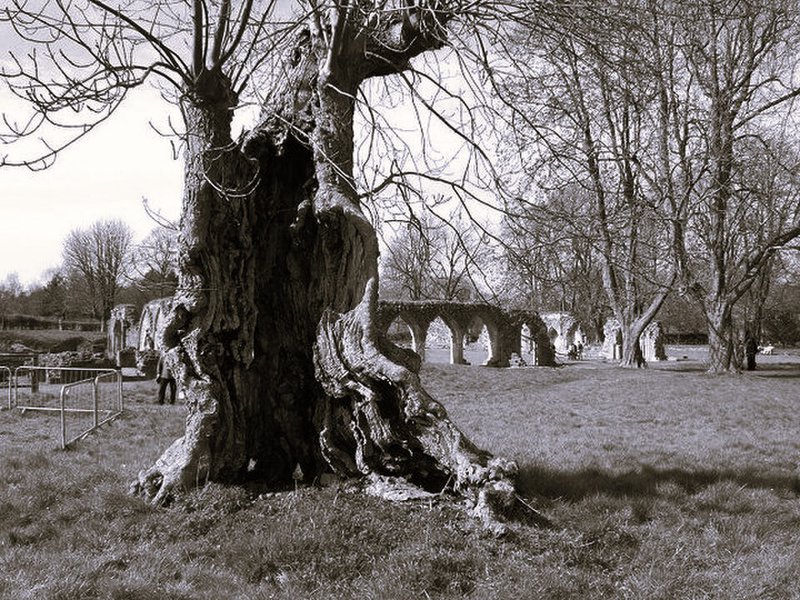
ash tree
The Old Ash Tree
​Symon Parsley / Old Ash Tree

In popular culture, the World Tree recently featured in season 2 of Marvel’s LOKI (2023).

For the Vikings, the first man, Askr, was formed from an Ash, whilst the first woman Embla was made from an elm. In the Norse poem Hávamál, Odin described hanging himself from a "wind-swept (Ash) tree" for nine nights, wounded by a spear, in a self-sacrifice to himself to gain wisdom and learn the secrets of the runes.

​In Celtic and British folklore, the Ash is one of the three sacred trees, along with Oak and Thorn; a healing tree, particularly used in rituals to cure poorly children.

For the ancient Greeks, the Meliae were nymphs associated with the Ash tree, born from the blood of Uranus falling onto Gaia.

​The Askafroa (wife of the Ash tree), or in Danish ‘Askefrue’ is the guardian of the Ash tree, a malicious creature. To appease her, it was necessary to make a sacrifice every Ash Wednesday by pouring water on her roots and declaring: "I am offering to you so that you do us no harm".

​Ash Wednesday, while nowadays of course, a Christian observance marking the start of Lent, has roots in pagan customs of purification, mourning, and the return of spring, including using ash for protection, fertility, and renewal. Ashes were used to mark the forehead for Odin’s protection often done on "Odin's Day" (Wednesday). In Celtic tradition, ashes were used to bless livestock and ensure fertility during the transition from winter to spring, frequently associated with Imbolc celebrations.

There are fictional takes on less than benevolent Ash trees, including in the 1990 3-part BBC television adaptation of Kingsley Amis’s novel, The Green Man (1969), where it puts in a truly terrifying appearance at the beginning of the first episode:

​Note: Green Man sculptures are often created from fallen Ash trees.
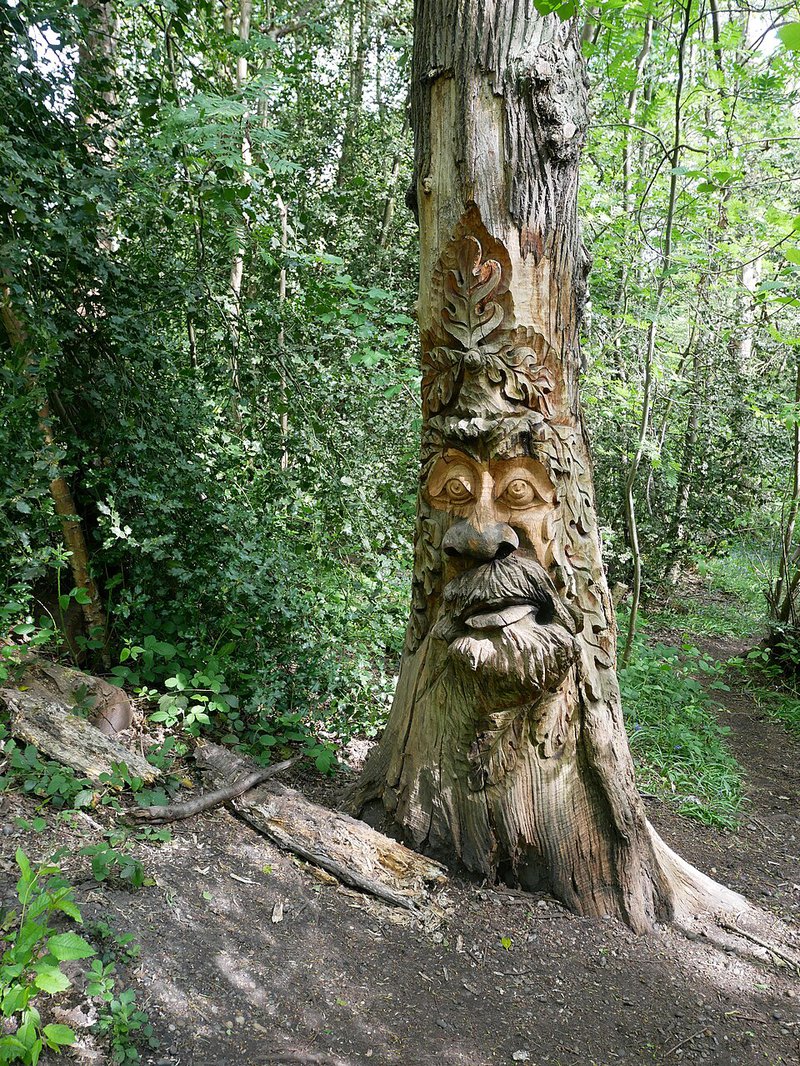
ash tree
The Green Man in Lesnes Abbey Woods, London Borough of Bexley.
​Ethan Doyle White, CC BY-SA 4.0 , via Wikimedia Commons

The UK - in ‘real’ life?

1869’s Haunted Ash of Lampits (Scotland), part of The Ghosts of Carnwath series of supernatural reportage

An account in Scotland’s Hamilton Advertiser of 28th August 1869 detailed a melancholy apparition and haunted Ash tree near Lampits Farm, to the east of Carstairs Junction in South Lanarkshire:

“There long stood a solitary, melancholy-looking ash tree in a field on the Lampits Farm, in the vicinity of Cockysyetts, which was cut down to make way for the Queen’s branch of the Caledonian Railway, and which was still more melancholy, in my imagination, from its dismal associations; for here, on one of the branches of this dowie-looking tree, a poor heart-broken girl of Cockysyetts closed her earthly sorrows and her earthly pilgrimage. No mavis or blackbird was ever seen to nestle in it scanty foliage, no merry note of music was ever heard from its dull half-blasted branches; the raven might croak and the pyot chatter there by day, and the owl scream by night, but no other merriment, dear tree, was thine. Ghosts love the darkness and the shade, and the ghost of poor Jessie was often seen gliding at midnight among the shadows of the fearsome neuk.”

Today, few trees grow on the flat windswept carseland around Lampits. There remains, however, a solitary ancient ash tree that commands a view across the flat fields towards the Caledonian Railway. Many of its upper branches have been lost to past storms, and disease ravages others, however new growth continues to sprout from a gnarled and weathered old trunk.

With scanty foliage and half-blasted branches it has an uncanny resemblance to the melancholy old ash tree described in the newspaper article over 150 years ago. Ash trees can live for up to three hundred years, therefore it’s possible that the surviving tree could have witnessed Jessie’s melancholy end, early in the 19th century. It might even have sprung from a seed of the haunted ash.

The Hardy Tree (St Pancras Old Church, London)
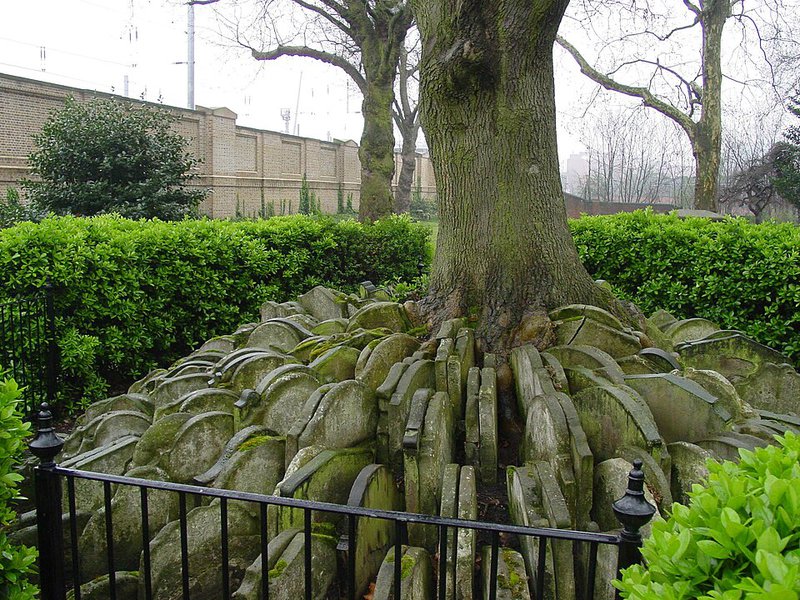
ash tree
​David Edgar, CC BY-SA 3.0 , via Wikimedia Commons

The Hardy tree was an Ash tree located in the very ancient, possibly Roman St Pancras Old Church's churchyard in London. Notable for the stacked gravestones embedded at its base in around 1860, when graves were moved by writer-then-architect Thomas Hardy to make way for the Midland Railway to run through the churchyard.

In 2014, the tree was infected with fungus, and with storms further weakening it, the tree fell in December 2022.

The Hell Tree

From: The Mysterious Hardy Tree | Graves that Circle a Tree….(2021)

It’s thought that during his time here, Hardy actually uncovered the body of a two-headed man during the excavations. Thomas never documented anything regarding and this and more recent photographs of the tree has encouraged speculation if he ever had anything to do creating the design at all. He did write a poem named Levell’d Churchyard. Thomas’s poem suggests that he didn’t have fond memories of the work he did here but its hardly surprising given the job he was expected to do.

In letters that were written by the St Pancras Old Church vicar John Tweed in 1859 to his wife Charlotte, he appeared to have witnessed a supernatural manifestation. The vicar detailed how his churchyard was home to a mass gathering of apparitions and how tombstones seem to appear at the Ash tree and that he had even seen them moving towards this tree by a unseen force.

In December 1859 he wrote to Charlotte: More missing headstones. Increasingly certain of connection with my guests. Today I traced strange lines of disturbed earth across the graveyard. Each lead to the Ash Tree. Are they being dragged there? And then where? The ash tree itself is looking increasingly unhealthy, possibly diseased. I don’t like to get too close to it.”

And then:If I hadn’t seen such as I have seen these past months I may not have trusted my eyes, but trust them I must. I shall record it in as plain a manner as I know how: By the light of the moon last night I saw a gravestone, moving with some speed, and quite of its own accord, across the graveyard. It hurtled towards the ash tree, at the base of which it disappeared, as if plunging in to the very bowels of the tree.” Finally: “Good God. Hundreds of them, of all shapes, just pouring into the tree.” He later refers to the tree being a gateway and it’s believed by some that he felt it could have possibly been a hell gate.

​“Dearest Charlotte, I do so love hearing your news from the vale, it pains me to have to recount the horrors of my life here… At night I am plagued by nightmares so vivid and dreadful that I am afraid to sleep at all. I have been nailed to the cursed iron frontage of a flame-licked and hell-bound locomotive. I have walked through the dark miasma and fetid slime of a London choked by death. I have seen the flagstones of the church floor thrust violently upwards by a sudden eruption of uncertain origin. And these are only the visions I have the constitution to retell… I begin to suspect that it is not just the lost ones that are being dragged down to that place. For how to account for the sheer number I watch descend every night? Where will it end? Must every dead soul in the parish, every dead soul in London be reclaimed for damnation?! No Charlotte, I shall not see it happen.”

​Allegedly John Tweed closed the hell gate in 1860 by burying a Bible under the tree, and scans of the Ash tree show a large book buried within the roots… but nobody has ever been allowed to dig the area. No reports were made from Tweed after 1860, when he lost the ability to record his findings; his writing hand apparently useless.

​And...this from Exit Strategy for the Restless Dead: The Hell Tree of St Pancras (2017)

He wrote to Charlotte: “Every thief, vagabond and ne’er-do-well in London seems to have wound up buried at St P. Which would be all well and good, except that the digging up of late seems to have unearthed more than just bones. Judging by the number of lost souls drifting about the place in one spirit form or another, I would offer that many of my guests are far from welcome in Heaven. I can only assume that having been buried in consecrated ground further precludes them from the other place, which leaves them, it is my horror to say, stuck in the churchyard with me”.

Tweed was not entirely without sympathy for his ghostly companions, going on to tell his wife that they were: “Sad seeming things. I feel quite sorry for them. I don’t suppose I should mind at all if only they kept their mournful meanderings to the night-time hours. Last Sunday I was midway through service when a wraith came down the aisle – an infernal thing, it stalked among the shadows between the shafts of morning light, wailing and moaning like a baleful cat. There were already murmurings amongst the parishioners about the foul stench from the digging up. Dearest Charlotte, I am not sure how much longer I can pacify them.”

The Beatles at Old St Pancras (1968)

Although St Pancras Old Church is in central London, minutes away from the great Victorian Gothic pile of a station, the area can be quite a haunting, lonely place, perched on a hill overlooking the railway junctions of St Pancras and King’s Cross. I remember visiting in the snows and blizzards of Winter 2015, when the church grounds felt like something from one of Grimm’s tales.

The Lively Arts: Thomas Hardy - A Haunted Man (1978)

The Ash Tree - Vampire/Zombie Killer

​In folklore, an ash stake is traditionally used to kill vampires, especially in Slavic, Russian, and Baltic traditions. Ash wood represents protective, "life" energy in Norse mythology, where it can help destroy the Draugr (Undead), or at least weaken their supernatural powers. The Viking version of vampires/zombies are described as bloated “death-blue/black” revenants who ferociously protect their treasure, with the ability to grow to giant sizes and shapeshift.

Note: other words for the Undead or Vampires in Norse legend include:

Aptrgangr (Again-walker): One who walks again.

Haugbúi (Barrow-dweller): One that dwells within its burial mound (howe).

Gjenganger: A ghost or revenant.

​In Bram Stoker’s Dracula (1897), Abraham Van Helsing utilizes wooden stakes associated with specific woods like ash or white oak to impale vampires by piercing their Undead hearts.

Three BBC adaptations of The Ash Tree by M.R James

The Ash-Tree (1986)

And a later telling from 2000; my idea but ripped off by a then senior BBC colleague:

​A Ghost Story for Christmas: The Ash Tree (1975) - The big reveal...

​Ash Wednesday (1973) full movie

LINKS

​The Haunted Ash of Lampits: https://clydesdalesheritage.org.uk/article/the-haunted-ash-of-lampits/

​Askafroa: https://www.stronghold-nation.com/history/myth/askafroa

​Ash Wednesday and its pagan origins: https://susannesanlier.wordpress.com/2015/02/18/ash-wednesday-and-its-pagan-origins/

​What is Imbolc? The Celtic fire festival that welcomes spring—in February: https://www.nationalgeographic.com/culture/article/imbolc-celtic-celebration-brigid

​Draugr, Haugbui And Aptrgangr – The Undead of Norse Myths: https://vikingr.org/other-beings/undead-viking-age?srsltid=AfmBOooD9FPhdZ_fGZNJpou74mRFiwpS_qX8UmyR39HCDmJHrj0w4hDj

​Thomas Hardy: Gravestone-encircled tree falls in Camden: https://www.bbc.co.uk/news/uk-england-london-64110086

​The Mysterious Hardy Tree | Graves that Circle a Tree….:https://paranormalhauntings.blog/2021/12/26/the-mysterious-hardy-tree-graves-that-circle-a-tree/

​Exit strategy for a restless dead: The Hell Tree of St Pancras: https://portalsoflondon.com/2017/01/20/the-hell-tree-of-st-pancras/

STEPHEN ARNELL’S HISTORICAL NOVEL THE GREAT ONE IS AVAILABLE ON AMAZON KINDLE:https://www.amazon.co.uk/Great-One-Secret-Memoirs-Pompey-ebook/dp/B0BNLTB2G7

SAMPLE:

Friday, 19 June 2026

Midsummer Oak Tree Tales, Traditions & Dancing Skeletons

​​The oak is the national tree of England; symbolising Strength, Longevity, Wisdom, Spirituality, Nobility and Trustworthiness. Virtues sadly currently lacking in ALL England and the UK’s leadership cliques, regardless of party affiliation.

​For the Greeks, Romans, Celts, Slavs and Teutons, the mighty oak ranked first amongst venerated trees and was associated with many of the supreme gods (or high ranking deities) in each Pantheon. Oak trees are more susceptible to lightning strikes than other trees, a perceived link with the Sky Gods. This is actually due to their tree’s natural high water content and their stature; all quite logical, really.

​England’s oldest oak is considered by many to be King Offa's Oak in Windsor Great Park (Berkshire), estimated to be between 1,300 and 1,500 years old. The Bowthorpe Oak in Lincolnshire is the UK's widest oak with a 13-metre girth, it is estimated to be over 1,000 years old. Its immense hollow trunk was once used as a dining room, seating 12 people “with ease”.

​An ancient 450 yera-old oak looms over my back garden; sometimes a forbidding presence it also reminds one of the continuity of life in the English Shires. It’s the home to a colony of rather cheeky squirrels, who now gather each morning for the daily handout of nuts (twenty of the critters at the last count). On June 11th, 2026, a huge part of the oak suddenly collapsed in my garden almost breaking through my drawing room windows, necessitating the urgent attendance of tree surgeons. ‘Sudden Branch Drop Syndrome’, apparently.

This occurred AFTER I had filed my Oak Tree investigation. Eerily reminiscent of the ‘evil tree’ scene in the 1982 horror movie, Poltergeist.

oak tree
My garden. (Author’s image)

Poltergeist Evil Tree scene

Sherwood Forest’s Major Oak in Nottinghamshire is between 800 to 1,000 years old and linked of course to the legends of Robin Hood. It is the largest by mass, weighing around 23 tonnes. The Marton Oak in Cheshire is approximately 1,200 years old, famed for its 14-metre girth:

oak tree
The Marton Oak
​Hypercolius, CC BY-SA 4.0 , via Wikimedia Commons

The oak has royal connections in England, probably with the last monarch to display much in the way of personality, intelligence and political acumen - Charles II. The Royal Oak was the tree in which the future King Charles II of England hid to escape Cromwell’s Roundheads after his defeat at the Battle of Worcester in 1651.

​The tree standing on the site today is believed to be a two or three hundred year-old descendant of the original and is thus known as 'Son of Royal Oak'. The original tree was destroyed during the seventeenth and eighteenth centuries by tourists who cut off branches and chunks of bark as souvenirs.

​Restoration Day, more commonly known as Oak Apple Day or Royal Oak Day, was an English, Welsh and Irish public holiday, observed annually on May 29th, to commemorate the restoration of the Stuart monarchy in May 1660. The public holiday was officially abolished under the Anniversary Days Observance Act 1859, but in some parts of England the day is still celebrated with gusto.

Celebrations to mark the event included the wearing of oak apples or sprigs of oak leaves. Those who failed to wear a sprig of oak were pelted with bird's eggs or beaten harshly with stinging nettles. In Sussex, those not wearing oak were liable to be pinched on the backside, giving rise to the unofficial name of "Pinch-bum Day"; similarly it was known as "Bumping Day" in Essex.

​Events still take place at Aston-on-Clun in Shropshire, Great Wishford in Wiltshire, Upton-upon-Severn in Worcestershire, Marsh Gibbon in Buckinghamshire and Membury in Devon. At All Saints' Church, Northampton, a statue of Charles II is garlanded with oak leaves at noon every Oak Apple Day, followed by a celebration of the Holy Communion according to the Book of Common Prayer. Oak Apple Day is also celebrated in the Cornish village of St Neot, with a vicar led procession through the village. In 2021, Oak Apple Day was celebrated at Eton Wick within sight of Windsor Castle, one of Charles II’s many homes.

Our old friend The Green Man is always depicted wreathed in oak leaves; here he is in his most savage aspect, as shown at the beginning of BBC1’s adaptation the Kingsley Amis’ classic chiller The Green Man (1990):

Generally, the oak is regarded as a benevolent plant but, as always, there are exceptions to every rule...

​The Midsummer Tree, Sussex

​The Midsummer Tree, by the Grove Lodge roundabout in Broadwater: legend says that every year on Midsummer’s Eve, June 23rd, skeletons would rise from the roots of the tree and dance underneath it.

A plaque states: "This tree, believed to be over 300 years old, was once celebrated in local folklore. Every year, at Midnight on Midsummer's Eve, it was believed that skeletons would rise up from its roots and dance to the rattling of their own bones until daybreak."

​In 2006, local paper The Argus reported that the tree was under threat from the Highways Agency as it was suffering from brown cubical rot. Following a campaign by neighbours and folklorists, the tree was saved by conservationist Chris Hare, who proclaimed, “This tree is a vital part of Worthing's heritage. The origin of the Midsummer Tree is to be found in England's pagan past, when Midsummer, rather than Halloween, was viewed as the most auspicious time to commune with the spirit world."

​The tale of the dancing skeletons was first recorded by Sussex folklorist Charlotte Latham in 1868, writing, “There stood, and still may stand, upon the downs, close to Broadwater, an old oak-tree, that I used, in days gone by, to gaze at with an uncomfortable and suspicious look from having heard that always on Midsummer Eve, just at midnight, a number of skeletons started up from its roots, and, joining hands, danced round it till cock-crow, and then as suddenly sank down again. “My informant knew several persons who had actually seen this dance of death, but one young man in particular was named to me who, having been detained at Finden by business till very late, and forgetting that it was Midsummer Eve, had been frightened (no difficult matter we may suspect) out of his very senses by seeing the dead men capering to the rattling of their own bones.”

​According to Chris Hare, there has been a gathering of would-be believers at the tree every midnight on June 23rd in recent years...

The Chained Oak, Staffordshire

The Chained Oak, near the village of Alton, Staffordshire
​Gary Rogers / Chained Oak

On an autumn night in 1821, the wealthy Earl of Shrewsbury was travelling through the village of Alton on his way home to the family estate of Alton Towers. Without any warning, an old woman (or man, according to alternative versions) popped up in front of his coach, startling his horses. The coach stopped to find why she was there, and the crone pleaded for the charity of a coin. The Earl cruelly dismissed her, so she placed a curse on him, croaking, "For every branch on the Old Oak Tree here that falls... a member of the Earl’s family will die.”

The Earl wasted little time with the wittering of the wretched old woman, dismissing any talk of a curse and headed back to Alton Towers. But that very evening, whilst the Earl snored in his grand bed, a terrible storm raged, tearing a single branch from the oak tree. That same night, a member of the Earl’s family mysteriously passed away. When the Earl awoke and learned the news, he was convinced of the hag’s curse, and thereby the power of the oak. The flustered Earl immediately ordered every branch of the oak tree be bound up in chains to prevent it from falling, and to this day, the old oak remains bound by chains.

A large branch fell from the old oak in 2007, but the Earl’s descendants confirmed that no-one had perished. Sadly, some of the oak has disintegrated, in part due to the action of chains; one had rusted so much as to cause the collapse of a large part of the tree. However, most of the tree still stands.

​The 16th Earl, John Talbot, appeared to have learned Scrooge-lesson of his predecessor and was widely known for his philanthropy and support of local schools and churches; earning him the nickname ‘Good Earl John’.

​In modern Alton life, the story of the chained oak lives on in Alton Towers theme park, where the story has been re-written and dramatised for the ride ‘Hex – The Legend of the Towers’, a walkthrough dark ride based around the chained oak legend.

​In 2014, an independent horror film based on the legend was released.

​Old Knobbley, East Anglia

A notable old Oak tree has stood in Mistley, Essex for 800 years, taking anchor around the time Bad King John signed the Charter of the Forest. Named Old Knobbley, due to its lumpy appearance, the trunk is 9.5 metres wide (more than twice its height), topped by gaunt branches.

Infamous 17th-century Witchfinder General Matthew Hopkins lived in nearby Manningtree, making his name torturing those accused of witchcraft to extort false confessions, killing hundreds. Village folklore says some of the accused successfully sought shelter in the hollows and branches of Old Knobbley.

This is of course unlikely, but chimes with the folklore image of trees as protectors; comforting to think of Old Knobbley doing his bit to offer sanctuary to those in extreme peril.

One does wonder why Hopkins, with his propensity for arson, didn’t just set light to the tree and settle down comfortably to watch the fun.

​According to local legend, Hopkins' ghost is said to haunt Mistley Pond.

Hywel Sele was a cousin of Owain Glyndŵr, self-proclaimed Prince of Wales, but was also friend of Henry IV of England and opposed Glyndŵr’s rebellion (1400-1415). After Sele was captured by Glyndŵr he accepted a gracious invitation to hunt with the ‘Prince’ on the Nannau Estate, but, after failing to kill the rebel leader Sele was slain and sealed up within the hollow of a gnarled oak tree. The oak naturally enough, was soon haunted by his shade, becoming known as Derwen Ceubren yr Ellyl ("The Hollow Oak of the Devils"), Ceubren yr Ellyll ("The Hollow Tree of the Ghost") or simply the Nannau Oak.

APPENDIX - WALES: Derwen Ceubren yr Ellyl ("The Hollow Oak of the Devils")/Ceubren yr Ellyll ("The Hollow Tree of the Ghost")

In 1778 one Thomas Pennant inspected the oak and noted that it was 27 feet 6 inches (8.38 m) in girth but that it was in an advanced state of decay, resembling the shape of a gothic arch. The oak collapsed on July 13th 1813; it was said Sele’s corpse fell from within it and was supposedly buried in the ruins of Cymer Abbey.

And finally, The Oaks of Avalon

​The Oaks of Avalon iare a pair of ancient 2,000 year-old oak trees in Glastonbury (Somerset), named after the ancient apocalyptic figures Gog and Magog. Believed to have been originally part of a ceremonial druidic avenue at the entrance to Glastonbury Tor/Avalon, most of which was cut down in 1906 to make way for a farm. Christian belief has Joseph of Arimathea following the row of trees towards the tor upon his arrival in Albion.

​In April 2017, though already lifeless, Gog was badly damaged by an accidental fire believed to be from an incense burning candle, but was extinguished by the Devon and Somerset Fire and Rescue Service.

LINKS:

​Meetings with Remarkable Trees - The Bowthorpe Oak: https://www.youtube.com/watch?v=cSoa2N3UDD4

The Folklore of the Oak Tree: https://www.youtube.com/watch?v=0rCJjJCd3ug

​'Do not sit under trees', council warns park-goers: https://www.bbc.co.uk/news/articles/ckgdly19j6yo

The English Oak: https://www.historic-uk.com/CultureUK/The-English-Oak/

​Walks in Somerset: In Search of the Oaks of Avalon, Glastonbury: https://www.youtube.com/watch?v=SNgi2dzKmxc

​The Mighty Oak: https://walkingthewolds.co.uk/f/the-mighty-oak

​Trees: myths and folklore: https://www.rhs.org.uk/education-learning/school-gardening/resources/curriculum-linked/trees-myths-and-folklore

​Sussex folklore explored: Worthing tree where skeletons are said to dance on Midsummer's Eve: https://www.sussexexpress.co.uk/heritage-and-retro/retro/sussex-folklore-explored-worthing-tree-where-skeletons-are-said-to-dance-on-midsummers-eve-4464732

300-year-old 'haunted' Sussex tree where skeletons 'dance' once a year: https://www.theargus.co.uk/news/24619238.worthing-story-midsummer-skeleton-tree/

​Midsummer Tree Worthing, West Sussex: https://ati.woodlandtrust.org.uk/tree-search/tree/?treeId=55875#/

​The Legend of Old Knobbley, East Anglia's Spookiest Tree: https://www.thorogood.co.uk/the-legend-of-old-knobbley-east-anglias-spookiest-tree/

​The Legend of the Chained Oak: https://burialsandbeyond.com/2023/12/18/the-legend-of-the-chained-oak/

​Old Knobbley Oak Tree: https://oldknobbley.com/

​Country diary: Old Knobbley – a tree of twisted branches and even twistier myths: https://www.theguardian.com/environment/2022/nov/10/country-diary-old-knobbley-a-tree-of-twisted-branches-and-even-twistier-myths

​Sleepy Hollow - The (Oak) Tree of the Dead (1999): https://www.youtube.com/watch?v=72_-phtcbEw

​Derwen Ceubren yr Ellyl, Nannau Park: https://www.nationaltrustcollections.org.uk/object/1149879

Hywel Sele and the Demon Oak: https://geoffbrookes.co.uk/hywel-sele-and-the-demon-oak/

Broadwater Midsummer Oak Tree, Worthing, West Sussex: https://www.youtube.com/watch?v=a6UCIXwPKzg

​Ancient Glastonbury oak tree known as Gog damaged in fire: https://www.theguardian.com/uk-news/2017/apr/27/ancient-glastonbury-oak-tree-known-as-gog-damaged-in-fire

​People are crying as they visit 2,000-year-old tree Gog that went up in flames near Glastonbury: https://www.somersetlive.co.uk/news/somerset-news/distressed-visitors-survey-damage-2000-38464

STEPHEN ARNELL’S NOVEL THE GREAT ONE IS AVAILABLE NOW ON AMAZON KINDLE:

SAMPLE:

Sunday, 15 September 2024

Unearthing the Unexplained: Geological Secrets of Paranormal Hotspots

Shedding light on paranormal mysteries

Across the globe, certain locations have gained notoriety as hotspots for unexplained paranormal activity. From ghostly apparitions to unexplained lights in the sky and encounters with cryptozoological creatures, these places captivate the imagination and stir a sense of wonder, and fear. What is particularly intriguing is the frequent correlation between these paranormal phenomena and unique geological features. Could it be that the very ground beneath these mysterious sites holds the key to understanding the unexplained?

This article delves into the potential connections between geological factors and paranormal activity, exploring how elements such as fault lines, underground water sources, and electromagnetic fields might influence or even generate these strange occurrences. By examining both well-known and lesser-known case studies, alongside scientific perspectives, we aim to shed light on the mysteries that lie at the intersection of geology and the paranormal.

Geological Factors and Paranormal Activity

Geological features may seem like unlikely culprits in the realm of the paranormal, but growing evidence suggests that the Earth’s natural energy could play a significant role in the manifestation of paranormal events. Several key geological factors are believed to influence these occurrences, potentially acting as catalysts or conduits for the unexplained.

Fault Lines: Earth's Shifting Energy

paranormal
San Andreas Fault in the Carrizo Plain Nov 2007. Commons.wikimedia.org/wiki/File:Kluft

Fault lines are fractures in the Earth's crust where tectonic plates meet and sometimes clash, releasing significant amounts of energy during seismic activity. Some researchers theorise that this energy might interact with the environment in ways that contribute to paranormal phenomena. For instance, areas surrounding the San Andreas Fault in California are not only prone to earthquakes, but also frequent UFO sightings and reports of strange lights in the sky. This has led to speculation that the fault line’s energy might be more than just geological, potentially influencing or even creating these paranormal occurrences.

Underground Water Sources: A Hidden Catalyst

Water has long been associated with the paranormal, and many haunted locations are situated near rivers, lakes, or underground streams. Some theories propose that moving water, particularly underground, can act as a conduit for spiritual energy or amplify existing anomalies. This could explain why so many haunted sites, such as the famous Borley Rectory in Essex, are located above or near underground water sources. In these cases, the presence of water may create the conditions necessary for paranormal activity, possibly by affecting the local electromagnetic fields.

Electromagnetic Fields: The Invisible Force

Electromagnetic fields (EMFs) are another area of interest in paranormal research. Certain geological features, such as mineral deposits or fault lines, can generate or amplify EMFs, which have been linked to paranormal experiences. High levels of EMFs have been detected at numerous haunted locations, leading to the hypothesis that these fields might attract or even create paranormal phenomena. Sites like Sedona, Arizona, known for its energy vortices, have been hotspots for UFO sightings and spiritual experiences, suggesting that the area's unique geological properties might be influencing these occurrences.

Case Studies: Unearthing the Unknown

To better understand the potential connections between geological features and paranormal activity, it is helpful to examine specific locations where these elements seem to intersect. While some sites are well-known, others are less frequently discussed but equally intriguing.

Bodmin Moor, Cornwall: The Beast and the Earth

paranormal
Rough Tor in Cornwall, UK, Andy F, Wikipedia

Bodmin Moor in Cornwall is a place rich in local folklore, including sightings of the phantom wildcat known as the Beast of Bodmin. What makes this area particularly interesting is its geological composition. Bodmin Moor sits atop a network of ancient granite formations known to generate unique electromagnetic fields. The combination of these geological features may create an environment conducive to the strange sightings and eerie atmosphere reported in the area.

Wookey Hole Caves, Somerset: Echoes of the Past

paranormal
Underground lake in the first chamber, Wookey Hole Caves – Wikipedia

The limestone caves of Wookey Hole in Somerset have long been associated with paranormal activity, with tales of a haunted witch and mysterious sounds emanating from the depths. The caves are located near significant underground rivers, and the unique mineral formations within them may contribute to the reported paranormal phenomena. The interaction between the water and the limestone could generate the conditions necessary for these unexplained occurrences, making Wookey Hole a prime example of how geology and the paranormal might intersect.

Hessdalen Valley, Norway: Lights in the Sky

Hessdalen Valley in Norway is known for the mysterious lights that regularly appear in its skies, a phenomenon that has puzzled researchers for decades. The valley’s geological composition, rich in sulphur and iron deposits, may play a role in these sightings. Some theories suggest that the interaction between these minerals and the Earth’s electromagnetic fields could be creating the conditions for these lights to manifest, offering a possible explanation for one of the most enduring mysteries of the region.

Scientific Perspectives: Bridging the Gap

While the connection between geological features and paranormal phenomena remains largely speculative, scientific research provides some intriguing insights. One theory posits that the Earth’s electromagnetic fields, influenced by geological formations, could be responsible for some paranormal experiences. For example, high EMF levels are known to cause symptoms such as feelings of unease, hallucinations, and the sensation of being watched, effects that could easily be mistaken for paranormal activity.

Additionally, the piezoelectric effect, where stress on certain minerals like quartz generates electrical charges, has been suggested as a possible mechanism behind some hauntings. This effect could produce electromagnetic fields that interact with the environment, potentially leading to the types of experiences often reported in haunted locations.

Despite these theories, the scientific community remains divided on the issue. Skeptics argue that psychological factors or environmental conditions are more likely explanations for paranormal reports. However, the possibility of a geological connection continues to intrigue researchers and encourages further exploration into this fascinating field.

Conclusion

The relationship between paranormal hotspots and geological features is a compelling area of study that blurs the lines between science and the supernatural. While definitive proof remains elusive, the correlations between geological factors such as fault lines, underground water sources, and electromagnetic fields with paranormal activity are too significant to ignore.

Whether it’s the UFO sightings along the San Andreas Fault, the mysterious lights over Hessdalen Valley, or the haunting echoes within Wookey Hole Caves, these examples suggest that the Earth itself may play a role in the mysteries that have captivated humanity for centuries. As our understanding of geology and the paranormal continues to evolve, we may one day uncover the truth behind these strange and unexplained phenomena.

In the meantime, the connection between the Earth’s natural features and the paranormal remains an open question, one that invites further research, debate, and perhaps a touch of wonder at the mysteries still hidden in the world around us.

References

Persinger, M. A. (1985). The Earth’s magnetic field and its relationship to paranormal activity: A review. Journal of Parapsychology.

Tandy, V. & Lawrence, T. (1998). The ghost in the machine: An investigation into the relationship between electromagnetic fields and reported hauntings. Proceedings of the Society for Psychical Research.

Pease, M. C. (2009). Fault lines and the paranormal: Earth energies in paranormal research. Journal of the Society for Psychical Research.

Harte, J. (2000). Geological anomalies and paranormal phenomena: A study of ley lines and earth energies. Oxford University Press.

Guiley, R. E. (1991). The Encyclopedia of Ghosts and Spirits. Facts on File.

Nickell, J. (2012). Tracking the Man-Beasts: Sasquatch, Vampires, Zombies, and More. Prometheus Books.

Radford, B. (2016). Investigating Ghosts: The Scientific Search for Spirits. Rhombus Publishing Company.

Clark, J. (1998). UFOs in the 21st Century: An Encyclopedia of Extraterrestrial Events. Visible Ink Press.

Friday, 25 August 2023

Amy Investigates - The Haunting Tale of Dick Turpin

With Halloween just around the corner, ghosts and ghouls are getting ready for their annual airing. Yet, York is a city well-acquainted with the paranormal, and hauntings are not confined to a solitary night. This city's cellars are particularly partial to paranormal phenomena, with dank, dark spaces lending themselves to the imagination. Any sound, smell, or visual experience is not immune to supernatural spin, and by adding the merest hint of a rumor, preferably of some tragic demise, and those creaking pipes are suddenly the agonizing cries of the dearly departed.

Harry Martindale’s famous account of a ghostly procession of Roman soldiers passing through the cellar of the Treasurer’s House is a particular favorite of mine although not all of York’s spirits are content to dwell underground.

One such spirit who supposedly makes his presence felt is that of the infamous highwayman Dick Turpin. While his stay in York was cut short by the Tyburn, it didn’t stop the residents from claiming him as their own. And Mr Turpin happens to be a neighbor of mine; he resides in the graveyard at the end of my street. Visitors come to photograph his final resting place, while sightseeing buses include him in their whirlwind tour of the city. He also makes a guest appearance in my Porter Biggleswade series as a lonely pipe-player who haunts the graveyard. Well, it seems fitting, considering.

Dick Turpin’s Grave, York - Amy Flint (Amy Investigates)

Richard Turpin was born in 1705, in Hempstead, Essex, and trained to be a butcher like his father. These skills proved useful when he joined a deer poaching gang in his early twenties, and thus embarked on a life of crime. Burglary and murder were soon added to his CV, and he was forced to flee to Yorkshire after killing his accomplice during a botched robbery.

By 1737, he had adopted the alias John Palmer and was posing as a horse trader. An unfortunate incident with a gun and another man’s game cock resulted in a stay at the House of Correction at Beverley. Already suspected of theft and trade in stolen horses (which was a capital offence) Turpin was transferred to the prison in York. It is here he wrote to his brother-in-law for help, something he was later to regret. A former tutor recognised Turpin’s handwriting and exposed him. Turpin was found guilty of horse theft and condemned to death. He was thirty-four.

On 7th April 1739, Turpin was taken through York in an open cart. Crowds observed his macabre progress to the Knavesmire, where the gallows was waiting. Turpin was left hanging until late afternoon when he was cut down and taken to the Blue Boar in Castlegate. His burial in the graveyard of St George’s Church, Fishergate was briefly interrupted by body-snatchers who sold his remains for illegal medical dissection. Fortunately, the crime was discovered, and Turpin was reinterred.

While there is some doubt regarding the authenticity of the grave, belief in Turpin’s ghost is real enough. He is said to haunt a lonely stretch of river path in the former slum area of St George’s field. Once home to those living on the fringes of society, this quiet spot raises expectation of a ghostly encounter. If setting is key, it certainly suits Turpin, who veils himself among the trees, waiting for unsuspecting victims to fleece. Stagecoaches once kept him busy, but now he is reduced to challenging dog walkers, cyclists, and children on scooters, although I don’t fancy his chances with the latter. The area is also prone to flooding, which must be something of an inconvenience.

Lonely stretch of river rumoured to be haunted by Dick Turpin - Amy Flint (Amy Investigates)

Whilst it seems fitting that Turpin haunts this spot (an area once inhabited by criminals and the like – presumably, he feels at home), there is no record of him ever having been to St George’s Field. He was a prisoner during his stay in York, brought to the city in chains. While he may have received visitors during his incarceration, he certainly wasn’t at liberty to make house calls. Hence, it would seem more plausible for him to haunt York Castle where he was held, the Tyburn on the Knavesmire or even the graveyard he is asserted to be buried in. A ghostly procession would even be appropriate, materializing on the date he was taken from the prison to the gallows, a stone tape of the grim event imprinted on the fabric of the city.

I decided to track Dick Turpin’s final journey for Amy Investigates one Sunday afternoon. Time shy, I was obliged to do it during Storm Ciara, which certainly made for a dramatic experience. I was blown along his route from outside the former prison towards Castlegate. The streets of York are often bustling, so it was easy to imagine crowds lining the road as Turpin was taken over Ouse Bridge, along Ousegate, and up the incline to Micklegate Bar. Passing through the city’s wall, he progressed along Blossom Street towards The Mount. The Tyburn, which was pulled down in 1812, was waiting for him on the Knavesmire opposite Pulleyn Drive. A paved area and a plaque now mark the spot.

The weather being inclement, I wasn’t surprised to find myself quite alone. Yet, as I stepped onto the paved area the wind suddenly dropped and the sun came out. I took a picture to capture this most extraordinary moment. A great calm descended, as if the tortured spirits of those condemned were taking a breath and in doing so allowed me to collect mine. The moment was extraordinary, and one I’ll never forget. I lingered briefly before retracing my steps back to where Turpin’s body was laid out at the Blue Boar. The rain had started afresh along with the wind.

The site of York’s Tyburn where Dick Turpin was executed - Amy Flint (Amy Investigates)

I continued down to the river in the hope of catching a glimpse of Turpin, but it was not to be. Perhaps he is a fair-weather spirit who favors sunny days rather than stormy, or maybe he doesn’t haunt the city after all. Either way Turpin was little more than a thug and a murderer, a far cry from the handsome, amiable rogue legend has created. Gladys Jones sums him up well in Shadows in the Mist. ‘He was a rotten musician and a second-rate horse thief; people were strung up for less. He should have stayed in Essex.’

Read more in my book:

(‘Shadows in the Mist’ - https://www.lulu.com/en/gb/shop/amy-flint/shadows-in-the-mist/ebook/product-zwg556.html).

Sunday, 2 July 2023

The Creepy Haunted Doll Of Finedon

Finedon is a picturesque, semi-rural village that sits quietly amidst the county of Northamptonshire, England. The village is famous for its quaint public houses, breathtaking hillside views, and cobbled streets that have awed people for centuries. Residents and visitors alike enjoy the wonders of grassy knolls, peaceful trickling rivers, and the gentle bleating of sheep, but the town has not always dwelled in such calmness. The rise of the Black Death plague in 1348 saw the once-thriving and bustling village slowly deplete of everything that gave it character. Children’s laughter that once graced the lush green pastures slowly began to fade, and the clunking sound of horse hooves on the cobbled streets became no more. Illness and death cast their sticky web of destruction over every home, forcing many to flee. An orchestra of silence was all that echoed in the tragic streets and hopeless homes for many years.

New Beginnings

Fortunately, the Black Death eventually succumbed to nature. Resettlement began sometime in the 17th century and life returned to Finedon. Inns were again filled with laughter, farming began to flourish and the once death-infested homes became occupied by young and happy families. The town continued to develop into the 20th century with no further signs of misfortune. Until a young school teacher was appointed the village school’s headmistress in 1901. Her name was Mary Ozier and curiously, our tale begins with nothing other than a kind gesture from this professional lady.

haunted doll

A Commemorative Oddity - A Haunted Doll

Proud of her appointment and seeking to christen her new status, Mary pondered greatly. She also needed something unique to commemorate the Finedon school’s upcoming anniversary, something that reflected the unique and quirky character of the village and school. She chose a beautifully crafted wooden doll and strategically positioned it in a small alcove above the school's main entrance, where it could be admired by all and keep watch over everything!

Very little is known about the origins of the doll. It is believed that it was made by a mysterious merchant who Mary allegedly met on a quiet country walk one afternoon. After conveying her ideas for the commemoration, the merchant gifted Mary the doll. Conveniently, it lay inside a sack upon his back. He took no payment, walked away, and was never seen again.

Dressed to Impress

The doll was deemed peculiar from day one by all who saw it. Mary’s sentiment was appreciated by the locals but there was something about the doll’s aura that emitted an uncomfortable, eerie feeling. Standing at approximately three feet in height, the figure was so intricately carved that the dark brown flowing dress looked almost real. Equally impressive was the carved white Dutch cap that adorned the head. The face appeared emotionless with dark staring eyes and tightly closed lips. These features were a strange contrast to the cherub cheeks upon which they sat. The doll’s attire closely resembled the fashion of the modern-day Puritan woman, complete with dark boots with a slight heel, also carved from wood.

haunted doll of finedon

The Dutch headpiece became the doll’s most famous and defining feature. It also resembled the hat worn by the children of the school at the time. As curiosity and uncertainty grew, the strange figure eventually became known as the ‘Dutch Doll of Finedon’. Finally, and probably the strangest feature of all was what sat tightly grasped in its hands. On the right was a bible, and on the left was a scroll that bared the writing ‘ Search the scripture-John-verse 39’...

Sinister Happenings

Days after the doll’s arrival, inexplicable events began to unfold. The once tranquil and carefree vibes of the school turned to anxiety and dread. One morning, a chastised student was sent to the school's front lawn to spend her break alone while others played in the yard at the rear. As she moped, a startling gust of wind appeared from nowhere, knocking her backward with great force. The girl grazed her head as she fell against an old tree. Within seconds, the wind was gone and the calmness of that June morning returned. As the girl composed herself, she saw something that chilled her to the marrow and contested until her dying day. Peering down from its concrete throne, the doll waved its left arm, scroll in hand, and juddered violently. The tight wooden lips were puckered, and its eyes glared with sadistic pleasure. Within seconds, the face returned to normal and the arm to its original position. Shocked and shaken by what had happened, the girl ran home, never to return to the school.

haunted doll of finedon

Since that horrifying incident, many students recounted witnessing the doll move on its own accord and the school record book reportedly possessed pages of daily occurrences depicting many traumatizing accounts. In the dead of night, the students who lived as boarders could often hear the sound of tiny pattering feet scurrying through the hallways. Dormitory doors would open on their own and scratching sounds could be heard on the floors. Some students claimed to see ‘tiny wooden hands’ and ‘beady wooden eyes’ peering around open doors before they were violently slammed shut. Piercing and blood-chilling cackling could also be heard around the school. Quite often, the shrill cries disrupted lessons and caused panic among teachers and students alike.

Was it a Haunted Doll or Not

Concerned for the student’s welfare, staff and parents decided to examine the doll during a school holiday. Convinced that the doll possessed a mechanical feature that could explain the phenomena, it was brought down from its cove above the door. After a thorough search, nothing was found. It was suggested that the doll may have been used in witchcraft rituals or even acted as a vessel for a malevolent spirit. Taking no chances, the now haunted doll was permanently removed from the cove. It was tightly locked in a chest and placed in the school’s dank, dark cellar.

For a short while, calmness settled upon the school. During this period, poor behavior would often be controlled with ‘tongue in cheek’ threats of detention in the cellar. Students trembled at the thought of being at the mercy of the wooden demon. It was the perfect deterrent. As time passed and incidents lessened, students began to believe the stories had been nothing more than a hoax. That was until a young student was sent to the cellar to retrieve more slates.

Haunting Crash

As the student gathered the resources, she heard an almighty crash behind her. The chest that housed the doll had fallen from a shelf and hit the floor with a deafening thud. Slowly, the chest started to rattle and vibrate furiously. A series of violent thumps followed and the chest edged toward the girl. Groans and gasps could be heard from inside the chest, each one more penetrating and violent than before. The student fled the cellar immediately. Terrified and shaken by the incident, she too left the school, never to return.

Eventually, the cellar was permanently closed, leaving the haunted doll entombed and alone for many years. Although the phenomenon decreased, a lingering and anxious atmosphere engulfed all who walked through the school. And despite the cellar being deep below the classrooms and far from the dormitories, strange laughter and voices could still be heard. The chilling echoes pounded through the school in the dead of night for many years.

A Mysterious Twist

Decades passed but the phenomenon and unrelenting feelings of dread persisted. A new headteacher, determined to alleviate the school of its supernatural reputation, had the doll removed. It was taken to the local St Mary’s church, and fixed tightly to the west wall. Locals hoped this would eliminate further troubles and suppress whatever strangeness lurked inside. As a result, the school returned to a state of calm that had not been felt for almost a century. Years passed and the memory of the Dutch doll began to diminish. All that remained were the frightening tales that once plagued the school, passed down through the generations. That was until an alarming and unexpected event took place...

Haunted Finedon Doll Vanishes

On the 24th of January, 1981, the parishioner unlocked the church to prepare for his daily duties. Upon walking to his alter, he noticed something unusual on the west wall. Further inspection revealed that the Dutch doll was no longer there. The hooks and bolts that kept it secure were strewn on the floor. Confused and unnerved by what had happened, the parishioner immediately visited the local police. Fears of supernatural forces being responsible resonated with him more than the idea of a potential thief. The parishioner knew that he had locked and bolted all the church doors the previous evening. All windows had also been locked, and only he possessed the key. It hadn’t been possible for anybody to gain entry without his permission. As a result, homes, fields, shops, and even the school were aptly searched. Locals were questioned but to no avail and restlessness returned to the town.

Tales of the haunted doll and superstition began to resurface, causing some parents to remove their children from the school amid the fear that the doll had returned. Fears of misfortune and miscellaneous activity repeating themselves grew at an alarming rate, forcing the town’s hierarchy to act. The townsfolk were reassured that the doll would be found and returned to the church. Despite everyone’s efforts, the haunted doll was never recovered. No further progress has since been made, and its disappearance remains Finedon’s biggest mystery. Is the Dutch doll residing in your home? It might be wise to check all those dark places before going to bed...

Photo Credits

St Mary’s church

Photo Credit: Wikimedia Commons, The Church of St. Mary the Virgin, Finedon (Public domain)

Haunted Doll photo

https://cdn.playbuzz.com/cdn/b983998b-1e60-4476-8ee6-20cf35bb3213/9259919c-06c0-4e43-8055-c804e1a8b96f.jpg