
This would be Arthur’s Oven/O’on
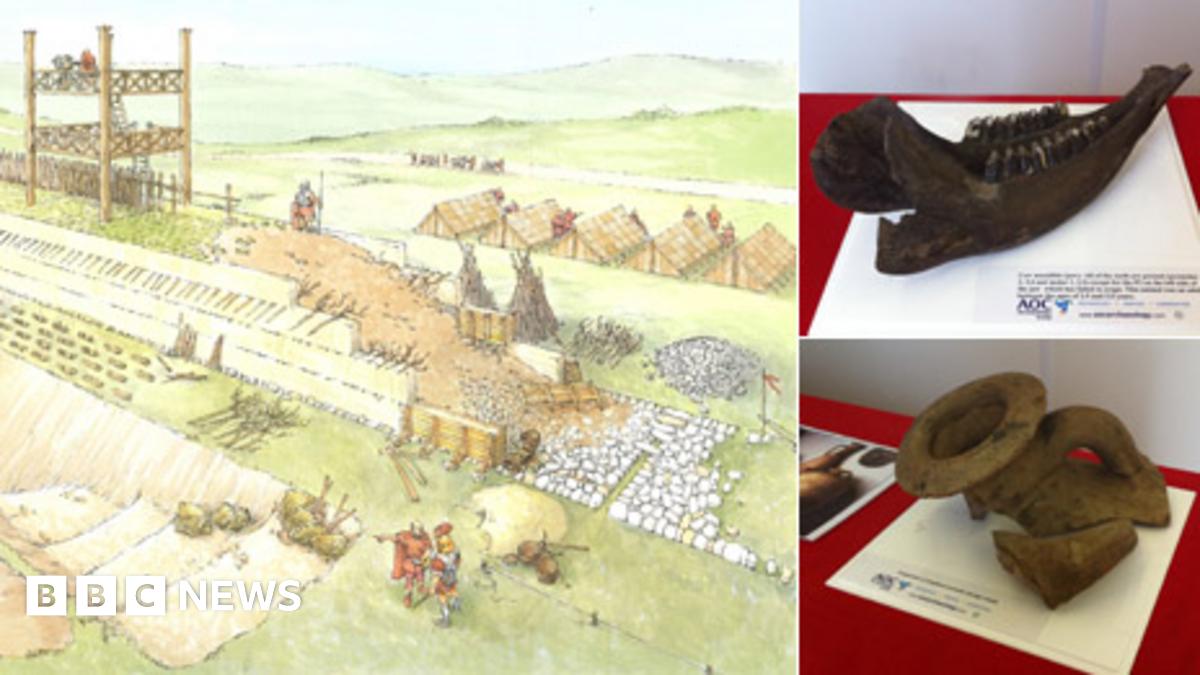
For over fifteen hundred years, visitors beyond the remains of Rome’s Antonine Wall in Scotland’s Central Lowlands would be greeted by a mysterious sight if they took the route along River Carron in Stenhousemuir (Stone House in English).
This would be Arthur's Oven/O'on (Scots), an towering ancient igloo/beehive shaped stone building (hence the village name) believed to be a Roman temple of some sort rising commandingly on the high ground above the north bank of the Carron. In the Historia Brittonum by 9th century Welsh monk Nennius, the structure is described as a "round house of polished stone". Aside from King Arthur, the Oven has been attributed to Romans Julius Caesar, Vespasian, and the usurper Carausius, but the most likely builder is the Emperor Septimius Severus (145-211 AD), who campaigned north of the Antonine Wall across 208-2011 AD.

The war started well enough for Severus, who managed to quickly reach the Antonine Wall which had been abandoned around 160-65 AD, but when he ventured into the highlands, the campaign became bogged down in a guerrilla war and the attempt to fully conquer Caledonia was never accomplished.
However he did reoccupy many forts built by Agricola over 100 years earlier and stymied the ability of the Caledonians to raid Roman Britain for some years.
With some possible exceptions (such as the Mausoleums of Augustus, Hadrian and Caecilia Metella in Rome, also Lucius Munatius Plancus in Gaeta) the building had few parallels anywhere in the Northern Roman empire, certainly in its unique beehive shape.

On reflection though, the mausoleum where the Berber King Juba II (son of Juba I of Numidia) and Queen Cleopatra Selene II (daughter of Antony and Cleopatra) were buried, also bears a certain vague resemblance to descriptions of Arthur’s Oven.

In terms of the Oven, antiquarians left sketchy records of inscriptions, also carvings of eagles and victories. A single large stone slab lay in the centre of the floor forming a pedestal for a statue, one solitary bronze finger of which survived, lodged in a crevice. It is possible that the circular Roman building here was a temple dedicated to the goddess Victory or Mars, called a tropaeum by classicists..
Two other tropaeums include the rebuilt Trajan's Trophy in Romania and that of Augustus in La Turbie, near Monaco.


The Arthurian Connection
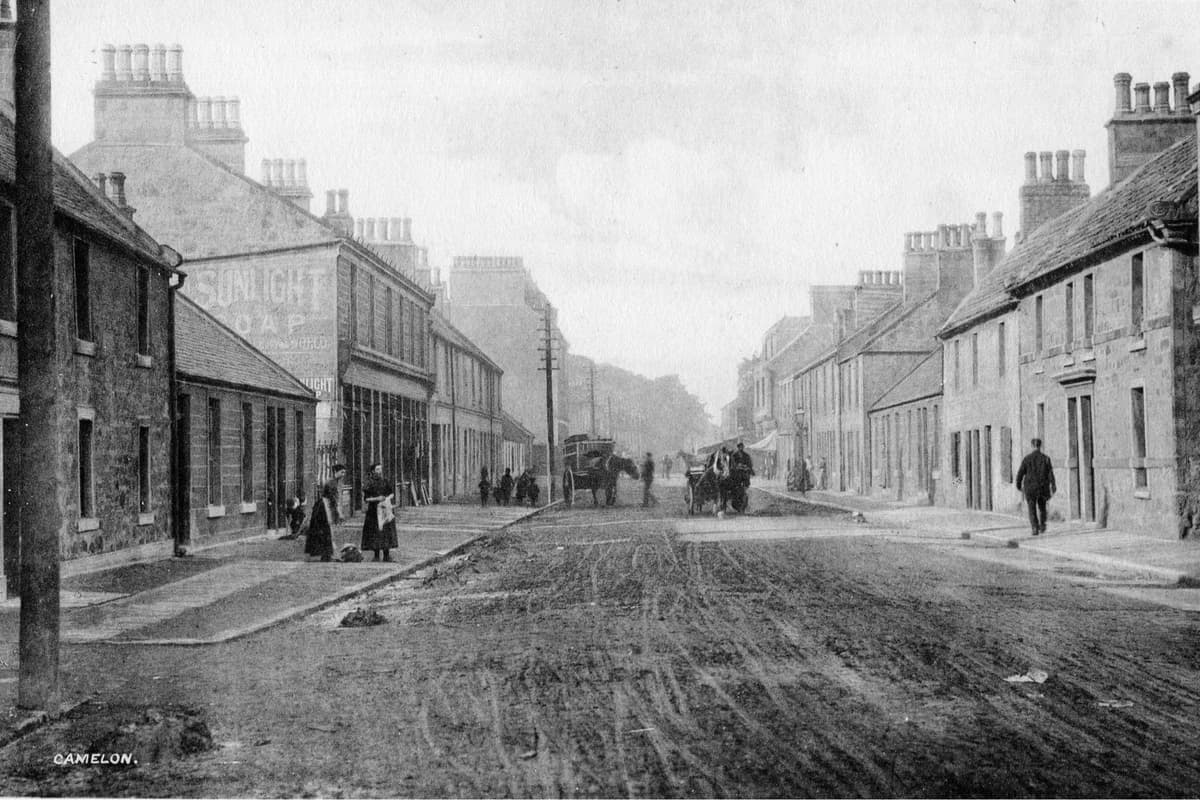
Arthur’s Oven lay close to the Roman fort at Camelon, the name itself prompting connections with the legendary Brythonic leader, although the name 'Camelon' may well have been coined by early antiquarians after the 15th century, with its earlier name being Carmore or Carmure. The myth of Camelon's twelve Arthurian (or Roman) brass gates was widespread but only commonplace items such as leather shoes and coins were found when a Tesco's supermarket was constructed in the area.
Scottish historian and folklorist Archie McKerracher (d. 2001) believed Arthur’s O’on was in fact Arthur’s famous Round Table where the King consulted his knights, who sat on a stone ledge reported within the building.
Septimius Severus: The Roman Who Tried To Take Scotland:
Arthur’s Oven was left largely intact when the Roman army withdrew from Scotland; maybe they couldn’t simply destroy a sacred structure especially if it represented not just a tropaeum but also served as a memorial to the men who had helped achieve the victory that had for a time secured the area.
Arthur’s Oven was denuded of its portable contents by the army before the legions decamped back to Hadrian’s Wall.
The indigenous population did not destroy the Oven once they had taken possession of it, a powerful sign of their triumph over the Romans? Perhaps as significant a symbol as the capture of a legionary eagle bestowing high honour on the tribe who held it?
The building remained impressive and its possession would have given distinction to any new owner, visible from a great distance, projecting an aura of power and influence over the surrounding land. It may have been used as a sacred shrine or a great hall – a meeting place of peoples and possibly a beacon for travellers. The O’on‘s hall-like chamber may have boasted an open fire set in the centre of the stone-paved floor, with smoke escaping through the top of the ‘beehive’. Dark Age Pictish society was after all hierarchical and status would be associated with symbols from the Roman occupation.
Arthur’s Oven survived through the following centuries, with even Edward I , ‘Hammer of the Scots’ leaving it undespoiled (unlike his theft of the Stone of Scone), presumably due to its Arthurian associations, which he wished to attach to himself, although some say he removed any remaining pagan symbols.
By the early eighteenth century, Arthur's O'on was one of the most celebrated antiquities in Britain. For the famed William Stukeley, it was "the most genuine and curious Antiquity of the Romans in this Kind, now to be seen in our Island or elsewhere.”
However, Sir Michael Bruce of Stenhouse, whose lands straddled the Carron, decided that his new mill needed a dam and rather than quarry fresh stone, he turned to the ancient structure standing nearby.
In his eyes the Oven was a ready-made source of high-quality building material. Within a few weeks, easily the best-preserved Roman monument in Scotland was obliterated, the stones carried away for the dam's construction. A structure that survived nearly sixteen centuries of weather, warfare, and neglect was undone by the spade of its greedy landlord, enraging classicists.
Bruce certainly wasn’t poor, and at the time of its destruction some gentlemen offered to assist him, redeeming the oven, providing him with free stone from a quarry, but he refused this . He may have wanted to rid himself of an ancient monument that attracted too many unwelcome visitors trampling onto his land, obstructing his other money-making schemes.
According to the Rev John Bonar, then Minister for Larbert Parish Church, “The curious will regret that the owner of Stenhouse and Stenhouse Mill was so destitute of all regard for antiquity. He certainly was no dilettante, neither real nor pretended. He was not one of the admirers of the beautiful and of the rare in the material world.”
Sir John Clerk of Penicuik, a leading Scottish antiquary, accused Bruce of having "no other motive had but to procure as many stones as he could have purchased in his own quarries for five shillings." His friend and fellow antiquarian Roger Gale transcribed the news into the minutes of the Society of Antiquaries of London, ensuring that the demolition would be remembered as a cautionary tale of wanton destruction.
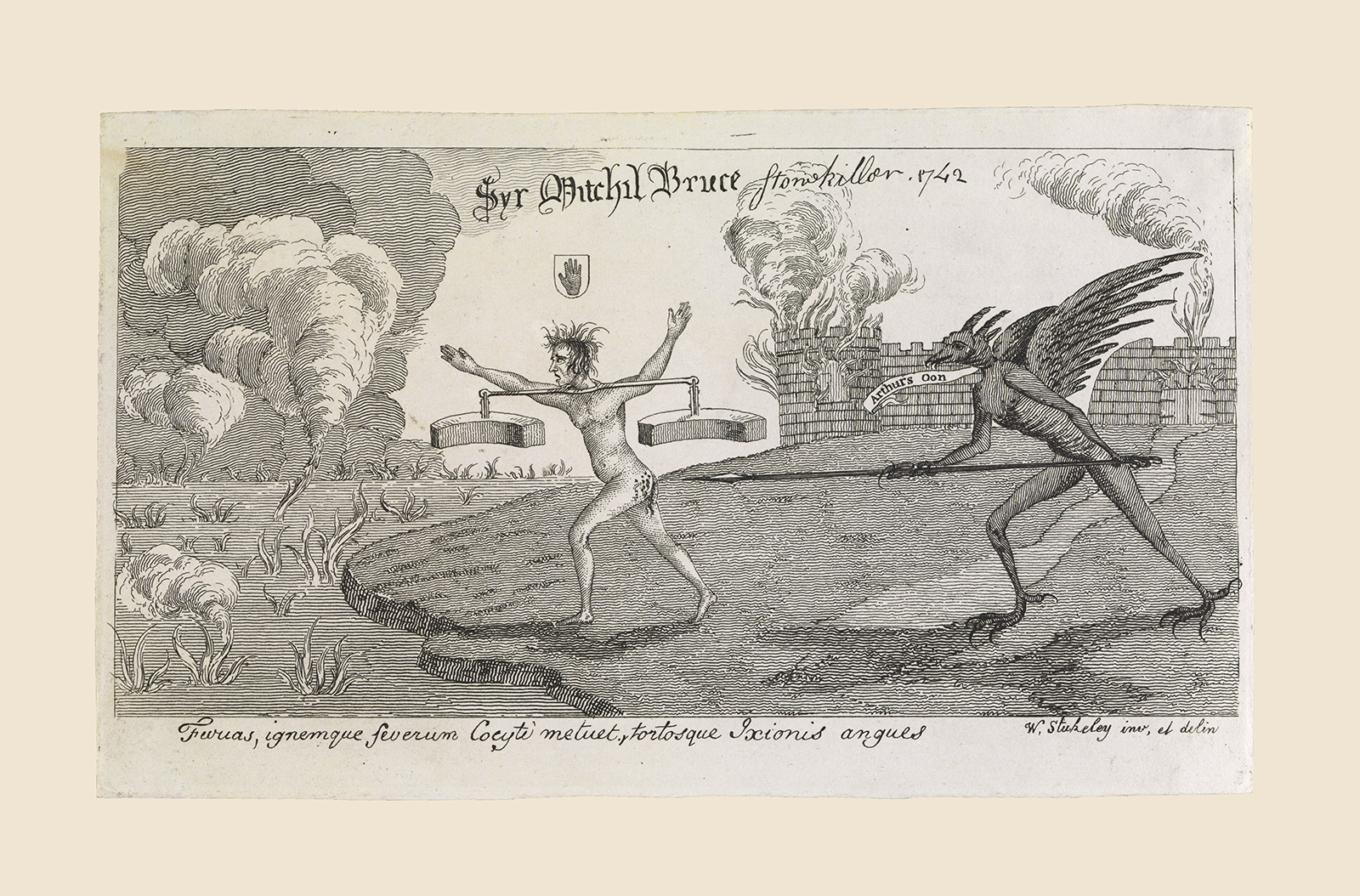
William Stukeley was furious. In an extraordinary drawing, he imagined Bruce undergoing eternal punishment:

In a letter, he wrote, “I would propose, in order to make his name execrable to all posterity, that he should have an iron collar put about his neck, like a yoke; at each extremity a stone of Arthur's O'on to be suspended by the lewis in the hole of them; thus accoutred, let him wander on the banks of Styx, perpetually agitated by angry demons with oxgoads; "Sir Michael Bruce," wrote on his back in large letters of burning phosphorus.”
One poet imagined a traveler walking along the Carron, talking with the stones of the demolished Oven; each piece bemoaned its fate, recalling the monument's former glory and cursing the man who destroyed it.
Sir John Clerk of Penicuik cursed Bruce "with Bell, Book, and Candle". Five years later, he reported gleefully the mill and dam built from the O'on's stones had been destroyed in a great storm; poetic justice of a sort. Whether Bruce ended up in eternal torment is a different matter, although the destruction of the dam certainly smacks of Olympian displeasure.
At his estate of Penicuik House, Clerk instructed his son James to design a new stable block boasting a dome directly modeled on Arthur's O'on. Using existing drawings and descriptions as a guide, a dovecote replica perches above the stables, where it stands to this very day.

LINKS




Under Another Sky: Journeys in Roman Britain by Charlotte Higgins, which includes Arthur’s Oven
STEPHEN ARNELL’S NOVEL THE GREAT ONE IS AVAILABLE ON AMAZON KINDLE
SAMPLE, READ BY ACTOR RICHARD INGS


No comments:
Post a Comment