Back in 1990 (nearly 30 years ago now), I founded the Noah’s Ark Society (NAS) to help save physical mediumship – which, at that time, appeared set to become extinct. Many of the few remaining physical mediums who were demonstrating in public at that time were elderly, deteriorating in health, and undertaking less and less work as their mediumships ‘wound down’.
For instance, within the next four years, two of the best known physical mediums – Gordon Higginson and Leslie Flint both passed to Spirit. Several other well-known physical mediums, such as Maud Gunning and Geoffrey Jacobs, had already passed to Spirit a little earlier as well. Some genuine physical mediums such as Rita Goold (who was working in a different energy-based way) had been forced to discontinue their mediumship due to alarming threats (including death threats) from anonymous ‘Arch Sceptics’ who – without any proof – accused them of fraud. Some excellent physical mediums like John Squires of Romford simply gave up because of health issues.
Ilkeston Physical mediumship circle
With the public’s increasing lack of access to séances and demonstrations of physical mediumship, and the lack of any exciting reports regarding encouraging contemporary results in this unique field of mediumship, it was perhaps inevitable that public interest in the subject would fade away. Instead of witnessing available demonstrations of physical mediumship (the publicity of which, naturally, would have generated considerable interest from scientists and the public), and since practical experience was sadly lacking, anyone seeking more knowledge and information was forced to go to the history books for answers! I remember more than one person at that time remarking to me: “Physical Mediumship – isn’t that something that happened way back in time – but is no longer being practiced?”
In 1989, my wife Sandra and I moved into a rented Church of England Rectory at Postwick – just a few miles East of Norwich. For many years, we had run our own home circles for the development of physical phenomena in the Romford area and had, in fact, actually met in a physical circle at Romford where the medium John Squires went on to develop the Independent Voice phenomenon (of an excellent quality) to almost rival that of Leslie Flint. My own interest as a researcher of physical mediumship goes back to 1972.
Once at Postwick, it was not long before I began to miss the home circles we had run and, although we did ask around the area, we never discovered any physical home circles who were looking for sitters at that time. Consequentially, a little later, we did once again start our own home circle at Postwick – but that is another story.
In the meantime, in March 1989, an advert for sitters in a physical circle at Ilkeston, Derbyshire appeared in the ‘Psychic News’. I replied and agreed to meet the trance medium of that circle, Stuart Hellen and his wife Valarie, for a chat. Although the circle was 130 miles away from Postwick, they had been asked by their Spirit Team to start a physical circle, running just once per month on the Saturday closest to the new moon. The traveling was therefore not too frequent, and when asked, I was happy to join the circle.
Regular communicators in the Ilkeston Group
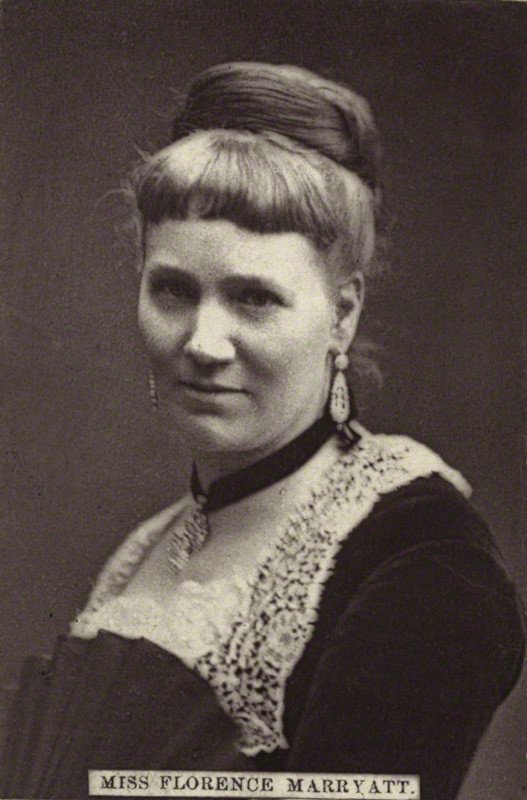
See page for author, Public domain, via Wikimedia Commons
In April 1989, I was present at their first proper physical phenomena sitting. Several raps occurred, together with psychic breezes, and ‘whistling’ was clearly heard over the singing of the group. Later in the year, after a few more sittings, I was able to arrange for the circle members to visit Leslie Flint, whom I had known for several years. Through his Independent Voice mediumship, the group received confirmation of the work they were doing to develop physical mediumship, and much evidence concerning the circle. The well-known Victorian Novelist and Spiritualist Florence Marryat (1833-1899) also became a regular communicator in the Ilkeston Group. Her book ‘There Is No Death’ is one I can highly recommend!
Stuart Hellen’s mediumistic development continued apace and early in 1990, at the request of the Spirit Team, Stuart’s chair was moved into a cabinet and during this first ‘cabinet’ sitting, the circle was taken unawares when the initial attempt at Independent Voice took place. This phenomena continued to develop during the further sittings in 1990.
In late 1989, another advert had appeared in the ‘Psychic News’ for sitters to attend another physical circle – this time in Hove, near Brighton. Again (and I shall never know quite why!) I replied, despite the fact that this circle was actually 140 miles away from our home – in a totally different direction. This group was run by John Austin, a veteran Spiritualist and his wife Gerry. They too knew Leslie Flint well. Although it was a weekly circle, I joined this group, too.
After sitting with the circle for a number of months, John and Gerry decided that they needed a new carpet for the lounge in which their sittings took place. The manager of a local carpet warehouse called to measure up the room, and instinctively made the comment that he knew what that room was used for. ‘Séances!’ There was no way he could have known this by normal means, so John and Gerry chatted to him about their interest. The result was that the young man Colin Fry was asked to join the circle. He agreed, and history was born! It was not long before Colin’s physical mediumship took off, and he started to go into deep trance. In terms of physical phenomena, his development was quite rapid. Within months, advanced examples of physical phenomena were taking place and by mid 1990, it was apparent that he was going to be an excellent physical medium. I personally witnessed one of the first instances of his phenomena, when a coin was suddenly apported into the centre of the circle from the medium’s solar plexus. Later, when levitation of the medium became commonplace, he was once levitated, complete with chair, through a wall into the next room!
How the Noah’s Ark Society was born
Meanwhile, back at the Ilkeston Circle in May 1990, it was on the anniversary of the inaugural meeting of the ‘Link of Home Circles’ (held in 1931 and attended by its founder – Mr Noah Zerdin) that a spirit personality communicated with us in the Independent Direct Voice. This was no less than Noah Zerdin himself, who had been a mentor to Leslie Flint in his early days, and many other mediums besides. He specifically asked us to: “Start a Society which would educate the public about physical mediumship – ensuring its safe development, demonstration and practice – as well as generally promoting physical mediumship and its phenomena to the public”.
This, for us, was a very exciting development, and we quickly realised the significance of such a message, and the importance of actually implementing Noah Zerdin’s request. After the sitting, we sat round discussing the possibility of starting such a society. Since I had more experience in this specialist type of mediumship and its phenomena than the others, I agreed to take over the responsibilities and practicalities of putting the society together, and badgered the other circle members to join me on the initial committee to help with the basic work (which involved an awful lot of diplomatic persuasion!)
At that time, I was in a reasonable position financially and was able to fund the society in its early days out of my own pocket. I came up with the name myself – The Noah’s Ark Society (I guess with a little help from Spirit), and commissioned an art studio in Norwich to produce a suitable logo. The name was suitable for three reasons:
1) The ‘Noah’ referred to Noah Zerdin, who had been the spirit communicator who asked us to start the Society.
2) Biblically speaking, ‘Noah’s Ark’ was a vessel that saved many species of animals from their ultimate extinction. The Noah’s Ark Society aimed to save a particular form of mediumship – physical mediumship – from extinction too.
3) The ‘Ark of the Covenant’ – biblically speaking – was a repository for psychic power and spiritual knowledge. That seemed particularly appropriate here too!
Over the next few weeks, I placed adverts regularly throughout the psychic press to notify the public of the new organization. We sent out information sheets to interested people, detailing the aims and objects of the new Society, and inviting them to join the NAS. There was to be a monthly newsletter starting in August 1990 with Issue 1 and although much preparatory work had been done before that date (including the rapid recruitment of members), it was generally accepted that the Society would be officially formed in that month.
The very first member – number 001 – was Stewart Alexander. He agreed to join the committee and to be the ‘Archive Officer’. However, it was to be quite some time before he actually admitted to me that he was a physical medium himself! I started the Newsletter as planned, and edited it. In those early days it was produced by me on a photocopier (initially at my workplace, starting at 5.50am!)
The first committee consisted of just the members of the Ilkeston Circle, together with Stewart Alexander. I did not want to take on the mantle of ‘President’ myself, preferring instead to remain as ‘General Secretary’, which allowed me to quietly get on with the building, expansion and running of the Society. It was agreed by all that the first ‘President’ would be the medium – Stuart Hellen. The first ‘Treasurer’ was Denise Lacey, another Ilkeston sitter. Apart from Stewart as ‘Archive Officer’, the rest of the committee was made up by: Stuart’s wife Valarie Hellen; Michelle Hackett; Mark Stanley and Jaquie Turner.
The psychic press reported and trumpeted the details of the new Society. Because of that, our adverts, and ‘word of mouth’ generally, the NAS membership grew rapidly over the first few months. Physical circles from all over the world joined as well, together with dozens of individual interested people and researchers. We quickly surpassed the significant benchmark of 100 members, and approached 200. All of a sudden, it became clear that as well as the committed physical circles and researchers already involved in our specialist subject, there was also – amongst those who had never come across physical mediumship themselves before the advent of the NAS – a new, and massive interest in physical mediumship and its phenomena from the general public, many of whom were totally lacking ANY knowledge of the reality of physical phenomena. The NAS, therefore, provided a rallying point for interested people. We set out a programme of education so that everyone could learn the basic facts and so that members who had not previously done so, could witness demonstrations of physical mediumship themselves on a regular basis.
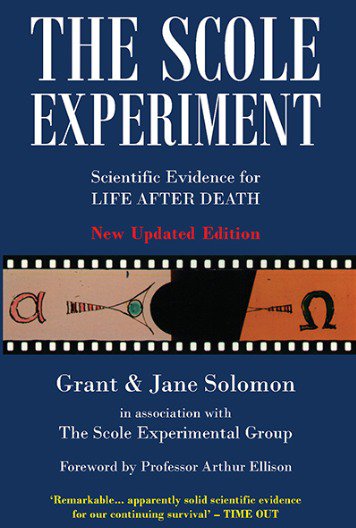
I wrote a NAS teaching guide on the ‘Development of Physical Mediumship and its Phenomena’, based on the traditional use of ‘ectoplasm’ (at that early stage, nobody knew that excellent phenomena could be produced using only ‘energy’. The ‘Scole Experiment’ and its work came later.) This, like the Newsletter, was produced in large numbers by me on my work’s copier machine, with a copy of this teaching booklet being sent out free to all members – together with Newsletter number 2 in September, 1990.
Over the next few months, the NAS continued to grow at a rapid rate, and the contacts that we made through the Society proved to be most useful. At a general meeting in January 1991, veteran medium and researcher Alan Crossley was elected as the new ‘President’, and I became ‘Chairman’ of the Noah’s Ark Society – a position I held until Sandra and I withdrew from the NAS in September 1994 (at the specific request of our Scole Spirit Team), to concentrate on our work with the Scole Experimental Group, which was producing some really amazing and exclusive Physical Phenomena – working in a brand new ‘energy-based’
The first NAS physical mediumship demonstration
At a residential Seminar in Leicester in May (with almost 100 people present), the very first NAS demonstration of Physical Mediumship took place, using medium Colin Fry (at that time identified simply as ‘Lincoln’). It was a huge success and – Stewart Alexander (who was present) recognised the importance and full impact of such a public demonstration. He was immediately motivated to offer to undertake similar public demonstrations for the NAS in the future so – for many years, members were able to witness demonstrations of physical mediumship by these two superb mediums.
Stewart Alexander later took over as ‘President’ of the Noah’s Ark Society. The last ‘President’, the late George Cranley, engineered the closing of the NAS in 2004. The ‘Vice-President’ at that time was the late Colin Fry – a superb Physical Medium.
It is quite clear today that there is now a massive interest in Physical Mediumship and its phenomena all over the world. Newer (and often younger) physical mediums are developing and coming on to the scene in so many different countries. I have no doubt personally that the work of the Noah’s Ark Society and the later work of the Scole Experimental Group have contributed tremendously to that interest, and motivated a large number of those emerging physical mediums to develop their own mediumship and phenomena.
In conclusion, therefore, I think I can justly claim that the ‘Noah’s Ark Society’, which set out to ‘save’ Physical Mediumship and its phenomena achieved, in part, exactly what it set out to do. The subject (and practice) of Physical Mediumship today is thriving and continuing to expand constantly. Therefore it is far more commonplace (and available to the public) than it used to be. Interest in this specialised subject indeed continues to grow at a rapid rate.
Editor’s Note: This article was originally published in The Afterlife Magazine by The Otherside Press which has since joined the PDN family.


