Showing posts with label parapsychology. Show all posts

Thursday, 12 March 2026

When Someone Appears: The Mystery of Crisis Apparitions

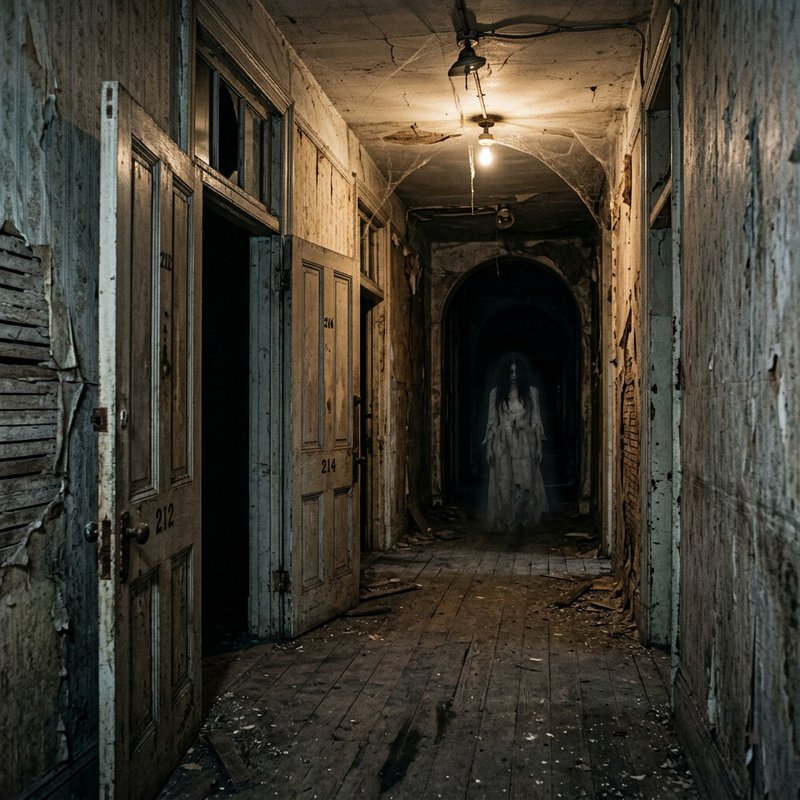
A quiet presence in an ordinary room, the kind many crisis apparition experiences begin with. People sometimes describe a moment that only feels strange afterwards. Nothing dramatic at the time. A sense someone is nearby. A quick impression. Occasionally a voice, or the feeling of being watched.

Then life carries on.

The phone rings later. News arrives. A death. An accident. Something serious.

Only then does the earlier moment return and feel different.

Accounts like this turn up everywhere. Different cultures, different periods, very similar descriptions.

What are crisis apparitions?

Researchers eventually began using the phrase "crisis apparitions" for experiences reported around moments of danger, trauma, or death. The definition is simple, but the timing is what draws attention.

Most reports are spontaneous. People are not trying to contact anyone. They are going about their ordinary routines when something interrupts them. Often the person involved is emotionally close. The experience tends to feel unusually clear compared to daydreaming or memory.

Not everyone interprets these moments the same way. Some treat them as coincidence. Others see them as psychological responses. Parapsychology tends to step back and look at the pattern rather than the explanation.

Early Psychical Research

crisis apparitions and parapsychology
Early psychical researchers began collecting firsthand accounts in an attempt to understand these experiences rather than dismiss them.

​By the late nineteenth century, people had started writing these experiences down more deliberately. Instead of passing them along as stories, they were being collected, compared, and discussed.

The Society for Psychical Research, established in 1882, became one place where this happened.

The aim was cautious. Members were less interested in proving survival after death than in asking a simpler question. Did these reports appear often enough to take seriously?

One ‘but project’, later known as the Census of Hallucinations, asked large numbers of ordinary people whether they had ever experienced a vivid impression of someone who was not physically present, particularly around important events.

Some investigators felt a pattern might exist around moments of crisis. That suggestion has never been fully settled, but the material itself continued to be referenced.

The Admiral Tryon Case

A distant ship fading into mist, echoing the sudden loss at the heart of many crisis apparition reports.

​One example often mentioned in this context is the death of Vice Admiral Sir George Tryon in 1893. Tryon led the British Mediterranean Fleet. During naval maneuvers off the Syrian coast, a command resulted in a collision between HMS Victoria and HMS Camperdown.

The ship sank quickly.

In the period afterwards, a number of people connected to Tryon reflected on impressions they had experienced around that time. The accounts themselves were understated. What drew interest was when those impressions were said to have occurred.

Researchers approached the case carefully. It was not treated as evidence on its own, but as a reminder of how these accounts tend to surface and how difficult they are to separate from memory, coincidence, and grief.

Patterns Across Reports

Across many reports, certain tendencies appear. Emotional closeness shows up repeatedly. Experiences involving strangers do occur, but far less often.

Timing is harder to assess. Many accounts are described after the person learns about the crisis. Memory shifts in those moments. Meaning settles in quickly. Researchers have always acknowledged that problem.

Closeness appears again and again in these reports. Experiences involving strangers do occur, but far less often.

The repetition is not dramatic. It is simply persistent, which is part of why researchers keep returning to the subject.

Psychological Explanations

Psychology tends to begin from connection. People remain mentally oriented toward those who matter to them. Worry, expectation, coincidence, and memory can overlap in ways that feel striking afterwards.

Another factor is reinterpretation. Moments that seemed ordinary at the time may be reconsidered once new information arrives. Memory adjusts quickly in those circumstances.

Experiences of presence after loss are widely reported and do not necessarily indicate anything unusual in a clinical sense. For many people they are part of ordinary grieving. Crisis apparitions may represent an earlier point along that same spectrum.

Parapsychological Perspectives

Parapsychology approaches the question from a different angle. Rather than dismissing the experiences outright, it asks whether extreme situations might coincide with unusual forms of information transfer.

Some researchers describe this in terms of spontaneous telepathy or emotional signaling. The idea remains tentative. If anomalous communication exists, moments of crisis would be the most likely place to look.

That position does not resolve the question, but it keeps inquiry open.

Modern Research and Experience Studies

Modern research methods often rely on experience surveys rather than individual case investigation. Large collections allow researchers to look for recurring features even when verification is difficult.

Online reporting has changed the landscape. People share experiences quickly, sometimes before timelines are clear. That creates both opportunity and complication.

Crisis apparitions now sit alongside research into bereavement experiences, deathbed visions, and anomalous perception more broadly. The boundaries overlap but the timing element remains distinctive.

Why the Topic Persists

Reflecting on experiences that resist simple explanation is where crisis apparition research often returns.

These experiences sit in an awkward space. They appear too often to dismiss entirely, yet not with enough consistency to explain comfortably.

For many people, the meaning comes first. Explanation follows later, if it comes at all. Even those who lean toward psychological accounts often note how distinct the experience feels.

Researchers, meanwhile, focus on recurrence. Patterns raise questions even when answers remain uncertain.

A Quiet Mystery

Crisis apparition reports are rarely dramatic in presentation. They are brief interruptions. A sense of presence. A glance. A moment that only becomes significant later.

The Tryon case shows how these reports enter discussion. It is not unusual in structure, which is precisely why it is referenced. The details matter less than the pattern it reflects.

What keeps the subject alive is not spectacle. It is repetition. People continue to describe moments in which someone seems to appear at exactly the point something changes.

The explanation remains unsettled. The pattern does not disappear.

Further Reading

Phantasms of the Living — Edmund Gurney, F. W. H. Myers, Frank Podmore (1886)

Census of Hallucinations report — Society for Psychical Research (1894)

Apparitions — G. N. M. Tyrrell (1943)

New Frontiers of the Mind — J. B. Rhine (1937)

The Founders of Psychical Research — Alan Gauld (1968)

Parapsychology: A Handbook for the 21st Century — edited by Etzel CardeƱa, John Palmer, David Marcusson-Clavertz (2015)

Friday, 5 September 2025

Parapsychology and Possession: A Scientific Paper

The illustrious owner and chief editor of Paranormal Daily News, John Brocas, is also an academic and has a soon-to-be-published paper titled: “Expanding Grof’s Transpersonal Framework to Integrate Parapsychology and Address Spirit Intrusion in Spiritual Crises.” Spiritual intrusion can also be considered as an obsession state or what is known as possession, though the latter is very rare.

For the majority of people not familiar with these terms, Brocas is referring to Czech-born American psychiatrist Stanislav Grof (who, as of this writing, is still alive at the age of 93) and investigated the therapeutic benefits of psychedelics in the 1950’s and 60’s Soviet era. These ideas have caught on in the West only recently. (See the work of Dr. David Luke)

Possession

Grof and Transpersonal Psychology

One of the most notable areas of exploration in psychiatry for Grof was the idea of transpersonal psychology, where non-ordinary (aka exceptional) experiences are taken into account as part of the spectrum of human experiences instead of being treated as a sickness of the mind. These often exceptional experiences are then used to benefit the individual instead of being treated as aberrant behavior.

This paper branches out from the core of transpersonal psychology to introduce another element to be taken into account: nonphysical intelligent entities that attach themselves to people. Brocas uses the term “direct spiritual intrusion,” which is also known as possession, although that term is probably a bit too dramatic. Brocas writes in his paper:

This paper argues for an interdisciplinary framework that redefines pathology, and integrates empirical evidence with spiritual experiences that may be viewed as originating external to the individual . This framework could contribute to a more harmonious relationship between the experiential focus of transpersonal psychology and the empirical methodology of parapsychology. Additionally, it proposes that psychotic disorders such as psychosis and schizophrenia, could, in many cases be interpreted as instances of Intelligent Spirit Intrusion (Brocas, 2018).

It’s Like a Toxic Coworker

Think of spiritual intrusion as being similar in emotional impact to having to deal with a toxic relative or coworker on a daily basis—someone very negative and critical that you can’t really get away from. Their presence is a form of possession. I posed this to Brocas, and he agreed. Such a problem is neither a mental disorder nor lends itself to easy fixes. It weighs on a person and induces strong emotional reactions, but it is largely an external problem, even though the entire effect is on a person’s mental state.

Brocas goes on to provide a definition:

We can differentiate direct spiritual influence or possession states by using the term spiritual subjugation (Brocas, 2018). Spiritual Subjugation is the direct influence of an external force or intelligence where the individual’s will, spirit, or the immediate environment is controlled by the influencing intelligences. The Oppression's existence is demonstrably clear through both subjective and objective empirical data.

What he is saying in the last sentence is that this isn’t a matter of speculation. A proper diagnosis requires subjective (i.e. subject testimony and data from mediumship) and objective data. (observable behavior, emotional states, and intellectual capacity)

Is It an Intrusion or Something Else?

The existence of such entities is difficult to diagnose, and that is why Brocas suggests employing different methods to discern whether an intelligent spiritual intrusion is at play. It was beyond the scope of the article to address how one would go about treating such a condition, but it is an important consideration for further exploration. All of the symptoms begin in the mind, so the question arises about whether the treatment of an internal or external force causing the problem makes any difference. What does one do differently in the healing process when confronted with an external intrusion rather than an internal conflict?

I think that there is a difference. If we look at the example of dealing with a toxic relative or coworker, we observe that the problem a person faces is in maintaining their sense of identity in the face of external forces attempting to create a weaker and more submissive identity for them. Possession can also be treated as an external issue.

Conversely, an internal struggle is one where a person is finding or building their identity in the first place. The former is pushing against manipulation whose purpose is creating a false identity, the latter is a process of discovery. They are quite different goals and therefore require different approaches.

What John Brocas is suggesting here—that we take the idea of spiritual interference seriously—is, I think, a good one. Properly diagnosed, a therapist can then direct a person to focus on productive strategies for dealing with the problem.

Brazilian Methods

To that end, Brocas presents evidence from Brazil, where mediums are used to help determine if a mental illness, such as schizophrenia or psychosis, has a basis in spiritual interference. he writes:

A growing body of research [DP1] (Friel, 2024, p. 11) would suggest that psychosis and schizophrenia share the same similarities and experiences that are reported by mediums. This includes hallucinations, hearing voices, visions, and altered states. These symptoms are at risk of being wrongly pathologized (Moreira-Almeida, 2012) and the individual being treated for a psychiatric illness when, in fact, it is a more spiritual expression. In Brazil, spiritists who practice mediumship believe that many mental illnesses are caused by negative spirits. [DP2] They use a mediumistic approach to facilitate DE possession, a practice that mainstream psychiatry would likely pathologize.

He goes on to cite a specific case:

An example where this evidence would support the joint parapsychological approach was in a case in Scotland with a schizophrenic patient who was presenting with a combination of all pathology. The medium could bring forth evidence of the experiences and evidence of the influencing spirit or agency, as well as external phenomena witnessed. The evidence brought forth used a pyramid of evidence approach (Brocas, 2018) that corroborated experiential phenomena, as well as knowledge unknown. This case was a clear case of spiritual subjugation.

Brocas is raising an interesting question here about the basis for some cases of schizophrenia. Could people get some relief by addressing spiritual interference?

Possession

The Conscious Universe Model

If all of this sounds a bit “out there,” bear in mind that that attitude comes from assumptions about the nature of the universe. Many of us assume that the universe is material because that’s what our senses tell us is real. Under those conditions a noncorporeal intelligence seems quite unlikely. However, the world we experience originates in our minds, something that is often forgotten or brushed over. What we take for real is actually a picture that our mind creates. This suggests that consciousness, not the material world, is fundamental to physics. And since this appears to be true, then the existence of beings that are nonphysical is a foregone conclusion. When you remove the assumption of materialist theory, the spiritual interference, which initially appears far-fetched, becomes a concept worth taking seriously.

In the end, it’s not about theory; it’s about helping people in the quickest and effective way. If this approach turns out to be successful in helping people, then that is the only metric that really matters.

Monday, 10 February 2025

Skeptics and Parapsychologists Have Something in Common

A new paper published in Frontiers in Psychology examines the similarities and differences between skeptics, parapsychologists, (scientists who study psychic ability), and believers in psychic ability. It challenges the idea that skeptics somehow possess different or superior thinking skills in evaluating the evidence for psychic ability. Here’s the introduction:

Introduction: Belief in psi, which includes psychic phenomena such as extra-sensory perception and post-mortem survival, is widespread yet controversial. According to one of the leading and perhaps most tested hypotheses, high belief in psi can be explained by differences in various aspects of cognition, including cognitive styles. Most of this research has been conducted with lay individuals. Here, we tested the hypothesis that academic researchers who investigate psi may exhibit different cognitive styles than lay individuals interested in psi, and are more similar to skeptics.

And this was their overall conclusion:

Discussion: Our research shows that academics who work with psi differ from lay psi individuals, but not from skeptics, in actively open-minded thinking. In other words, despite their high belief in psi phenomena, psi researchers demonstrate a commitment to sound reasoning about evidence that is no different from that of skeptics.

One of the myths that this research dispels is that skeptics are somehow superior critical thinkers when it comes to psychic research. This is certainly consistent with my own observations over the years. I have personally never seen any case where skeptics demonstrated superior skills at evaluating parapsychological research, or indeed, anything related to the paranormal or psychic ability at all. At best, they are equal in their critical thinking and at worst, they demonstrate obvious biases in their evaluations.

A very important aspect of this discussion is the idea of objective vs. subjective experience. This line isn’t clear cut and there is a lot of ambiguity on the table. What this means is that people who rely on their subjective experiences to create their worldview aren’t necessarily worse thinkers, only different in what they rely on. Objectivity itself relies ultimately on choosing what data to believe.

Better Informed Equals better at Being Objective

Also, lay individuals, whether skeptics or experiencers, were generally worse at critical thinking. No surprise there either. Objective evaluation is a scholarly skill that has to be learned. In general, lay skeptics and experiencers tend more towards knee jerk reactions to data that they don’t like and both exhibit more defensiveness over their positions.

A lot of bias comes from having an emotional attachment to a particular position. Spending more time with a subject includes careful considerations of contrary positions, which in turn will slowly erode strong emotions surrounding a subject and introduce more objectivity.

So these study results shouldn’t be very surprising. Informed people are better at evaluating a subject than uninformed people. Having said that, my long history with the controversies in parapsychology tells me that the situation is decidedly more complicated. This has less to do with logic and rational thinking and more to do with the nature of psychic ability. Believers are not really believers and skeptics aren’t really skeptics. There are deeper layers to this situation.

Who is Really the Believer?

Belief implies a reliance on faith without evidence and skepticism implies objectively examining evidence and not drawing unsupported conclusions. Yet “believers” often rely on evidence, it’s merely a question of interpretation and how much evidence they think that they need. And skeptics often begin from their own sets of beliefs before they examine evidence.

One complication comes from the self reporting nature of the study. It can only measure people’s view of themselves, not the accuracy of their self reflection.

For example, when examining beliefs about psychic ability, it is important to establish the reality of psychic ability first. If, for example, we were examining a discussion about whether trees exist, we would immediately divide that group into rational people who know that trees exist and irrational people who did not believe in trees.

The believers in trees would not be criticized for being inflexible about the reality of trees nor would their critical thinking skills be questioned for refusing to entertain any discussion about it, rather the tree skeptics would be criticized as tree deniers. The entire narrative completely flips depending on what we agree is real.

Who is the Rational One?

So if it’s assumed that psychic ability is real, then of course people are not going to be open to changing their minds about it. Doubt about whether a particular experience is real is weighed against whether it is within the boundaries of ordinary psychic experiences. If psychic experiences are not considered to be exceptional, then the bar for acceptance is not very high. In this case the classification of “believer” is grossly misleading because they are operating on knowledge based on experience, not on personal beliefs.

The other thing to consider is that skeptics tend to talk big about being open minded, and often sincerely believe this to be true about themselves, but in practice most of them demonstrate just the opposite to be true. What passes for careful rationality and critical thinking is often just pride and stubbornness with a lot of ego mixed in. So a skeptic might claim that their mind can be changed by evidence, but when push comes to shove, it gradually becomes obvious that no evidence will ever be enough. In the study, this was somewhat acknowledged by measuring a “need for closure.” While this is certainly related to stubbornness, there may still be a gap between what a person thinks about themselves and what they actually do.

Measuring Skeptical Stubbornness

Skeptical stubbornness is difficult to uncover because it requires repeatedly probing the skeptic to see whether they will change their mind in the face of contrary evidence, but revealing this trait is extremely important in evaluating their critical thinking skills. Part of stubbornness is the belief that one isn’t being stubborn, merely holding steadfast to the truth, so a survey or a psych test that is not designed to specifically uncover this is probably insufficient.

For example, if you asked a skeptic if sufficient evidence would change their mind, they would say that yes, it would. If you instead forced them to quantify exactly what evidence would definitively change their mind, (a successful telepathy test? A personal experience?) they would likely refuse to commit to a concrete answer that would force them to concede, or choose an answer that will always be out of reach. Either path demonstrates stubbornness and a deficiency in critical thinking.

When it comes to these two things: sorting out whether belief is actually experience or whether claims of being open minded and objective are just lip service, it’s very hard for academic studies to sort these two things out, but they have huge ramifications for the conclusions. The flaky believer magically transforms into an open minded holistic thinker and the critically thinking skeptic becomes a stubborn fool.

Know Your Universe Before Passing Judgment

This is an important point because evidence is mounting that we live in a universe where consciousness, not the material world, is fundamental to reality. In that case, reality itself is relative to the observer, which must necessarily change our perception about what constitutes belief vs. reality. It no longer becomes a question of whether someone is correctly viewing reality, but about how far off they are from what is often referred to as “consensus reality.”

The takeaway here is that I think that we have to be careful in our assessments of the strengths and weaknesses of “believers” and “skeptics.” It is a question with far more depth and nuance than first appears. If we don’t question our underlying assumptions, we may lose sight of thinking processes that are far more complex than first appears.

Friday, 11 October 2024

The Vital Role of Psychological Evaluation in Paranormal Investigations

Clarion Call for All Involved in the Mysterious Field of Paranormal Investigations

In the fascinating world of paranormal investigations, the stakes are high, ranging from haunted locations to cases alleging demonic possession. However, one often overlooked but critical aspect of these investigations, is the necessity for comprehensive psychological evaluations. Why are these assessments so vital?

In a timely podcast episode, Investigating Demonic Cases: Paranormal Psychological Evaluation, host Jock Brocas underscores the importance of psychological evaluations, noting that he personally receives about four to five new cases every month. Although a significant majority—over 95%—are not serious, the small percentage that may involve something more sinister requires utmost caution.

The Thin Between Psychiatric Illness and Demonic Influence is Easily Blurred

paranormal
(Image: Canva)

Jock Brocas, a professional medium and spirit interventionist, emphasizes the importance of psychological evaluations to distinguish mental health issues from genuine paranormal occurrences. A clarion call for all involved in this mysterious field to adopt practices rooted in professionalism, ethics, and multidisciplinary cooperation.

“There's a very gray area between psychosis, mental psychosis, psychiatric illness and demonic possession/obsession. There is basically a pattern. There's an intelligence. And some of this pattern and... intelligence actually comes through looking at a potential case which is out of the realms of science and...psychology and psychiatry. And a lot of people that are claiming that they are having a psychiatric illness, do actually suffer from... some spirit obsession or spirit oppression, not necessarily demonic, by the way.” Jock Brocas

While the necessity for a professional psychological evaluation when assessing paranormal claims speaks for itself, Brocas explains that individuals often refuse these evaluations, firmly believing they do not need them. This refusal complicates matters because the line between psychiatric illness and demonic influence is thin and easily blurred.

“One of the things that stops people in their tracks is when you start to say, this case actually needs psychological evaluation, we need to bring in a psychiatrist or a psychologist and they need to be able to evaluate that person. Nine times out of ten, most of these people will say they don't need an evaluation and they don't want an evaluation and they're not interested in having that done because they know.
Unfortunately, that's where things get a little bit gray because there are so many people out there claiming that they have a haunting... a demonic possession or an obsession, and do not have the history to back it up, and they do not have the phenomena to back it up. And they think that just a little imbalance in the mind or negative thoughts or bad things is completely oppressive and demonic. And it's not.” Jock Brocas

The Allure and Misconception Around Demonic Cases

A common trend among people who contact Brocas, is an almost eager conviction that they are experiencing demonic oppression, obsession, or possession. This excitement can be problematic and reveals a significant misunderstanding of the complexities involved. Paranormal professionals, including mediums and parapsychologists, must address these cases cautiously, ensuring that they don’t contribute to unnecessary fear or misinformation.

“There is a pattern to diabolical possession. There is an intelligence. This is also the same in obsession and oppression, before even you get to possession. So be very careful, don't jump on the bandwagon. Make sure that you have all your bases covered that you actually go through, that you have a relationship with a professional, with a psychologist, with a psychiatrist, someone that you can rely on that can actually help you to evaluate that case. It's important that this is evaluated professionally.” Jock Brocas

Occult illiterate, mainstream mental health professionals who dismiss the paranormal world as nonsense, will be of no help to spirit interventionists, mediums and others who are called upon to assist troubled souls. Experiencing mental imbalances because of innocent, ignorant tinkerings with spiritual realms, is more common than many people realise. Basic occult education and holistic health pathways should be taught in universities and medical schools but that is unlikely to happen any time soon. In the meantime, taking heed of the reality of paranormal and potential interferences is highly recommended when assessing mental/emotional imbalances.

Patterns of Alleged Demonic Activity Symptoms

Several patterns can manifest in cases involving alleged demonic activity and often overlap with various psychiatric conditions, such as psychosis. Brocas notes that some symptoms attributed to demonic influence might actually stem from psychiatric illnesses like schizophrenia or bipolar disorder.

However, there is an intelligence that drives genuine paranormal cases, making them distinguishable from psychiatric conditions but identifying this intelligence requires more than intuition; it needs evidence and professional validation.

A Multi-disciplinary Approach Prevents Misdiagnosis of Mental Health Conditions

The importance of psychological evaluations lies in their ability to provide a clear, clinical perspective on the individual’s mental health. Collaborating with psychiatrists and psychologists is a valuable multi-disciplinary approach because it ensures any paranormal investigation is grounded in reality, thereby preventing the misdiagnosis of mental health conditions.

“You want to be able to identify if there is psychiatric or psychological illness there. Is there a pattern of psychological illness in the family? Is there a pattern of psychosis that's developing here? As a medium, you're not going to be able to give those answers but you can bring in a professional that can. As professionals ourselves in mediumship, we can talk to people and get the background and intelligence, give them advice and things. But when it comes to something that's serious or maybe needs looked at deeper, you really do need a professional.” Jock Brocas

Brocas collaborates with the Wisconsin Paranormal Society, illustrating how effective teamwork and network-building with medical professionals can enhance the credibility and outcomes of paranormal investigations.

When investigating paranormal claims, building trust with the affected individuals and their families is paramount. This approach mandates a professional demeanor and a commitment to ethical standards. Professionals should never hastily diagnose a situation as demonic without thorough evaluation, including psychological assessments.

Cutting Through the Noise: The Myths and Realities of Possession

On the topic of misinformation proliferated by some religious entities and media that sensationalize demonic possession, Brocas contends that many individuals who believe they are possessed are, in reality, experiencing psychological or emotional turmoil.

Certain religious narratives and sensationalist media presentations fuel misconceptions about possession, often advocating for extreme views without substantial evidence, contributing to the public’s misunderstanding.

“I'm blaming religion... some of these evangelical type people that will say that there are so many demons inside of you. There's no proof in this and there's no evidence to the contrary. So anybody who thinks that they are actually oppressed, would have to go through a series of tests and a series of studies to be able to have a professional identify if that person seriously is being influenced by a demonic being or a spirit being or is being oppressed in some way.
There is a need for anybody that is seriously claiming that they're possessed, or the family is claiming they're possessed, to have a psychological evaluation, not just of them, but also the family. So if you're a professional and...you have people who come to you and say that they are actually demonically possessed, and you start to kind of believe it, and you go down the realms of checking everything and... you don't have any professional psychological testing or evaluations done, then you're kind of doing yourself a disservice. And you're doing them a disservice because 99% of cases are actually explainable. There's very, very little out there that is seriously a diabolical possession and people who think they are, normally aren't.” Jock Brocas

Avoiding the Pitfalls: Responsible Paranormal Investigation

Avoid the pitfalls of rushed or unsubstantiated conclusions by approaching each case with an open mind, rigorous methodology, and a willingness to seek professional psychological insights.

Ethical responsibility is a cornerstone of credible paranormal investigation. Even if a case appears to fit the criteria for demonic possession, investigators should ensure that it undergoes comprehensive evaluation. This approach not only protects the individuals involved but also upholds the integrity of the investigative field.

Stay Informed and Engaged with Deadly Departed Podcasts

For those interested in delving deeper, the Deadly Departed podcast is a rich resource of knowledge and case studies which aim to shed light on these intriguing and complex phenomena. The perfect place to engage with the community by posing questions and sharing experiences to foster a more informed and respectful dialogue about the paranormal.

The ongoing journey to understand the paranormal is filled with both challenges and revelations. Psychological evaluations serve as a crucial tool in this quest, bridging the gap between mental health and supernatural phenomena. By embracing a rigorous, ethical approach to investigations, we ensure that our work contributes meaningfully to both fields.

Stay tuned and stay curious. The more we learn, the greater our ability to navigate the shadowy intersections of the seen and the unseen.

Watch the Video

Investigating Demonic Cases: Paranormal Psychological Evaluation

(Run time: 13 mins)

Saturday, 23 March 2024

The Eternal Dumpster Fire of Rupert Sheldrake’s Wikipedia Biography

Wikipedia is a tragic mess of epic proportions and its crowning dumpster fire is Rupert Sheldrake’s highly contentious biography. It’s been a Wikipedia battleground ever since his TEDx Talk at Whitechapel in 2013. This was all covered in my book: PSI WARS: TED, Wikipedia and the Battle for the Internet. Sheldrake had his video taken down from the main TED website -essentially banned - and there was a big uproar over the whole thing.

rupert sheldrake
ruper

Prior to that time, Rupert had a decent Wikipedia page, but as his notoriety grew, his page became the playground of his enemies, making him look worse and worse as they edited out his accomplishments and plastered the word “pseudoscience” everywhere. It’s got the fingerprints of the Guerrilla Skeptics on Wikipedia all over it. They are an anti-intellectual atheist materialist Wikipedia editing group dedicated to teaching the world that we have brains, but no minds. But first, a little backstory.

At the time, Rupert was talking about his then new book Science Set Free, where he talked about the ten dogmas of science, which are worth repeating here because it clarifies what ideologies are at play:

The Ten Dogmas of Science

  1. Everything, including all living things, are essentially mechanical.
  2. All matter is unconscious. Subjectivity doesn’t exist.
  3. The total amount of energy and matter is always the same.
  4. The laws of nature are fixed.
  5. Nature is purposeless, and evolution has no goal or direction. Everything happens according to random processes.
  6. All biological inheritance is material, carried in the genetic material, DNA and in other material structures. Mind and intent play no part.
  7. Minds are inside the head and are nothing but the activities of brains.
  8. Memories are stored as material traces in brains and are wiped out at death.
  9. Unexplained phenomena like telepathy are illusory. They are a trick of the mind.
  10. Mechanistic medicine is the only kind that really works. Natural remedies of any sort are ineffective.
ten dogmas of science rupert sheldrake

Rupert Sheldrake Has Enemies

The enemies of Sheldrake who control his biography absolutely believe these dogmas as though they were etched in stone. This is what Sheldrake was challenging in his book. He argued that we should question these beliefs and that there were other ways to conceptualize the universe.

Sheldrake is at home with ideas like collective consciousness and telepathy and his most well known theory, morphic resonance, relies on these concepts. Morphic Resonance describes how entire species have a collective mind that they draw upon to spread information. This, of course, runs entirely counter to the beliefs of these zealot editors.

Rupert’s Popularity

As far as Wikipedia goes, what’s interesting about Sheldrake is that he is a popular figure with a lot of very science-literate followers. So naturally, when people see the abysmal state of his biography, they step up to see if they can help. This has been going on for years. You can see it in the talk page right at the top:

How to violate the Wikipedia Neutral Point of View by requiring bias in targeted articles.

Here, let me translate it for you: “A common objection by people with actual scholarship abilities is that this biography is utter garbage. Although we control this page with an iron fist, we need to maintain the pretense that we’re following the rules, so we’re calling it fringe and pseudoscience, a decision you are not allowed to object to. “Any evidence you provide showing that he is not fringe or pseudoscience will be treated as fringe and pseudoscience, thereby proving you wrong.”

Failures Of Skeptics

That banner, in other words, is an advertisement for the Guerrilla Skeptic’s utter failure to be able to intellectually defend their position. Instead, they’ve resorted to a line of reasoning that would be more at home in a Monty Python sketch.

I’m going to use one of Rupert’s favorite methods of cutting through the noise: phrase this as a question. Is he fringe? Is it pseudoscience? If the answer to both is no, then all the other objections to a neutral biography are moot.

The Wikipedia Fringe Label

rupert sheldrake

Is Rupert Sheldrake fringe? By the Wikipedia definition, fringe is defined as: an idea that departs significantly from the prevailing views or mainstream views in its particular field. Is Morphic Resonance fringe by this definition? The answer is no if you stay within the context of how scientific inquiry and exploration normally works. Fringe within the context of science means that the concept won’t pass ordinary peer review within its own field, much less get into more generalized journals like Nature. Fringe, as it applies to science, is usually one person pushing an idea that no one else takes seriously.

Morphic resonance passes the basic test of science in that it is falsifiable. You can run experiments that test the theory, which has been done. There are also references to it from other scientists as early as 1938, (Spemann), (Weiss, 1939).

Morphic Resonance is taken seriously by other scientists and references to it can be found in various journals and some experimental evidence supports it, particularly within its field. This is science that is going through the ordinary process of discovery at the usual snail’s pace. Adoption hinges on some rethinking of the fundamental assumptions that Sheldrake addressed in his TED talk. And scientific testing of Morphic Resonance is part of what is creating the need for this rethinking.

The whole discussion of the nature of the universe is a huge scientific controversy that has been growing. There are consciousness researchers currently making submissions for a $100,000 prize. There are a number of people closing in on theories of consciousness in physics, which has gained momentum due to the 2022 Nobel Prizes in physics.

The Nobel Prize in Physics 2022 was awarded jointly to Alain Aspect, John F. Clauser and Anton Zeilinger "for experiments with entangled photons, establishing the violation of Bell inequalities and pioneering quantum information science."

Information is a form of consciousness, so this prize is essentially saying that there is consciousness in physics, which in turn makes Morphic Resonance quite plausible. The objection that the theory somehow defies physics is removed here. It isn’t enough to rely on second sources for this topic because there are legitimately competing views. Labeling the theory (and the man) as fringe is a way of taking sides in a debate that Wikipedia editors are woefully unqualified to tackle.

The Wikipedia Pseudoscience Label

Then we move on to the designation of “pseudoscience.” The Wikipedia definition is:

Pseudoscience is often characterized by contradictory, exaggerated or unfalsifiable claims; reliance on confirmation bias rather than rigorous attempts at refutation; lack of openness to evaluation by other experts; absence of systematic practices when developing hypotheses; and continued adherence long after the pseudoscientific hypotheses have been experimentally discredited.[4]

Let’s go through this list for Morphic Resonance:

  1. Contradictory? No
  2. Exaggerated? No
  3. falsifiable? Yes
  4. Reliance on confirmation bias rather than rigorous attempts at refutation? No
  5. Lack of openness to evaluation by other experts? No
  6. Absence of systematic practices? No
  7. Continued adherence after experimentally discredited? N/A

The term pseudoscience, as applied here, is nothing more than a skeptical dog whistle; a trademark of the atheist materialist Guerrilla Skeptics on Wikipedia. It does not apply to parapsychology, which has a scientific organization, the Parapsychological Association, that is an affiliate of the American Association for the Advancement of Science. There isn’t more an organization can do to establish its legitimacy. But that is ignored in the article. The Guerrilla Skeptics, who clearly have an iron grip on this article, peddle their secular humanist propaganda by manipulating Wikipedia articles and biographies.

Why You Can’t Rely on Sourcing on Wikipedia

This manipulation is most visible in the sourcing: This is important because journalists often skip the article, but then rely on sourcing. That doesn’t work either. The following sources cited in this article are associated in some way with the Center for Inquiry/Committee for Skeptical Inquiry (CSI)/the Skeptical Inquirer/Prometheus Books:

  • 5. A book containing articles by fellows of CSI: David Gorski, Chris French
  • 6. Skeptical Inquirer
  • 8. One of the writers is a CSI fellow: Massimo Pigliucci
  • 11. Skeptical Inquirer
  • 14. Prometheus Books
  • 17. Founder of CSI: Martin Gardner
  • 23. CSI Fellow: Jerry Coyne
  • 24. CSI Fellow: Susan Blackmore
  • 26. Not a CSI Fellow, but aligned with them. Pub. of Skeptic Magazine: Michael Shermer
  • 32. See 26. Shermer
  • 33. See 26. Shermer
  • 60. See 26. Shermer
  • 65 CSI Fellow: Robert Todd Carroll
  • 66. CSI Fellow: Susan Blackmore
  • 68. CSI Fellow: James Alcock
  • 69. CSI Fellow: Richard Wiseman
  • 82. CSI Fellow: Susan Blackmore
  • 84. CSI FEllow: Richard Wiseman
  • 90. Skeptical Inquirer
  • 91. Skeptical Inquirer
  • 92. Skeptical Inquirer
  • 93. See 26. Shermer
  • 97. CSI Fellow: Massimo Pigliucci

Special mention to Steven Rose, a distinguished supporter of the British organization, Humanists UK. He is cited on: 20, 27, 123, 127, 132.

In case you were wondering, four of these people have a legitimate reason to be cited in some specific situations: Richard Wiseman replicated one of Sheldrake’s experiments where they did testing on whether dogs know that their owner is coming home. Susan Blackmore wrote a couple of specific critiques on specific experiments, and Steven Rose critiqued Morphic Resonance.

They were involved in scientific discussions that are part of the process. Rose’s critique can be found in full on Rupert Sheldrake’s website, but in an act of pettiness, the Guerrilla Skeptics have chosen to cite the Wayback machine, lest anyone be exposed to the horrors of woo. The interaction with Shermer was an unnecessary addition to the biography.

This isn’t a biography, it’s an advertisement for these skeptics, all of whom have well done, complimentary Wikipedia biographies. It’s an example of reward your friends, punish your enemies.

Misrepresentation of Research by omitting Rebuttals

I suppose I should mention that the article makes a hash of Rupert Sheldrake’s work by over emphasizing criticism and leaving out rebuttals and positive attributes. For example, in the section on dogs that know when their owner is coming home, Richard Wiseman replicated the experiment and got the same results as Sheldrake. Rather than admit this, he simply moved the goal posts, adding criteria that were not in the original experiment and then declared the experiment a failure.

https://www.sheldrake.org/files/pdfs/papers/The-Psychic-Pet-Phenomenon.pdf

In the case of Blackmore’s objection, Sheldrake wrote:

https://www.sheldrake.org/files/pdfs/papers/The-Psychic-Pet-Phenomenon.pdf

If you have to cheat, to make someone look bad, you are not winning your intellectual war.

It’s not just Rupert Sheldrake; it’s not just Parapsychology; it’s a whole weird list of things that these atheists object to. They are on a crusade against chiropractors and Santa Claus as well. As stated earlier, they claim that we are just brains and chemical processes and that consciousness is just a brain process and doesn’t actually exist. They truly don’t believe that we have minds.

One cannot help but wonder if this belief in mindlessness isn’t just a bit of self reflection.

Saturday, 26 August 2023

Qualities Of The Best Psychic Practitioners

Observations of a Parapsychologist/Psychic Entertainer By Loyd Auerbach

I’ve worked with some genuine psychics and mediums of extremely high caliber and psychic functioning, in investigations, under laboratory conditions, and in situations where they applied their talents.

Several years ago (2005), I wrote and presented a paper to a Parapsychology Foundation conference on mediumship in Charlottesville, VA, on what I’ve learned about psychics and the commonalities of the very best from working with some of the best over the years. I’ve since presented the topic at several parapsychological conferences, and had lots of feedback from colleagues that they, too, came to similar conclusions (but hadn’t really made a list).

In this article, I pass along what I’ve learned about the commonalities of the best psychics – and when I say “best,” yes I do to some extent mean the most accurate (really, the ones who are accurate most of the time). But what’s below is really about the more personal commonalities of the psychics and mediums who often seem impressive to people, and who work best with researchers and investigators.

How Psychic Is A Self-Proclaimed Psychic

the best psychic practitioners

It is not my intention to discuss in this article how to judge “how psychic” is a self-professed psychic, psychic medium, or medium. That requires a separate piece of its own. To my mind, choosing a psychic practitioner to work with can be summed up in two points: (a) how useful is the information provided by the practitioner and (a) how useful is the practitioner.

As to the first, one can only judge the usefulness of information within the context of the situation itself. I have observed a number of psychic practitioners provide information irrelevant to the situation. For example, in working with them in investigations of reported apparitions, hauntings and poltergeists, one should look at more than the verifiability of the information and consider how the information explains, supports, or melds with the experiences of the witnesses and information gathered in researching the case. Much of the usefulness of a psychic practitioner’s information in the resolution of cases rests with how that information is received and accepted by the clients (and perhaps the discarnate entity).

Psychic Practitioners and Ego

The usefulness of psychic practitioners is often related to how ego-involved the psychic is and his or her interpersonal skills. A psychic should not be the main focus of the investigation process or reading, as that should remain the experiences of the clients. Certainly while the focus in an experiment is on the subject, it’s the experiment itself that needs to be the focus.

Look At Me I’m a Great Medium

mediumship

Many psychics and mediums seem to have a need to be the center of attention, but if they are good at communicating and working with people, they can still be good team players. It is those having a need to be “right” who can be real problems to deal with, especially when their perceptions are contradictory to the experiences of the witnesses and to other data collected, or to the results of an experiment.

Psychic Integrity

The best practitioners are those who understand that their psychic perceptions may sometimes be incomplete, influenced by their biases or personal problems, symbolic, or even from a different source than the current situation. Furthermore, they are willing to take each perception and examine it for both validity and relevance. The practitioner recognizes that others on the investigative or research team and perhaps even witnesses in a case investigation, or the client in a reading, may need clarification or may need to fit the practitioner’s perceptions into other parts of the case or even disqualify them for lack of validity or relevance. The Psychic or Medium does not become defensive if told that a particular perception is incorrect, misinterpreted, or misguided.

They realize that they may not be psychic in all situations. For example, many mediums who spend their time communicating with spirits are good when it comes to apparition (ghost) cases, but lousy – even totally “blind” – when it comes to reading living people. Many psychics who can read people or objects can’t pick up anything in apparition cases.

Consider The Science

parapsychology

They are willing to consider various non-paranormal and non-spiritual explanations for events in a case or experience and to consider fraud. They will follow suggestions from the field researchers, especially where focusing their perceptions to gain more or different information is concerned. They will participate with the investigators in trying to understand the initial and subsequent factors that led the clients to believe their building is haunted or to an individual believing he/she had an intense psychic experience. They are willing to discuss and consider their perceptions in light of the observations of the other investigators. They are willing to let go of ownership of their perceptions in discussion with the investigators and witnesses.

They are willing to learn the perspective of the researcher and field investigator, even to the point of understanding good investigative and experimental procedures. They may have their own personal spiritual or religious beliefs, but they do not force them into the cases or on others.

They consider the clients’ needs above their own.

They have a sense of humor, especially with regards to how seriously they take themselves.

psychic practitioners

Most of all, they have a real curiosity about their own abilities, what their limits might be, how they do in different situations and conditions, and how psi might actually work. I will note that those working as mediums seem to express much more curiosity about understanding what’s going on and the scientific studies of their abilities (and the possibility of life after death/Survival of Consciousness) than those who work as psychics (with no mediumship practice). On speculating about this, I believe it may be a result of mediums being focused on communication with living and deceased people – and the communication process -- while psychics are often more concerned with the information rather than the people.

Psychics and Mediums Must Work In Harmony With The Investigators

The best psychics and mediums seem to work with the investigators and the clients to set expectations of success at a reasonable level. While they are able to cite past successes, they are aware of their own limitations and are honest about them.

The best seem to display many additional qualities beyond their psychic talents. They have excellent interpersonal skills, and because of that are confident without being egotistical. It has been said that psychics often have great egos. This can be a plus if the practitioner understands the place of a big ego and is able to both freely admit this and most importantly to be humorous about it.

You Need a Good Sense Of Humor

The best psychics and mediums generally display a good sense of humor, especially about themselves. They do take their work seriously, but because of their maturity, they see the lighter side of life as extremely important. They actually enjoy watching (good) psychic entertainers and magicians, unlike many who don’t fit the criteria of this article who voice objections to “making fun of” the paranormal.

Personally, I’ve always said I take my subject seriously – but not myself. And I can have fun with it all. That sums up the attitude of the best psychics and mediums.

One special note: There are some very famous psychics out there who don’t fit these commonalities. They’ve often bullied their way to the top, or used any bit of mystery and/or fame and/or publicity to get there and frankly, what I end up observing about their psychic abilities (in my role as a parapsychologist) is extremely unimpressive. But even if they were incredibly psychic, I still wouldn’t recommend people to them because as people, they leave much to be desired. One of them (who has since died) was downright mean to people even in her TV appearances!

To sum up, here’s a list of the qualities I’ve found. I encourage all mentalists/psychic entertainers to incorporate these into your performing persona, naturally adapted to your own personality.

The best psychic practitioners

• Are confident without being egotistical (but still have a healthy ego)

• Display good “people skills” (with the living and the dead)

• Don’t set expectations too high, and know their own limitations and biases

• Are still willing to learn (i.e. from a parapsychologist/field researcher)

• Are curious about their own abilities, how they work, and what their limits are.

• Do not force their beliefs on others, even as they stand by their own beliefs.

• Put the clients first.

• Don’t claim to be right all (or even any particular unverifiable percentage) of the time.

• Display a good sense of humor, especially when it comes to themselves.

In other words, good psychic practitioners have good people skills above all else!

Friday, 4 August 2023

What is Pseudoscience?

I’ve never been happy with the word “pseudoscience.” Skeptics throw around this word much like monkeys in cages throw their poo; they just want it to stick and smell bad. But the closer you look at it, the more vague it becomes and nearly impossible to apply to most real world situations.

Merriam Webster dictionary defines pseudoscience simply and in a vague, unhelpful manner:

A system of theories, assumptions, and methods erroneously regarded as scientific

Wikipedia has a somewhat more lengthy explanation:

Pseudoscience consists of statements, beliefs, or practices that claim to be both scientific and factual but are incompatible with the scientific method.[Note 1] Pseudoscience is often characterized by contradictory, exaggerated or unfalsifiable claims; reliance on confirmation bias rather than rigorous attempts at refutation; lack of openness to evaluation by other experts; absence of systematic practices when developing hypotheses; and continued adherence long after the pseudoscientific hypotheses have been experimentally discredited.[4]

This seems reasonable, except I’ve never actually seen this. What’s described here is so far off the deep end that it would be almost universally uncontroversial. Kind of like the flat earth theory. It would be more of a joke than anything else. There’s no need to describe it as pseudoscience because aside from a small handful of weird people, no one takes it seriously enough for it to matter.

what is pseudoscience

For most topics that get the pseudoscience tag slapped on them, this definition wouldn’t apply. Once you start looking more closely, what you see is usually just science embroiled in controversy.

For this word to be more relevant, the definition needs to be drastically narrowed.

My own definition looks something like this:

Pseudoscience is a deliberate attempt at misinformation through the use of falsified scientific studies to lead people to a particular, false conclusion.

I chose this definition because it is unambiguous and clearly states what pseudoscience is and what it isn’t. Any other definition creeps into gray areas where it can end up being applied arbitrarily. Here’s the problem:

While Flat Earthers arguably fit the pseudoscience definition, how about cold fusion? Is this also pseudoscience? Are you sure? Because the U.S. Department of Energy gave a $10 million dollar grant for that research in February of 2023.

How about Astrology? Surely that’s pseudoscience. Right? Didn’t a large study by Shawn Carlson published in the journal Nature in 1985 demonstrate that astrology is bunk? Actually, no. In a 2009 paper, Ken McRitchie outlined the problems with the study, and demonstrated that those errors, when corrected, supported Astrology. So a major study published in Nature shows that astrology is not pseudoscience.

How about Parapsychology? Also nope. The Parapsychological Association has been an affiliate of the American Association for the Advancement of Science since 1969. They were vetted a long time ago by mainstream scientists as doing real science.

You can add Reiki, with its medical studies, Naturopaths, who have their own accredited medical programs, chiropractors, who also have a body of research and many other areas where claims of pseudoscience simply aren’t true.

The main problem with throwing around the term pseudoscience is that science is about measurement and if you can measure something, you can examine it scientifically. So if you apply the pseudoscience label to whole areas of scientific inquiry, you are missing the obvious problem that for any particular subject you can have both real science and pseudoscience.

The term is almost never used in some areas where it should theoretically apply, such as The Multiverse Theory, String theory and some areas of psychology. Also left out of discussions of pseudoscience are some of the most obvious and dangerous pseudosciences out there: doctored pharmaceutical studies and tobacco science.

When we’re talking about pseudoscience, we really should be talking about individual experiments, where errors in theory and erroneous conclusions can be definitively found. But even that has its own problems.

Even if an experiment has errors in theory and conclusions, what distinguishes pseudoscience from a bad experiment with a faulty conclusion? You can find terrible experiments with faulty conclusions in almost every science from physics to evolution to psychology. It happens all the time. Everything that can be measured can be measured incorrectly and every experiment has the potential to be badly flawed. But we don’t normally regard that as pseudoscience.

And then we move on to yet another problem with using the term pseudoscience. If a controversial area of science has a number of criticisms lodged against it, that is not enough to call it pseudoscience either. The existence of criticism just means that something is controversial. One first has to determine whether those criticisms are valid.

Controversies exist in science either because the available data is ambiguous, such as UAP’s or because there are deep, fundamental differences of underlying assumptions, such as is the case for parapsychology.

This opens the door to individual interpretations based on the weight people will give to various facts and opinions they encounter based on their prior beliefs. There is typically a lot of ground to cover: The original experiment, the criticism, the rebuttal, the rebuttal to the rebuttal, the commentary and analysis by third parties and the ensuing discussions.

It’s a rabbit hole that few people will go down and it takes more time and energy than most people are willing to devote. Yet this where truth lies. Anything else is just taking sides based on prior beliefs.

If you take a step back and look at who is using the pseudoscience argument the most and why, what stands out is the political nature of it. It’s more of a talking point than a scientific assessment. The accusation of pseudoscience is most often leveled by self described skeptics who are firm believers in materialism against the many sciences and practices that have evidence disputing this philosophical position. Materialism, -a belief that the universe is material-, is disproved if psychic ability is true. It’s disproved if psychic healing is true; if homeopathy works; if there’s something to astrology and if many holistic medicines work.

The term pseudoscience, when used in this context is nothing more than a dog whistle for skeptics. It doesn’t advance our understanding of anything. It’s analogous to saying “Make America Great Again.” When this phrase is used, it tells you more about the person saying it than the subject they’re addressing. In the same manner, using the word pseudoscience ends up telling you more about that person’s scientific beliefs than about the science they’re speaking of.

My suggestion is that the word be limited to clear cut demonstrations of intentional scientific deceit. Otherwise the word pseudoscience is almost useless.

Sunday, 23 July 2023

Finding Inspiration from “The Handbook of Tests in Parapsychology” by Betty M. Humphrey

As a librarian, I love connecting folks with resources. And as a person interested in the paranormal and Parapsychology, I especially love connecting folks with resources on spooky topics. Often, the two mix. I never get tired of hearing someone approach the reference desk and ask, “Do you have books about ghosts?” or “I need to write a research paper and I want to write about the paranormal - can you help?”

I especially love reminding people of all the ways they can freely access all sorts of books, articles, newspapers, and journals. This is partly because I suspect people often feel pressured to buy the things they want to read. To be fair, there’s nothing wrong with purchasing your reading material. It is, however, a privilege. And even if you do have the privilege of disposal income to spend on books or subscriptions, it’s not possible to buy everything that you want. And sometimes you may not even be able to find what you want in print.

tests in parapsychology

But another reason why I love showing people the different things they can access freely is because people just don’t know the breadth of what’s out there or where to go to access it. You may not know, for example, that the Directory of Open Access Journals (DOAJ) allows you to freely access scholarly articles and journals on a wide variety of topics. Fun fact: you can find 190 articles in DOAJ just by typing the keyword “parapsychology.” Or maybe you didn’t know that there are entire scholarly journals dedicated to anomalous phenomena, like the Journal of Scientific Exploration.

I love connecting people with resources, because it’s not only fun to read about the paranormal - it’s also a great way to get inspiration for your own spooky shenanigans. Take, for example, the freely accessible textbook Handbook of Tests in Parapsychology by Dr. Betty M. Humphrey. Written in 1948, this textbook offers detailed methods for conducting various psychical experiments. Organized into three parts, Humphrey’s book outlines in detail experimental designs used to test for extrasensory perception (ESP), psychokinesis, and even a combination of both.

This book also helps the reader understand the difference between the phenomena of clairvoyance, telepathy, general extrasensory perception (GESP), and precognition. For example, in the introduction, Dr. Humphrey tells us that “In a simple clairvoyance test the subject is asked to name the top card of a shuffled deck when no one knows what that card is.” This is different from a test of telepathy, which she tells us is “when the experimenter merely thinks of a symbol and asks the subject to call it.”

But the thing I love most about this book is that it offers explicit designs for those who want to conduct experiments themselves. Part 1, for example, is dedicated to experiments involving ESP. One chapter in this section is titled “Card-Calling Tests of Clairvoyance.” The first paragraph of this chapter tells us that “in the clairvoyance tests the subject tries to name the symbols on cards when no one knows in what order the symbols are arranged.” The chapter then proceeds to give detailed descriptions of various experimental designs.

One design is called the BT (broken technique) method in which one person holds a card behind a screen while another person attempts to guess the symbol on that card. The BT method is just one option, though. Dr. Humphrey goes on to describe others like the DT (down through) method in which a person attempts to guess the order of a stack of cards - called ‘down through’ since the goal is to guess the symbols down through the stack. In this method, no cards are separated as they are in the ‘broken technique’ (hence the name) and are instead kept together as an entire stack.

There are detailed photos and even sample scoring sheets, all of which you can replicate or even modify for your own experiments!

tests in parapsychology
A sample sheet for recording ESP experiment results.

You don’t have to be a literal scientist in order to replicate the designs in this book. And you don’t need to have an end goal of publishing your work in a journal. Maybe you want to test out your ESP abilities with a friend. Maybe you just want to get weird and have some fun. Maybe you want to adapt these experiments in different settings - like if you are investigating a haunted location and want to see how that environment might impact an ESP or clairvoyance test.

parapsychology tests

Whatever the reason, you should feel empowered to find inspiration in the pages of Dr. Humphrey’s textbook. Know that you deserve access to this information too. And it’s freely available! Why shouldn’t you boost your weirdness with the wide world of freely accessible weird resources?

References:

Humphrey, Betty M. Handbook of Tests in Parapsychology. (Durham: Duke University, 1948).